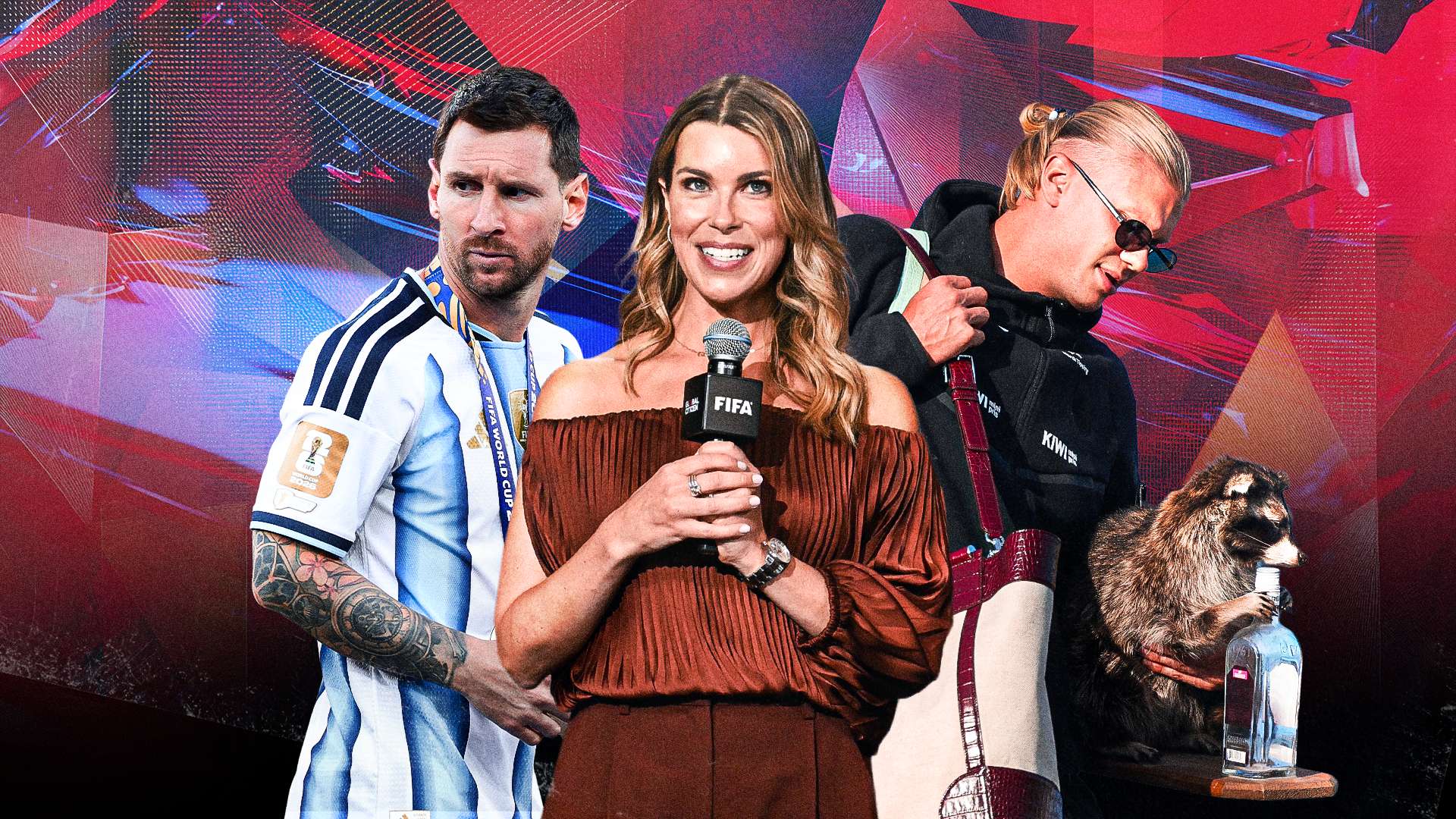
The 2026 World Cup had its fair share of flaws, but its most lasting impact may well be remembered in the streets, bars and stadiums where different cultures came together and unlikely bonds were built.
The fans in the Boston coffee shop, by any measure, looked very English. Their unmistakable accents and Three Lions tattoos were obvious clues. If that was not enough, one of them was even wearing an England tracksuit.
There were other hints as well: later that day, England were scheduled to face Ghana at Boston Stadium. It was matchday, and the pair had stopped for a morning coffee - almost certainly in preparation for a heavy round of beer later on.
They were then approached by a friendly woman, who was walking her dog. In the politest but most unmistakably Boston accent possible, she said to the two men:
“We’ve loved having you Scots in Boston these past two weeks!”
The English supporters laughed, thanked her, spoke for a while, and then continued down the street towards Boston’s South Station. The mistaken identity did not matter; there was a match to think about. It was a funny moment, but one that perfectly summed up the mood of this summer. Englishmen being mistaken for Scots is usually a serious matter, a point of dispute, the moment when things can turn ugly.
But in North America, it became a harmless joke with a wider meaning. It did not matter that the two men sounded as if they had just stepped out of a chippy in East London. Nor did it really matter that the warm-hearted woman believed they were Scottish. That moment, when one person got it wrong and everyone had a laugh, reflected a summer in which the world, for a brief spell, felt united.
“The whole tournament was spectacular, in every respect. You had a lot of enthusiasm. You had a lot of really fabulous matches. You had all the worry beforehand that all these new countries coming in would make a mockery of it. Well, they really held their own, with just one or two exceptions, and so that made it exciting,” Alan Rothenberg, former president of U.S. Soccer, told GOAL .
'It's the people in the streets'
World Cups reflect the country and society where they are staged. They provide a deeper look at the strengths and weaknesses of a nation or region. Yes, this was a tournament in which 48 teams took part.
But it was also a lens through which the rest of the world judged North America. And as people looked through that lens this summer, almost searching for flaws, the clearest image was of a place that, for six weeks, was brought together by soccer.
The numbers were impressive. Television viewership was at record levels. Nearly seven million people attended in person. Stadiums, on average, were 99.7 percent full. But perhaps more important was the sense of togetherness that ran through the event.
“It's the people in the streets and the people in the various bars and restaurants at the watch parties at the fan festivals, and they intermingling with people from all over the world. It really was one nation. It was one world,” Rothenberg said.
'The time of their life'
In truth, the best way to understand this tournament is through a series of scenes from cities across North America. But it is also worth remembering that expectations before the event were very high. The United States, one of the three host nations and the country hosting the vast majority of the matches, loves major occasions. FIFA President Gianni Infantino played into that perfectly, calling it the summer of ‘104 Super Bowls.’ It sounded bold, almost very American.
He did not quite get exactly what he had hoped for. Not every match had the pageantry of a Super Bowl. Instead, something emerged that perhaps he had not expected: America, even if only for a short while, began to like itself again. The world enjoyed it too.
“A lot of the international visitors who came, and you know, were a little apprehensive of what it would be like. And I think everybody came away just having the time of their life,” Rothenberg said. “It really showed what the beauty of sport is, which is it really can drive community.”
There were many moments that captured that feeling. But perhaps it began on social media. An anonymous German football fan, who used the name freddyLA7 on X, started posting about his American trip with two companions.
He arrived in the U.S. just before the World Cup and began drawing attention online for his love of American classics. He praised Waffle House. He had the time of his life at Buc-ee's (see below). He was not the only one. Other fans spoke about their love for ranch dressing or endless tortilla chips at Mexican restaurants.
“I loved all of it. I do feel like we're all seeing all the fans from around the world come to America, fall in love with America, bring the ranch dressing. We've all seen every one of those memes, but that is a beautiful thing,” Fox Sports analyst Jenny Taft said.
'Texting me pictures of Erling Haaland'
The fan groups also played a big part. One of the attractions of a World Cup is that it is, in effect, the truest expression of a country’s odd little habits and impulses. It gives a sort of unspoken permission to go a little over the top. It is also a perfect excuse to take the purest version of a nation’s culture to places where it would never normally appear.
That brings us to the idea of Erling Haaland. The Norwegian striker is six-foot-four, a goal-scoring machine, and a nightmare for defenders. He is also a goofy child who, apparently, loves having fun. He became the symbol of Norway’s unexpected quarterfinal run this summer, not just through his goals but also through his personality.
He led the “Viking Row” at New York/New Jersey Stadium after scoring twice in the round of 16 win over Brazil. He promoted smoked fish in Times Square. He also scored seven goals. America quite clearly fell for him.
“I loved my friends who have never watched soccer texting me pictures of Erling Haaland. I loved all of it,” Taft said.
The same was true for Scotland’s Tartan Army. They had their moments throughout the tournament, famously drinking Boston dry - something even the city’s large Irish population has not been able to do. They also brought football songs to Fenway Park, singing to John McGinn in the echoing concourse of the famous stadium.
And it was not only those two. England fans sold out rodeos while wearing Three Lions cowboy hats. The Dutch “marches to the match” were impossible to miss. Argentina fans sang so loudly that stadiums literally shook.
ENJOYED THIS STORY?
Add GOAL.com as a preferred source on Google to see more of our reporting
'Yo, I'm rooting for you guys today'
Gerald Jean was standing on a street corner in Philadelphia, handing out Haitian flags. To anyone passing by, he looked like a friendly man in his early 60s, building support for the World Cup. Haiti were due to face Brazil later that day, in one of the clearest mismatches of a 48-team tournament.
But Jean was no ordinary promoter of the match. In his younger days, the unassuming elder was a very capable footballer, and he played for the Haitian National Team from 1974 to 1978. He shared the field with legends such as Carlos Alberto, Pele and Rivellino. In effect, he is woven into the footballing history of his country.
And there he was, standing on a street corner, wearing a Haiti hat.
The Haitian community in Philadelphia had come together to print 19,000 flags, and former national team players were placed on different street corners across the city. Block parties and rara parades were planned for the day. And even after a heavy defeat against a dominant Brazil side, their fans never stopped singing.
The same story played out for countless diaspora communities in the U.S. during this tournament. One of the special things about America is that people from every part of the world live here, often in small pockets that many people never even know about. That gave some real visibility to nations this country usually overlooks. Cape Verde, the second smallest nation to qualify for the World Cup, has sizeable communities in Massachusetts, New York and Central Florida. They were among the liveliest supporters of the entire event.
“It was insane, the feeling, marching, seeing all the fans from different countries, seeing our jersey and hearing, 'Yo, I'm rooting for you guys today,'
-
Invest Rs 10 Lakh: Have ₹10 lakh in hand? Discover 5 of the safest and smartest strategies to grow your money..

-
Tax Rules for Foreign Stocks: Do you trade in US, South Korean, and Taiwanese stocks? Find out how they are taxed in your ITR..

-
The magic of this secret Post Office scheme! Deposit ₹2,000 per month and get ₹1.42 lakh—here’s the full breakdown..

-
Train News: High Court cracks down on Tatkal ticket booking irregularities; directs IRCTC to tighten Aadhaar and PAN verification.
-
Train Cancellations: Heavy rain disrupts Western Railway services; several trains cancelled from today. Check the latest updates before travel.