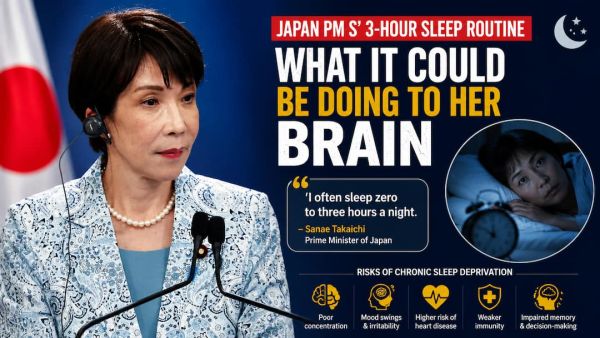
Japan's Prime Minister Sanae Takaichi has drawn attention after revealing that she often sleeps only 0 to 3 hours on working days, adding that getting 5 uninterrupted hours recently felt unusual. While her comments reflected the demands of leading a country, they have also triggered a wider discussion about the health impact of severe sleep deprivation. Medical experts say regularly sleeping for only a few hours is far from harmless. From reduced concentration and emotional instability to a greater risk of heart disease, chronic lack of sleep can affect nearly every system in the body over time.
Why Three Hours Of Sleep Is Not Enough
Adults generally require seven to nine hours of sleep each night for the body and brain to recover properly. Consistently getting only three hours leaves the body in a state of sleep debt, making it difficult to restore physical energy, regulate hormones and maintain normal brain function.
Queensland Brain Institute researcher Bruno van Swinderen told ABC that someone following such a routine would be "extremely sleep deprived". "She must feel miserable," he said. He explained that after prolonged sleep loss, the brain prioritises deep sleep to repair itself. However, this often comes at the cost of rapid eye movement (REM) sleep, which plays a key role in emotional balance, learning and flexible thinking.
Sleep Loss Can Affect Decision-Making
A lack of adequate sleep does not simply cause tiredness. Studies have shown that chronic sleep deprivation can impair memory, reduce attention span, slow reaction times and increase irritability. It is also linked to higher risks of obesity, diabetes, high blood pressure, heart disease and weakened immunity.
Dr van Swinderen said missing REM sleep could be particularly worrying for someone in a leadership position. "It's particularly concerning for a leader of a country, because you want to be emotionally regulated and have cognitive flexibility," he said. Experts believe these mental functions become increasingly difficult to maintain when the brain is repeatedly denied sufficient rest.
Japan's Long Working Hours And Health Concerns
Japan has long struggled with a demanding work culture where extended office hours are common. The country even has a recognised term, karoshi, meaning "death by overwork", highlighting the serious health consequences linked to excessive working hours and chronic stress.
Prime Minister Takaichi has previously spoken about sacrificing work-life balance, saying she would "work, work, work, work, work". Her recent comments have renewed public concern, with some politicians questioning whether national leaders should receive greater support to protect their health and decision-making abilities.
Healthy Mind Needs Adequate Rest
Occasionally sleeping less because of unavoidable circumstances is unlikely to cause lasting harm. However, making three hours of sleep a regular habit is widely considered unhealthy. Doctors agree that consistent, quality sleep remains one of the most important foundations for physical health, mental wellbeing and clear decision-making.
-
Invest Rs 10 Lakh: Have ₹10 lakh in hand? Discover 5 of the safest and smartest strategies to grow your money..

-
Tax Rules for Foreign Stocks: Do you trade in US, South Korean, and Taiwanese stocks? Find out how they are taxed in your ITR..

-
The magic of this secret Post Office scheme! Deposit ₹2,000 per month and get ₹1.42 lakh—here’s the full breakdown..

-
Train News: High Court cracks down on Tatkal ticket booking irregularities; directs IRCTC to tighten Aadhaar and PAN verification.

-
Train Cancellations: Heavy rain disrupts Western Railway services; several trains cancelled from today. Check the latest updates before travel.