In 1876, a thorny tree was introduced to India to fight drought, more than a century later, Prosopis Juliflora still divides conservationists
ETimes | July 27, 2026 9:39 PM CST
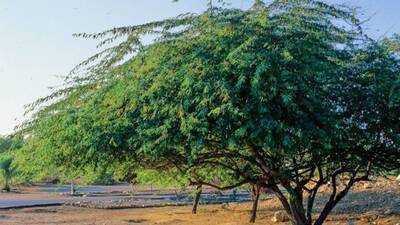
A thorny tree species that was introduced to India in 1876 as a solution to the colonial famines continues to divide conservationists, researchers, and villagers to this day. The species was brought in as a solution to the recurring droughts in the region, but more than a century later, it is considered an invasive species that needs to be eradicated.
A solution to a drought problem
The late 19th century was marked by severe famines in India, particularly in Rajasthan, Gujarat, and South India. The government was desperate to find a solution to the recurring droughts and decided to introduce a foreign species that could thrive on India’s arid soil.
Prosopis juliflora was the species of choice, and it was brought from South America. It was a tall, thorny tree that could grow in the driest conditions with minimal human intervention.
What research says about Prosopis juliflora
According to research conducted by S.K. Saxena of the Central Arid Zone Research Institute, Prosopis juliflora was first introduced to the Indian subcontinent in 1877 in the Sindh region. Later, it was planted throughout India’s arid and semi-arid regions. His research indicates that it was a species that could withstand the harsh conditions of the Thar Desert and had naturalized itself in rocky, sandy, and wastelands. It was used as a fuelwood by the poor and became a popular hedge in many parts of Tamil Nadu, Gujarat, Haryana, and Karnataka. It is reported to have replaced native plants such as Prosopis cineraria and Acacia spp., and it contributed to desertification control.
Prosopis juliflora has been a blessing for many. It is a reliable source of fuelwood and fodder and has provided livelihood to many people in the form of charcoal production. It is a hardy species that can withstand the harshest of conditions and has been a reliable source of income for the people of the Thar Desert.
The species has proven to be invasive and has been reported to affect the local ecosystem adversely. It has encroached upon many wastelands, degraded the quality of groundwater due to its high water consumption, and created barriers to free grazing. It has also proven to be harmful to humans and animals due to its sharp thorns.
Prosopis juliflora has proven to be a double-edged sword. It has been beneficial to many but has also caused adverse effects to the environment. It is currently the subject of a heated debate among conservationists, ecologists, and policymakers. Some argue that it should be eradicated due to its adverse effects on the environment, while others believe it should be left alone due to its economic importance.
It has been more than a century since Prosopis juliflora was introduced to India. It has been a subject of controversy and has caused adverse effects to the environment. However, it has also been a source of livelihood for many and has withstood the test of time. It remains to be seen if it will continue to thrive in the years to come.
A solution to a drought problem
The late 19th century was marked by severe famines in India, particularly in Rajasthan, Gujarat, and South India. The government was desperate to find a solution to the recurring droughts and decided to introduce a foreign species that could thrive on India’s arid soil.
Prosopis juliflora was the species of choice, and it was brought from South America. It was a tall, thorny tree that could grow in the driest conditions with minimal human intervention.
What research says about Prosopis juliflora
According to research conducted by S.K. Saxena of the Central Arid Zone Research Institute, Prosopis juliflora was first introduced to the Indian subcontinent in 1877 in the Sindh region. Later, it was planted throughout India’s arid and semi-arid regions. His research indicates that it was a species that could withstand the harsh conditions of the Thar Desert and had naturalized itself in rocky, sandy, and wastelands. It was used as a fuelwood by the poor and became a popular hedge in many parts of Tamil Nadu, Gujarat, Haryana, and Karnataka. It is reported to have replaced native plants such as Prosopis cineraria and Acacia spp., and it contributed to desertification control.
Prosopis juliflora has been a blessing for many. It is a reliable source of fuelwood and fodder and has provided livelihood to many people in the form of charcoal production. It is a hardy species that can withstand the harshest of conditions and has been a reliable source of income for the people of the Thar Desert.
The species has proven to be invasive and has been reported to affect the local ecosystem adversely. It has encroached upon many wastelands, degraded the quality of groundwater due to its high water consumption, and created barriers to free grazing. It has also proven to be harmful to humans and animals due to its sharp thorns.
Prosopis juliflora has proven to be a double-edged sword. It has been beneficial to many but has also caused adverse effects to the environment. It is currently the subject of a heated debate among conservationists, ecologists, and policymakers. Some argue that it should be eradicated due to its adverse effects on the environment, while others believe it should be left alone due to its economic importance.
It has been more than a century since Prosopis juliflora was introduced to India. It has been a subject of controversy and has caused adverse effects to the environment. However, it has also been a source of livelihood for many and has withstood the test of time. It remains to be seen if it will continue to thrive in the years to come.
READ NEXT
-
‘It is not FIFA’s to sell’ - Gianni Infantino’s $20 billion World Cup power move puts football’s soul on the market - and makes resistance too costly

-
Lovepreet''s record silver headlines day; Neeraj, two others reach javelin final

-
Son of a tailor, Punjab''s Lovepreet wins silver with CWG ''snatch'' record

-
Bengaluru Restaurants' Pushback Gives Rapido's Ownly An Opening Against Swiggy, Zomato

-
Ajinkya Rahane Retires: A Look Back at His Impact on Indian Cricket