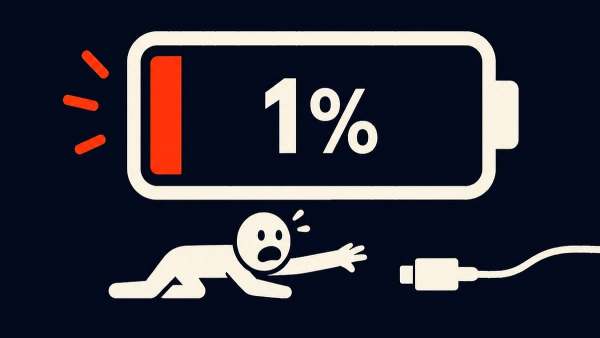
Despite record-large batteries, phones still struggle to last a full day, as rising screen time, 5G connectivity, and always-on AI features outpace battery gains.
Batteries have never been bigger, yet the low-battery warning has never felt more familiar. Global average smartphone screen time now sits at roughly 4 hours and 37 minutes a day, according to data.ai's State of Mobile tracking, and that figure keeps climbing even as manufacturers pack in ever-larger cells. Battery anxiety, the quiet dread of watching a charge drop hour by hour, has crept back into daily life for a simple reason: usage has grown faster than capacity ever could.
Bigger batteries, bigger appetite
Counterpoint Research found that the average smartphone battery capacity reached 5,291mAh in January 2026, a roughly 400mAh year-on-year jump attributed largely to the spread of silicon-carbon battery technology pioneered by Chinese brands. On paper, that should translate into noticeably longer battery life. In practice, most users are not seeing anywhere near a proportional gain, because the very features drawing people to their phones for longer stretches are also the ones draining them fastest.
Where all that screen time is actually going
-
पूरन की धमाकेदार बल्लेबाज़ी से MI London ने The Oval पर सात विकेट से जीत दर्ज की

-
Pooran Blazes MI London to Seven-Wicket Victory at The Oval

-
Gulveer Singh Makes History with Silver Medal at Commonwealth Games 2026

-
Bhai Tera Star Hai: A Comedy That Misses the Mark

-
Prime Minister Modi Criticized Over NEET Protests and Social Media Engagement