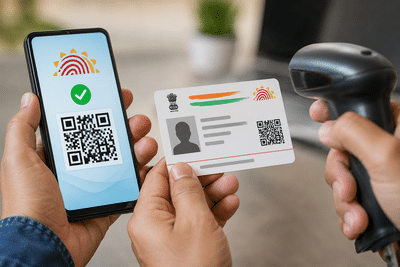
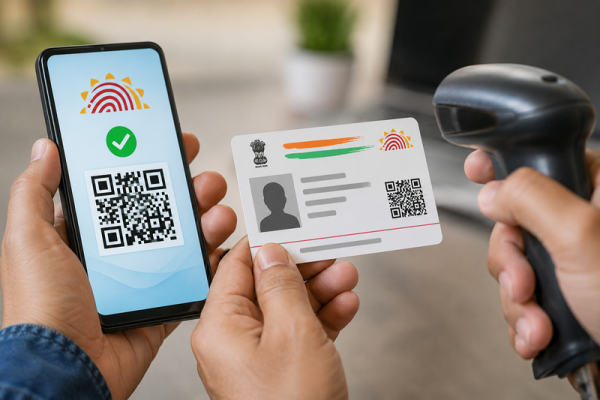
Aadhaar has become one of the most important identity documents in India, playing a key role in everything from opening bank accounts and applying for government schemes to purchasing SIM cards, checking into hotels, and accessing financial services. As digital services continue to expand, concerns around privacy and unnecessary sharing of personal information have also increased.
To address these concerns, the Unique Identification Authority of India (UIDAI) offers Aadhaar Offline Verification, a secure and privacy-focused system that enables identity verification without requiring an active internet connection during the verification process.
Here's everything you need to know about how Aadhaar Offline Verification works, its benefits, and where it can be used.
What Is Aadhaar Offline Verification?Aadhaar Offline Verification is a secure identity authentication system that allows organizations to verify a person's Aadhaar details without accessing the UIDAI database online.
Instead of sharing a photocopy of your Aadhaar card or exposing unnecessary personal information, only the data required for verification is shared—and that too only with your consent.
The system has been designed to improve user privacy while making the verification process faster and more secure.
Why Did UIDAI Introduce This Feature?In the past, many organizations required customers to submit photocopies of their Aadhaar cards. This often resulted in sensitive personal information being stored in multiple locations, increasing the risk of misuse or unauthorized access.
To minimize these risks, UIDAI introduced Aadhaar Offline Verification, enabling individuals to prove their identity without revealing more information than necessary.
The feature reduces paperwork while strengthening privacy protection.
How Does Aadhaar Offline Verification Work?The verification process is based entirely on user consent.
Whenever an organization needs to verify your identity, you can share your Aadhaar details using approved offline verification methods provided by UIDAI. The organization receives only the information necessary to confirm your identity.
The process is designed to prevent unnecessary sharing of Aadhaar information while maintaining the authenticity of the verification.
Two Official Methods of Offline VerificationUIDAI currently supports two primary offline verification options.
1. Secure QR CodeThe Aadhaar card and the official Aadhaar app include a Secure QR Code that contains digitally signed information.
Authorized organizations can scan this QR code to verify identity quickly without accessing online databases. Since the information is digitally signed by UIDAI, it can be authenticated securely.
This method is fast, simple, and widely used for in-person verification.
2. Paperless Offline e-KYCThe second method involves a digitally signed XML file generated through UIDAI's Aadhaar services.
The user downloads the encrypted XML file and shares it with the requesting organization. The service provider then verifies the digitally signed information without requiring online authentication.
This paperless approach enhances security while eliminating the need for physical document submission.
Is Internet Required?One of the biggest advantages of Aadhaar Offline Verification is that the actual identity verification process does not require an internet connection.
However, internet access may be needed initially for:
- Downloading the Aadhaar app
- Updating the application
- Generating certain offline verification files
- Accessing UIDAI services when required
Once the required offline credentials have been generated, verification itself can be completed without internet connectivity.
What Is the Aadhaar App?The official Aadhaar app developed by UIDAI provides access to several Aadhaar-related services from a smartphone.
Using the app, users can:
- View Aadhaar profile information
- Access the Secure QR Code
- Generate offline e-KYC files
- Use various Aadhaar verification services
- Manage identity-related features securely
The application is available through the official mobile app stores.
How to Set Up the Aadhaar AppGetting started is simple:
Always ensure that you download only the official UIDAI application to avoid security risks.
How Secure Is the System?UIDAI has designed the offline verification framework with multiple privacy and security measures.
Some of its key safeguards include:
- User consent before information sharing
- Digitally signed verification data
- Limited disclosure of personal information
- Secure QR Code technology
- Paperless verification process
These measures significantly reduce the possibility of identity misuse while giving users greater control over their personal information.
What Is an OVSE?An Offline Verification Seeking Entity (OVSE) is an organization registered under UIDAI's framework to perform Aadhaar Offline Verification.
OVSEs may include:
- Government departments
- Banks
- Financial institutions
- Fintech companies
- Insurance providers
- Private organizations authorized under UIDAI guidelines
Only eligible entities can use the offline verification mechanism in accordance with UIDAI regulations.
Growing Adoption Across SectorsAs India's digital ecosystem continues to expand, Aadhaar Offline Verification is becoming increasingly common across multiple industries.
It is being adopted in sectors such as:
- Banking and financial services
- Healthcare
- Hospitality
- Government services
- Education
- Digital payments
- Travel and identity verification
The paperless system helps organizations verify identities more efficiently while offering stronger privacy protection for users.
Final TakeawayAadhaar Offline Verification provides a secure, privacy-friendly alternative to sharing physical Aadhaar copies or exposing unnecessary personal information. By using Secure QR Codes or Paperless Offline e-KYC, individuals can verify their identity quickly while maintaining greater control over their data.
As more banks, government agencies, hospitals, hotels, and financial service providers adopt this technology, Aadhaar Offline Verification is expected to become an increasingly important part of India's secure digital identity ecosystem.
-
Eddie Howe poised for surprise Newcastle departure with Matthias Jaissle lined up to take over

-
Sheikh Hasina To Face Arrest The Moment She Returns, Says Bangladesh Minister

-
Anti-Paper Leak Bill Clears Parl As Rajya Sabha Passes It Amid Opposition Walkout

-
PM Modi Congratulates Gavit, Basil And Sreeshankar For Commonwealth Games Medal Wins

-
Man jailed for life for killing lover’s mother in Hyderabad