
At the ASEANext Forum 2026 in Singapore on July 30, Koh joined a panel discussion on “Wealth, Values and Generational Transition”, where business leaders examined how family enterprises can navigate succession amid Asia’s growing intergenerational wealth transfer.
Following the session, Koh spoke with Read International about preparing the next generation of leaders, balancing legacy with innovation, strengthening family governance and the growing opportunities for private banking in Vietnam.
|
Angela Koh, Head of Wealth Planning and Family Office Advisory Services at UOB Private Bank. Photo courtesy of the bank |
In many family businesses, succession is often associated with choosing the next leader. From your experience, what should families actually look for when preparing the next generation?
Succession is not about choosing an heir. It is about choosing the right person. Families should not assume the eldest child will automatically become the next leader. Instead, they should identify someone with the ability to develop into an effective leader, the values to become a responsible owner, and the commitment to serve as a steward of the family’s wealth.
Leadership requires qualities that go beyond technical expertise. Future leaders should demonstrate sound judgment, emotional maturity and resilience. Business will inevitably face setbacks, and how someone responds to failure often reveals more about their leadership potential than success.
It is also important to distinguish between leadership and ownership. These are different roles, and some families deliberately separate them. Someone may serve as chief executive without becoming chair of the family board, creating checks and balances while allowing family members to contribute according to their strengths.
Beyond leadership and ownership, families should instill stewardship. The next generation should understand that they are custodians of the family’s financial and social capital. Their responsibility is not simply to inherit wealth, but to preserve and grow it for future generations. Stewardship also extends beyond the family. Looking after employees, investing in communities and creating broader social value can strengthen both the business and the family’s long-term legacy.
Not every member of the next generation will become the CEO. How can families keep everyone engaged and prevent succession from becoming a winner-takes-all process?
Every family member has different strengths and talents. One of the biggest mistakes families make is treating succession as though there can only be one winner. In reality, the objective should be to ensure everyone has a meaningful role to play.
The person with the strongest operational capabilities may lead the core business. Someone with an entrepreneurial mindset may be encouraged to build a new business line, while others may contribute through philanthropy or other family initiatives.
For entrepreneurial family members, developing ventures outside the core business can be beneficial. This creates a “sandbox” where new ideas can be tested without exposing the family’s main business to unnecessary risk. If a venture succeeds, it creates diversification and new growth opportunities. If it fails, it does not affect the balance sheet of the core business.
As families expand across generations, keeping everyone engaged becomes even more important. For example, a family with three children may eventually include nine grandchildren, all of whom need to feel they have purpose and value. When people no longer feel involved or appreciated, conflicts often begin to emerge.
Younger generations often bring different ambitions and ideas. How can families balance preserving legacy while giving successors the freedom to innovate?
Legacy businesses constantly face the challenge of balancing tradition with innovation, whether through digital transformation, expansion into new markets or the launch of new business lines.
The foundation for achieving that balance is governance. Families should establish clear rules and governance structures before disagreements arise. I always encourage clients to include independent directors or advisers rather than relying solely on family members. Independent voices can facilitate discussions objectively and help prevent differing views from reaching a deadlock.
Equally important is having a clear process for evaluating new ideas. Families should agree in advance on how proposals are presented, how opportunities are assessed, how much capital is allocated and how decisions are made. When everyone accepts the process beforehand, even unsuccessful investments become shared decisions rather than sources of blame.
We often describe these projects as “tuition fees”. Sometimes allowing the next generation to experiment with new ventures is the best way for them to build confidence, gain experience and develop a sense of purpose. Success strengthens both the individual and the family’s business portfolio, while failure provides valuable lessons without putting the core business at risk.
Beyond governance, what structures can help families preserve both business continuity and family harmony over the long term?
Maintaining family unity is one of the most important objectives for any business family. Families can never agree on everything, but disagreements should not spill into the boardroom. That is why we often recommend establishing two separate governance bodies.
The first is a family council, which focuses on family matters such as succession, values, governance and determining responsibilities within the family. The second is the company’s board, which is responsible for business decisions.
Discussions, debates and disagreements should take place within the family council. Once the family reaches a decision, family representatives should present a unified position when serving on the company’s board or the boards of businesses in which they invest.
Separating family governance from business governance allows companies to operate effectively while helping preserve family relationships over the long term.
Vietnam’s family enterprises are growing rapidly. Do you see Vietnam as a strategic market for private banking, and how does UOB Private Bank differentiate its wealth management and family office advisory services?
As businesses grow, entrepreneurs initially reinvest most of their profits into the company. Over time, however, they begin to recognize the importance of diversification rather than concentrating all of their wealth in a single business, industry or market. That is one reason demand for wealth management has grown significantly in recent years.
As Vietnam continues to develop, we expect demand for private banking to become increasingly sophisticated. Many families will begin by investing domestically before gradually seeking greater diversification across international financial center such as Singapore and Hong Kong.
Education is another strength that stands out in Vietnam. Families place tremendous importance on investing in the next generation, and that commitment creates a strong foundation for economic growth. Well-educated entrepreneurs and business owners are ultimately what drive long-term prosperity.
Vietnam is a strategic market within UOB’s ASEAN footprint. What differentiates UOB Private Bank is that we do much more than manage private wealth through our One Bank proposition. We help clients structure their wealth, establish family constitutions, advise on succession planning and governance, while also supporting their businesses through our corporate banking capabilities and foreign direct investment ecosystem. For many entrepreneurial families, growing the business remains the foundation of long-term wealth creation.
Recognizing Vietnam and ASEAN’s growing importance, UOB Private Bank has restructured towards a more geographically-anchored model with dedicated coverage across our key markets. This sharper market focus enables us to deepen local insights and deliver more tailored advice and solutions.
Ultimately, helping family businesses continue to grow is just as important as preserving the wealth they create. The business is the engine that fuels family wealth, and ensuring its continuity is fundamental to successful succession planning.
-
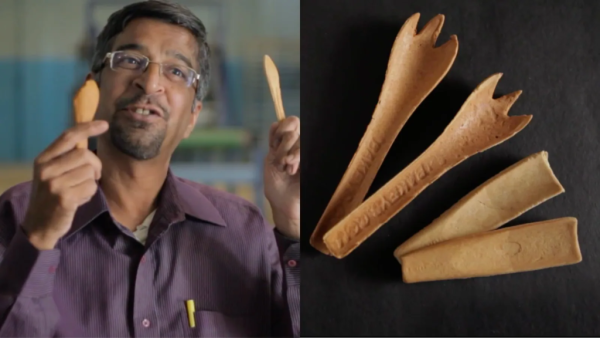
Indian Scientist Created Worlds First Edible Spoon To Replace Plastic, Its Rs 2 Crore Business Now
-
From kaftan tops to skirt jackets, take inspiration from these 2 summer looks of Khushi Kapoor for day outings and recreate them like this

-
Is Protein Deficiency Causing Your Hair Loss? 5 Warning Signs and Simple Home Remedies

-
Troubled by itchy scalp and dandruff this monsoon? Learn preventative measures from Dr. Hansa Yogendra.

-
Who’s smarter about love, money, and career? Learn about these surprising differences between the two generations.