Top News

Supreme Court Recommends Pilot Project Linking Petrol To Vehicle Insurance
Sagarika Chakraborty | August 5, 2026 12:41 AM CST
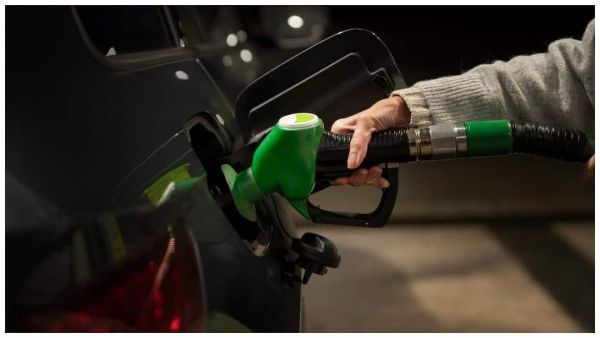
In a significant push towards improving road safety, the Supreme Court has recommended that the Insurance Regulatory and Development Authority (IRDA) and the Ministry of Road Transport and Highways (MoRTH) develop a pilot project linking a vehicle's insurance status with fuel purchases.

The recommendation aims to ensure that vehicles without valid third-party insurance could be refused fuel at petrol pumps until the mandatory insurance is obtained.

A Bench of Justice Sanjay Karol and Justice Prashant Kumar Mishra issued a series of directions while hearing a case concerning third-party motor insurance and insurance coverage for vehicle occupants.

'No Insurance, No Fuel' Recommendation

The court clarified that its direction was a recommendation and not a binding order.

"As deliberated upon in Court, the IRDA in consultation with the MoRTH, to deliberate and evolve a pilot-project whereby fuel for vehicles to be linked with valid insurance status. In the absence thereof, the vehicle concerned would be refused fuel at petrol pumps, until such time that valid insurance is obtained," the Bench said.

In the judgment authored by Justice Karol, the court said such a system would serve two purposes. It would help identify uninsured or unregistered vehicles and encourage owners to obtain valid insurance.

The Bench added that such projects would improve compliance with Section 146 of the Motor Vehicles Act, 1988, which makes third-party insurance mandatory for all vehicles.

The court also noted that the Ministry of Petroleum and Natural Gas had "in principle, no objection" to the proposal.

ANPR Cameras To Be Used In Pilot Project

The Supreme Court said the pilot project could be implemented using Automatic Number Plate Recognition (ANPR) cameras.

It also directed the Ministry of Road Transport and Highways to implement pilot projects on selected highway corridors that would replace the process of stopping vehicles at toll plazas with automatic vehicle detection systems.

According to the Bench, reducing queues at toll plazas could also help lower the number of accidents on national highways.

Insurance Companies Liable Under Comprehensive Policies

The judgment arose from a compensation dispute involving one T. Ramu, who died after his Maruti 800 was hit by an unidentified lorry while returning from Tirupati to his village.

His family sought Rs 10 lakh in compensation before the Motor Accident Claims Tribunal, stating that he was engaged in the seafood business, earned at least Rs 1 lakh annually, and was the family's sole breadwinner.

The tribunal rejected the claim after accepting National Insurance Company's argument that no additional premium had been paid to cover the owner's personal risk.

The High Court later awarded the family Rs 10,00,500, along with 7.5% annual interest, holding that the comprehensive insurance policy also covered the owner.

The Supreme Court upheld the High Court's decision, relying on an IRDA circular dated November 16, 2009, and held that insurance companies are liable to compensate occupants travelling in a vehicle covered under a comprehensive insurance policy.

The court also directed insurance companies to display the benefits of comprehensive motor insurance policies in an easy-to-read format on their websites.

Third-Party Insurance Period Extended

The Supreme Court further directed that third-party insurance coverage should be extended by one year.

It said that new cars must now be covered by four years of third-party insurance, while new two-wheelers must have six years of third-party insurance.

The Bench directed the IRDA to issue the necessary directions immediately.

Other Key Directions Issued By The Court

The Supreme Court also issued several additional directions to improve compliance with mandatory motor insurance and strengthen road safety:

  • ANPR cameras deployed on highways should be integrated with data from the Insurance Information Bureau and the VAHAN portal to automatically issue e-challans to uninsured vehicles.
  • State Police should be provided with handheld devices or mobile applications linked to the Insurance Information Bureau and VAHAN database to verify a vehicle's insurance status in real time and issue challans where required.
  • Strict compliance should be ensured once amendments to Section 196 of the Motor Vehicles Act are notified.
  • The IRDA should introduce a four-layer policy structure for private vehicles, comprising:
    • Third-party insurance as the mandatory base policy.
    • Optional cover for occupants or pillion riders.
    • Personal accident cover for the owner, driver and occupants.
    • Own damage cover for the insured vehicle.
  • Buyers should receive a customer option form, both online and offline, allowing them to choose optional insurance covers.
  • The IRDA, General Insurance Corporation (GIC) and insurance companies should prepare uniform policy wordings for optional insurance covers.
  • A consumer-friendly information sheet explaining mandatory and optional insurance coverage should be made compulsory during the sale of motor vehicle insurance.
  • Insurance companies should prominently display the benefits of comprehensive motor insurance policies on their websites.
  • A separate pilot project should allow citizens to verify a vehicle's insurance status, including whether it has only mandatory third-party insurance or a comprehensive policy, enabling them to identify and report uninsured vehicles.
ALSO READ: 


READ NEXT
Cancel OK