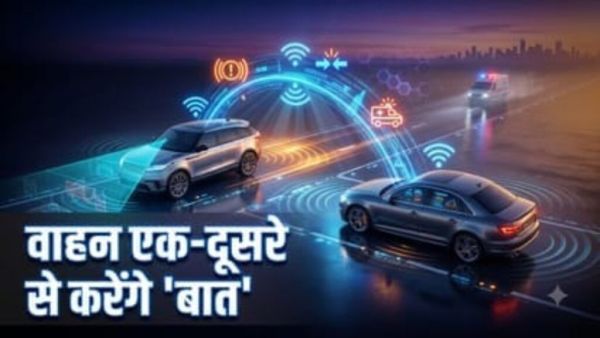
Automobile Desk – देश में सड़क हादसों की बढ़ती संख्या पर प्रभावी अंकुश लगाने और ड्राइविंग को अधिक सुरक्षित बनाने के उद्देश्य से केंद्र सरकार एक दूरगामी तकनीक लागू करने जा रही है। सड़क परिवहन एवं राजमार्ग मंत्रालय (MoRTH) ने ‘व्हीकल-टू-व्हीकल’ (V2V) कम्युनिकेशन सिस्टम को भारतीय सड़कों पर उतारने का खाका तैयार कर लिया है। इस वायरलेस तकनीक के माध्यम से भविष्य में वाहन आपस में रियल-टाइम डेटा साझा करेंगे, जिससे सड़क पर संभावित खतरों की जानकारी ड्राइवर को पहले ही मिल जाएगी।
क्या है व्हीकल-टू-व्हीकल (V2V) तकनीक?
व्हीकल-टू-व्हीकल यानी V2V एक अत्याधुनिक वायरलेस नेटवर्किंग सिस्टम है। इसके तहत सड़क पर चल रहे वाहन सीधे एक-दूसरे को अपनी गति, सटीक लोकेशन, यात्रा की दिशा, ब्रेकिंग स्टेटस और एक्सीलरेशन जैसी अहम जानकारियां भेजेंगे।
यदि आपके आगे चल रहे किसी वाहन ने अचानक तेज ब्रेक लगाया है, या मोड़ के उस पार कोई गाड़ी गलत दिशा में खड़ी है जो ड्राइवर को सीधे तौर पर दिखाई नहीं दे रही, तो यह सिस्टम तुरंत पीछे आ रही गाड़ियों को अलर्ट जारी कर देगा। इससे चालकों को संभलने का पर्याप्त समय मिलेगा और टकराने या श्रृंखला-बद्ध हादसों की आशंका बेहद कम हो जाएगी।
What is vehicle-to-vehicle (V2V) technology?
Vehicle-to-vehicle (V2V) is a state-of-the-art wireless networking system. Under this technology, vehicles will directly transmit vital information to each other, such as their speed, exact location, direction of travel, braking status, and acceleration.
If a vehicle ahead of you suddenly brakes, or a vehicle parked on the wrong side of a curve is not directly visible to the driver, this system will immediately alert vehicles behind. This will give drivers ample time to react, significantly reducing the risk of collisions or chain-link accidents.
Plan to be implemented in two phases
The Ministry has issued a draft notification amending the Central Motor Vehicle Rules (CMVR), 1989, to ensure smooth adoption of this technology. To give industry and vehicle manufacturers adequate time to prepare, the implementation will be phased in:
Phase 1 (October 1, 2027): The rule will apply to L, M, and N category vehicles manufactured from this date that will be equipped with the V2V system. These vehicles will be required to comply with the AIS-230 safety standard.
Phase Two (October 1, 2028): From this date, new vehicles in all categories (two-wheelers, cars, commercial vehicles, buses, and trucks) will be required to include V2V communication systems.
Spectrum and Licensing Relief
To ensure seamless operation of this entire system, the 5.875 GHz to 5.925 GHz frequency band has been selected. The Department of Telecommunications (DoT) has placed this frequency band in the license-free category. This will make it easier for automobile companies to integrate the technology into their vehicles without any complex paperwork.
How different is this technology from ADAS?
Many modern vehicles currently feature Advanced Driver Assistance Systems (ADAS), which rely primarily on cameras, radar, and on-board sensors. However, ADAS has its limitations—its sensors often fail to respond in a timely manner in fog, heavy rain, or blind spots.
V2V technology connects directly to the other vehicle’s data network. It receives warnings directly from the other vehicle, regardless of visibility or distance, making it more accurate and safer than ADAS.

दो चरणों में लागू होगी योजना
मंत्रालय ने इस तकनीक को सुचारू रूप से अपनाने के लिए सेंट्रल मोटर व्हीकल रूल्स (CMVR), 1989 में संशोधन का ड्राफ्ट नोटिफिकेशन जारी किया है। उद्योग जगत और वाहन निर्माताओं को तैयारी का पूरा समय देने के लिए इसे चरणबद्ध तरीके से लागू किया जाएगा:
पहला चरण (1 अक्टूबर 2027): इस तारीख से निर्मित होने वाले L, M और N श्रेणी के उन वाहनों पर नियम लागू होगा जिनमें V2V सिस्टम लगाया जाएगा। इन वाहनों को ‘AIS-230’ सुरक्षा मानक का पालन करना होगा।
दूसरा चरण (1 अक्टूबर 2028): इस तारीख से इन सभी श्रेणियों (टू-व्हीलर, कार, कमर्शियल वाहन, बस और ट्रक) के नए वाहनों में V2V कम्युनिकेशन सिस्टम अनिवार्य रूप से शामिल करना होगा।
स्पेक्ट्रम और लाइसेंसिंग में राहत
इस पूरे सिस्टम को निर्बाध रूप से संचालित करने के लिए 5.875 GHz से 5.925 GHz फ्रीक्वेंसी बैंड का चयन किया गया है। वाहन कंपनियों के लिए राहत की बात यह है कि दूरसंचार विभाग (DoT) ने इस फ्रीक्वेंसी बैंड को लाइसेंस-मुक्त श्रेणी में रखा है। इससे ऑटोमोबाइल कंपनियों को बिना किसी जटिल कागजी प्रक्रिया के तकनीक को अपने वाहनों में इंटीग्रेट करने में आसानी होगी।
ADAS से कितनी अलग है यह तकनीक?
वर्तमान में कई आधुनिक गाड़ियों में एडवांस्ड ड्राइवर असिस्टेंस सिस्टम (ADAS) देखने को मिलता है, जो मुख्य रूप से कैमरों, रडार और ऑन-बोर्ड सेंसर पर निर्भर करता है। हालांकि, ADAS की अपनी सीमाएं हैं—जैसे धुंध, तेज बारिश या फिर किसी मोड़ के पीछे (ब्लाइंड स्पॉट) की स्थिति में इसके सेंसर कई बार समय पर प्रतिक्रिया नहीं दे पाते।
V2V तकनीक सीधे दूसरी गाड़ी के डेटा नेटवर्क से जुड़ती है। यह किसी भी विजिबिलिटी बाधा या दूरी की परवाह किए बिना सीधे दूसरी गाड़ी से चेतावनी प्राप्त कर लेती है, जिससे यह ADAS की तुलना में अधिक सटीक और सुरक्षित साबित होती है।
-
Enzo Maresca gives update on Manchester City’s move for Enzo Fernandez ahead of Chelsea’s deadline

-
Liverpool and Manchester United told €60 million will not be enough to sign Lamine Camara

-
Dipke to launch ‘School Thik Karo’ Campaign for govt schools

-
NMDC Q1 profit rises 2 pc to Rs 2,007 crore, output up 26 pc

-
Kharge, Rahul Gandhi Skip Red Fort Independence Day Event For Second Year In A Row