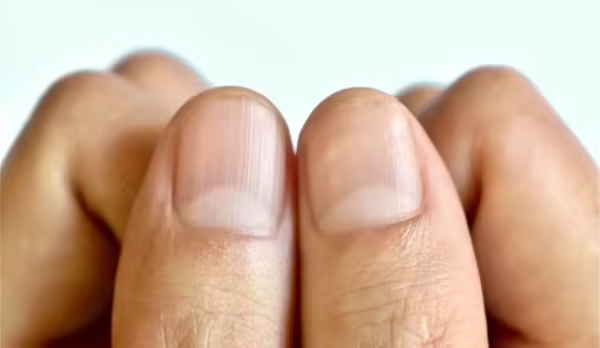
Every small part of our body reveals deep secrets to health, and nails are the most important among them. If you look carefully at the nails of your hands, then a white colored half moon like shape is visible in their lower part (just above the cuticle). In medical science, this half moon is called ‘Lunula’, which means ‘small moon’ in Latin. Lunula is mainly the visible part of the matrix of the nail, from where new nail tissues are formed.
According to health experts and dermatologists, this tiny half-moon isn’t just a part of the nail’s structure, but it also provides a direct indication of the internal health of your heart, kidneys, liver, and blood circulation. The color, shape, or sudden disappearance of the lunula can help identify several serious health conditions. Let’s explore the connection between this half-moon on your nail and our health.
What should be the normal and healthy size of the lunula?
In a healthy person’s nails, the lunula is pale white or milky in color and is most prominent and largest on the thumb. Its size gradually decreases on the index, middle, and ring fingers, while it is very small or sometimes not visible on the pinky.
If the lunula covers about 1/5th of your nail’s total size and is a clear white color, it indicates that your blood circulation, oxygen levels, and metabolism are in good shape.
Changing the color of the lunula: what disease does it indicate?
According to experts, if the half-moon on your nails starts to change color from white to anything else, it’s not something to ignore. Changing colors of the lunula can indicate internal organ problems:
Blue or Purple Lunula: If the lunulae appear blue or purple, it’s a sign of cyanosis. This may be associated with heart disease, lung problems (COPD, asthma), or Wilson’s disease (impaired copper metabolism).
Red lunulae: Redness of the lunulae is a sign of inflammation or heart disease. It can be an early sign of heart failure, coronary artery disease, or autoimmune diseases like psoriasis.
Becoming completely transparent or brown instead of white: If the lunula appears very dark or brown, it may indicate chronic kidney disease or chronic renal failure.
Black Lunula: This is very rare and is seen in some severe cases of heavy metal poisoning or cancer.
Missing or oversized lunula: What does medical science say?
Too small, missing, or excessively large lunulae on the nails can also indicate internal imbalances in the body:
1. Complete disappearance of the lunula from the nails (Anonychia)
If the lunulae have completely disappeared from all of your nails, it is a sign of several nutritional deficiencies and diseases:
Anemia and iron deficiency: When hemoglobin and red blood cells in the body decrease, not enough oxygen reaches the nails, due to which the lunula becomes invisible.
Severe Vitamin B12 Deficiency: Deficiency of Vitamin B-12, which is responsible for neurological and blood formation, can also cause the lunula to disappear.
Thyroid imbalance (Hypothyroidism): Slowed thyroid gland function can cause a slower metabolism and a smaller or missing lunula.
Kidney and liver sluggishness: When the kidneys or liver are unable to filter toxins properly, it affects the growth of nails and lunula.
2. Macrolunula is excessively large
If the lunula covers more than half of your nail, it could be a sign of excessive strain on the cardiovascular system, low blood pressure (hypotension), or hyperthyroidism. It can also sometimes be seen in athletes or people who do a lot of physical work.
Expert advice: When to see a doctor?
Health experts say that if the lunula on your thumb or fingernail is very small or nonexistent from birth, there’s no cause for concern. Everyone’s anatomy is different.
However, if your nail lunula suddenly disappears, changes color to blue, red, or brown, or your nails develop clubbing, don’t ignore it. This could be an early warning sign of a major organ problem—the heart, kidneys, or liver. In such a situation, consult your doctor immediately and get a blood test, hemoglobin, vitamin levels, and kidney/heart function tests.
-
Harry Kane to receive Golden Shoe award again

-
The highest-paid Premier League XI for 2026-27: Haaland, Saka, Fernandes and more

-
Bureaucratic reshuffle: Senior IAS officer Deepti Gaur Mukerjee named new Higher Education Secy

-
Who is Louis Page? Leicester wonderkid compared to ‘the next Jude Bellingham’ and a Manchester United fan

-
Laurie Whitwell reveals Manchester United plan to sign ‘excellent’ LaLiga talent Jorge Salinas with €16m release clause