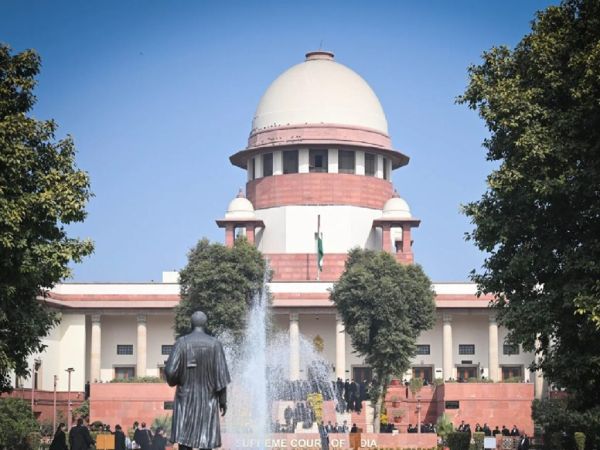
In a landmark legislative development aimed at tackling the staggering backlog of pending cases across the country, the Parliament has successfully cleared a crucial bill to increase the judicial strength of the apex court. Following its passage in the Lok Sabha, the Rajya Sabha on Wednesday approved the Supreme Court (Number of Judges) Amendment Bill, 2026, through a voice vote after a detailed discussion. With this amendment, the total sanctioned strength of judges in the Supreme Court, including the Chief Justice of India, has officially been hiked from the previous 34 to 38.
Legislative Battleground: Rajya Sabha Clears Bill Amid High-Voltage Uproar
The passage of the bill in the Upper House was far from smooth, witnessing intense political friction and continuous protests from opposition benches. Following earlier adjournments, proceedings resumed at 2 PM on Wednesday when Union Law Minister Arjun Ram Meghwal formally introduced the legislation for debate. Members belonging to various opposition parties, including the Congress, raised vociferous slogans over un political and administrative issues. Despite repeated appeals from Deputy Chairman Harivansh urging protesting MPs to return to their seats and engage constructively on the crucial judicial reform, the uproar persisted, prompting a brief walkout by several opposition lawmakers before members from parties like the TMC, DMK, AAP, RJD, CPI(M), and JMM returned to participate in the discussions.
Law Minister Defends Reform to Expedite Justice Delivery
Replying to the parliamentary debate, Law Minister Arjun Ram Meghwal emphasized that expanding judicial capacity forms a core pillar of the government’s ongoing judicial sector reforms. He asserted that increasing the number of judges will significantly accelerate case disposal rates and provide much-needed relief to litigants waiting years for justice. Highlighting the historical evolution of the apex court, Meghwal noted that when the Supreme Court was established in 1950, it started with a modest strength of just eight judges, including the Chief Justice. Prior to this amendment, the last major hike occurred in 2019, when the judge strength excluding the CJI was raised from 30 to 33.
Opposition Raises Concerns Over Diversity, Collegium, and Lower Courts
During the floor debate, while opposition and treasury members alike acknowledged the critical necessity of judicial expansion, several leaders raised pressing systemic concerns. Lawmakers from the Aam Aadmi Party and RJD strongly advocated for enhanced representation of underprivileged communities, Scheduled Castes, and Scheduled Tribes within the judiciary, with some members calling for an all-India judicial examination system. Countering certain allegations, Parliamentary Affairs Minister Kiren Rijiju clarified that judge appointments are processed strictly through the collegium system rather than direct government appointments. Meanwhile, other opposition MPs flagged critical issues such as the low representation of women judges in High Courts, lingering vacancies across lower courts, and procedural hastiness in bringing forward the legislation.
-
Indian Scientist Created Worlds First Edible Spoon To Replace Plastic, Its Rs 2 Crore Business Now

-
From kaftan tops to skirt jackets, take inspiration from these 2 summer looks of Khushi Kapoor for day outings and recreate them like this

-
Is Protein Deficiency Causing Your Hair Loss? 5 Warning Signs and Simple Home Remedies

-
Troubled by itchy scalp and dandruff this monsoon? Learn preventative measures from Dr. Hansa Yogendra.

-
Who’s smarter about love, money, and career? Learn about these surprising differences between the two generations.