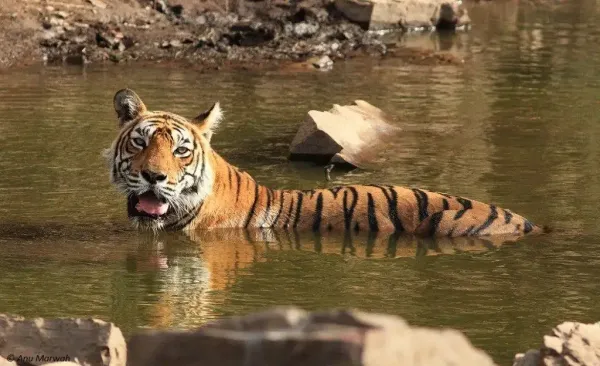
Rajasthan was once known for its deserts and forts, but today, this state is among the world’s most renowned tiger reserves. Much of this credit goes to the Ranthambore Tiger Reserve , which many call Rajasthan’s “tiger factory .” While tigers were once threatened, the tigers originating from Ranthambore have breathed new life into many of Rajasthan’s forests.
Tiger reserve converted from hunting ground
The Ranthambore forest was once the private hunting grounds of the Maharajas of Jaipur. Thanks to the royal protection, tigers survived here, even as their numbers rapidly declined in many parts of the country. When the Indian government launched Project Tiger in 1973 , Ranthambore was included among the first nine tiger reserves.
At the inception of Project Tiger, the tiger situation in Ranthambore was extremely dire. Through conservation efforts, hunting bans, forest protection, and scientific monitoring, tiger numbers gradually began to increase.
Machli became the ‘mother’ of tigers
The most prominent figure in Ranthambore’s story is Machli . This tigress was one of the world’s most famous. She was named Machli because of the fish-like markings on her face.
Machli gave birth to several cubs, and her offspring played a major role in increasing the tiger population of Ranthambore. She was also known by names such as “Rani of Ranthambore” and “Queen of Ranthambore.”
Why is it called Tiger Factory?
Ranthambore’s greatest strengths are its successful breeding rate and strong tiger lineage. Many tigers born here have been relocated to other reserves to help increase their tiger populations.
Translocations of tigers from Ranthambore have also been part of national tiger conservation programs. Tigers were sent from Ranthambore to repopulate the Sariska Tiger Reserve.
Unique confluence of fort and forest
Tigers aren’t the only attractions of Ranthambore. The historic 10th-century Ranthambore Fort, lakes, hills, and dense forests combine to make it one of the most attractive wildlife destinations in the world.
The tigers here are often seen among the fort ruins, lakes and forests, making it a memorable experience for tourists.
Success achieved through challenges
Ranthambore’s path to success wasn’t easy. Despite challenges like poaching, illegal activities, and increasing pressure on the forest, the efforts of the Forest Department, conservation organizations, and local communities made tiger conservation possible.
Today, Ranthambore is a major source of the growing tiger population in Rajasthan. Recent data also lists Ranthambore as the state’s largest tiger habitat.
Ranthambore became an example
The story of Ranthambore demonstrates that with proper conservation and collective efforts, even endangered species can be brought back. Tigers, once on the brink of extinction, have now become the hallmark of Ranthambore.
This is why Ranthambore is not just a tiger reserve, but is called the land of Rajasthan which gave birth to new generations of tigers and made its own special place in the wildlife conservation history of India.
-
Micky van de Ven set to sign new Tottenham Hotspur contract after dramatic change of stance

-
Investing in FDs made easy! Start right from your mobile—invest as little as ₹100 daily.

-
Schools in UP to Close at 12:15 PM on Monday; Half-Day Order Issued

-
Separate recharge plans for high-speed 5G? Proposal under consideration

-
8th Pay Commission: Crucial meetings begin in Delhi; decision on salary and pension expected soon