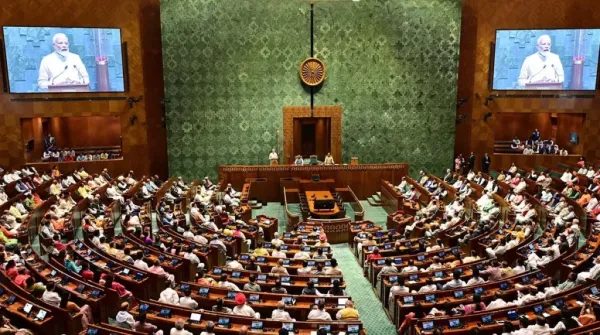
A significant and surprising shift is currently underway in the corridors of Indian politics. For a long time, the Bharatiya Janata Party (BJP) set the agenda for national debate, and all opposition parties were seen chasing it. However, in the past few months, the situation has completely changed. Now, opposition parties, especially the Congress and leaders like Rahul Gandhi, are raising new issues, forcing ruling party leaders to provide clarifications. Let’s explore how the political climate has suddenly shifted in the country and what this means.
When the government went on the defensive in the face of sharp opposition questions
In recent times, several cases have emerged that have changed the entire political landscape. Take the alleged theft of donations in Ayodhya, which Akhilesh Yadav raised with great force, and after which many senior BJP leaders, including Chief Minister Yogi Adityanath, had to come forward and offer clarifications. Whether it’s the NEET paper leak or the serious incident of lathicharge and pellet gun use on protesting students at Jantar Mantar, the opposition has cornered the government from all sides. These incidents have proven that the opposition is now completely successful in setting the narrative, forcing the ruling party to chase them.
Just before the 2027 Uttar Pradesh Assembly elections, this contest has become even more interesting. Rahul Gandhi’s “Chhatraon Ki Goonj” program in Prayagraj raised issues of education, employment, and jobs, focusing on Gen-Z. The very next day, Chief Minister Yogi Adityanath began speaking openly on education and employment issues in Siddharthnagar, which is clearly being seen as a direct response to Rahul Gandhi’s program.
These major issues dominated from Parliament to the streets
Political analysts believe that over the past two to three months, there has been a major strategic shift in the balance of power and agenda setting in the country. Whether it’s the Jharkhand student movement, the NEET paper leak controversy, or issues to the UGC Bill and FCRA amendments, these issues are now being openly debated. The student movement, which began at Jantar Mantar in Delhi in June-July and became known as the “Cockroach Movement,” created a climate of opposition against the government in states like Mumbai, Delhi, and Bihar. The growing public outrage ultimately led to the resignation of the Education Minister. Although the movement was later confined to court investigations and legal proceedings, it certainly gave the government sleepless nights.
Similarly, the opposition dealt a severe blow to the government over the UGC Bill 2026 and amendments to the Foreign Contribution Regulation Act (FCRA). The opposition alleged that these changes were aimed at tightening control over civil society and institutions. A direct answer was demanded from Home Minister Amit Shah regarding the police action against protesters in the Parliament complex, and the Congress issued a whip to its MPs. Although these heated debates calmed down after the government’s assurances, it made it clear that the opposition is now mastering the strategy of constantly pushing the government on the back foot.
Is the public mood changing, and what do political pundits say?
The biggest question now is whether the country’s public is becoming disillusioned with the Modi-Yogi government, or whether voters now want to test the opposition as well? The public support for the issues raised by the opposition is a clear indication that people are hoping for change. While keeping any issue alive for a long time and converting it into electoral votes remains a major challenge for the opposition, there is no doubt that the political atmosphere has completely changed in the last few months, and the issues of students and youth have forced governments to change their working styles.
-
Manchester United and Arsenal make opening move for €35m Joaquin Seys as Lewis Hall pursuit hits a snag
-
Cristian Romero reportedly open to Arsenal switch as Tottenham face major transfer dilemma

-
Rodri’s move to Barcelona edges closer to completion

-
5 Zodiac Signs Have The Best Horoscopes On Tuesday, August 11, 2026

-
5 Zodiac Signs Have The Best Horoscopes On Tuesday, August 11, 2026