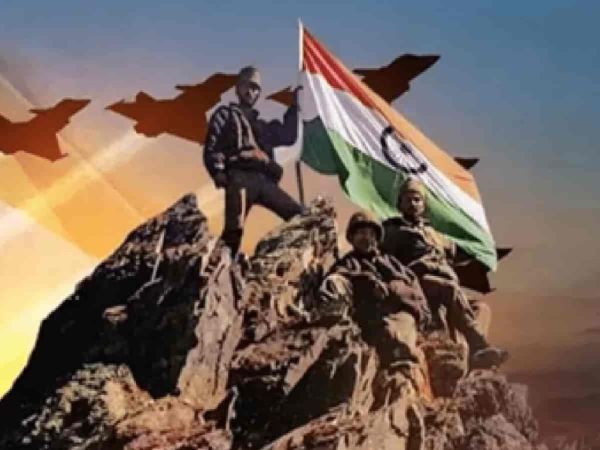
The Kargil War of 1999 remains one of the most defining chapters in modern military history, testing the grit, resilience, and tactical brilliance of the Indian Armed Forces. While ground troops fought valiantly across treacherous peaks, the Indian Air Force (IAF) wrote a historic chapter by executing Operation Safed Sagar—a daring and unprecedented airborne campaign conducted at freezing altitudes ranging between 14,000 and 18,000 feet. Facing unprecedented geographical challenges, enemy surface-to-air missiles, and strict operational boundaries, the IAF completely revolutionized high-altitude warfare to crush Pakistani infiltrators.
The Grim Discovery of Infiltration and Initial Setbacks
As the scorching summer heat of May 1999 enveloped the country, unsettling signs emerged from the barren and desolate heights of Kargil, a remote sector that would soon command global attention. Initial reports of unusual enemy movements on high mountain ridges prompted reconnaissance missions. The first patrol team, led by Lieutenant Saurabh Kalia, was tragically captured, tortured, and killed by Pakistani infiltrators.
Shortly after, around May 17, a second patrol team was deployed to locate the missing troops. This team fell into a heavy enemy ambush and managed to survive only due to the supreme bravery and sacrifice of Captain Amit Bhardwaj and Havildar Rajveer Singh Sheoran. Recognizing the massive scale of the intrusion along National Highway 1A—stretching from Dras to Batalik and threatening critical supply lines to Ladakh and Siachen—the Cabinet Committee on Security formally greenlit the use of air power.
Unprecedented Challenges at 18,000 Feet and Early Setbacks
Deploying air power in Kargil presented hurdles that no air force in the world had ever encountered before. Operating fighter aircraft and helicopters at altitudes between 14,000 and 18,000 feet meant facing dangerously thin air, which significantly reduced engine thrust. Furthermore, weapon sights calibrated for low-altitude combat caused bombs to overshoot targets, often tumbling down steep valleys. Adding to the complexity, the Indian government strictly prohibited pilots from crossing the Line of Control (LoC), severely limiting their tactical maneuvering space.
On May 26, under the command of Air Commodore Anil Kumar Sinha and Group Captain Arvind Oak, Operation Safed Sagar officially commenced. Mi-17 transport helicopters were deployed alongside fighter jets to suppress enemy fire and clear paths for assault. However, the operation faced severe early blows. Flight Lieutenant Nachiketa (callsign Hyena-2) had to eject after his MiG-27 suffered an engine failure caused by gun gas ingestion in thin air. Squadron Leader Ajay Ahuja, who flew out to locate him, was shot down and killed. A day later, a Mi-17 helicopter captained by Squadron Leader Rajiv Pundir—along with crew members Flight Lieutenant Muhilan, Sergeant Raj Kishore Sahu, and Sergeant P.V.N.R. Prasad—was shot down by an enemy Stinger missile, highlighting the lethal threat posed by shoulder-launched SAMs.
Tactical Adaptation: The Game-Changing Role of Mirage-2000
The heavy initial losses forced the IAF to swiftly overhaul its strategy. Leveraging readily available technology, pilots integrated Global Positioning System (GPS) units and handheld cameras for advanced reconnaissance and accurate target mapping. Rigorous bombing trials were conducted at Toshe Maidan, and the data was successfully readjusted for high-altitude strike parameters.
Simultaneously, at the Aircraft and Systems Testing Establishment in Bengaluru, Mirage-2000 fighter jets were rapidly equipped with laser-guided bombs and advanced Litening pods. By June 4, these lethal upgrades became operational, completely altering the course of the war. On June 17, precision Mirage strikes obliterated Muntho Dhalo, a major Pakistani logistics and supply base in Batalik, neutralizing over 100 enemy combatants. A week later, similar precision airstrikes devastated Pakistani fortifications on Tiger Hill, paving the way for Indian infantry regiments to recapture the strategic peaks in triumph.
-
Leeds United transfer latest: Wrexham set to bid £4.5m for Gelhardt, Igor Paixao interest revived, Jaka Bijol reacts to James Trafford move

-
Interiors of 2026: New trends in decoration

-
Kourtney Kardashian calls Kylie Jenner her ‘magical little fairy’ in birthday post

-
Mehndi color does not fade: So adopt this easy method of essential oil, you will get thick color on your hands.

-
Tech Life – School deepfake ransoms