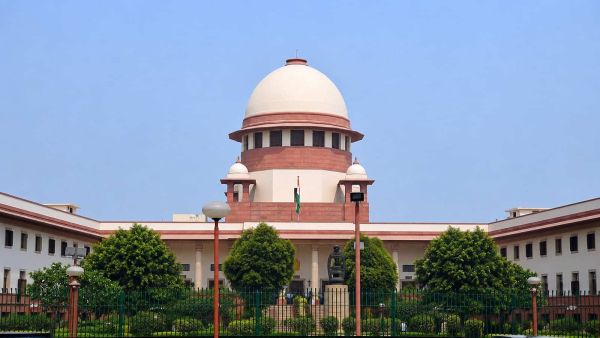
New Delhi: A public interest litigation (PIL) has been filed in the Supreme Court seeking directions to the Centre and social media platforms to identify, remove and block online content allegedly insulting Sanatan Dharma and Hindu deities and disturbing communal harmony.
The public interest litigation filed by Gujarat-based social worker Hitendra Kumar Parsottambhai Gadhiya has made the Union ministries of home affairs and electronics and information technology, the Delhi government, Google/YouTube, Meta Platforms (Facebook and Instagram), X Corp and WhatsApp respondents.
“Issue a writ of mandamus commanding the Respondents to block/remove the social media posts published on social media platforms which have a tendency to incite the general public against communal harmony, national integrity, and judicial independence, and to undermine the authority of constitutional functionaries through an uninformed mob,” the plea said.

It seeks directions for identification, prevention, removal or blocking of unlawful, provocative, hateful, abusive, derogatory and misleading digital content, including fake news, incendiary speeches and anti-national slogans disseminated through social media platforms.
The petitioner said he approached the top court in public interest for protection of communal harmony and enforcement of statutory obligations relating to unlawful digital content.
According to the petitioner, the plea is aimed at seeking action against videos, memes, manipulated content, abusive posts and other electronic material uploaded on internet platforms that allegedly “insult, vilify and promote hatred” against Hindu religious beliefs, Sanatan Dharma and revered Hindu deities.
The PIL alleged that social media platforms have failed to adequately discharge their obligations under the Information Technology Act, 2000, and the rules framed thereunder by not acting against content that allegedly promotes enmity, hatred and public disorder.
It further claimed that fake messages and provocative material circulated online have disturbed public order and communal harmony.
The petition also relied on the Supreme Court’s judgment in Shreya Singhal vs Union of India case and sought directions to intermediaries to comply with statutory obligations relating to unlawful online content.
In Shreya Singhal vs Union of India case (decided on March 24, 2015), the top court struck down Section 66A of the Information Technology Act, 2000, in its entirety. The court had ruled that the provision violated the fundamental right to freedom of speech and expression under Article 19(1)(a) of the Constitution.
The matter is yet to be listed for hearing.
-
Databricks wanted to raise $1B, investors wanted $15B. It settled on $5B at a $190B valuation.

-
Sign-to-Text: Helpful Gboard Breakthroughs – News

-
Grieving Argentine icon Messi unsure about continuing to play football

-
“Ravindra Jadeja’s Celebration Used To Annoy Me,” Stuart Broad Ahead Of IND vs SL 1st Test

-
Game Changers Lions edge Panthers, Khan Tigers stun Leopards on Akcel World Padel League day 2 – Read.com