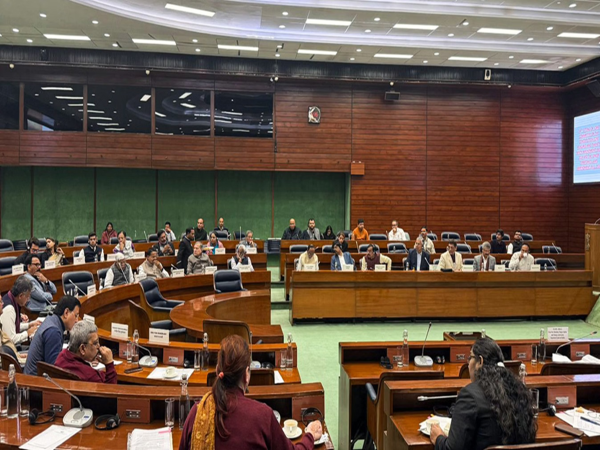
Parliamentary Committee: A parliamentary committee has stated that schools were not given adequate time to prepare for the introduction of a third language starting from Class 6. The committee noted that a lack of clarity regarding the recruitment of language staff, the availability of learning materials, and the process of language selection has increased stress among students, teachers, parents, and school administrations.
These observations are part of the tenth report of the Estimates Committee (2026-27), which was tabled in the Lok Sabha on Wednesday. The report focuses on "budgetary and policy aspects for providing affordable and quality education in the country, including a review of the Central Board of Secondary Education (CBSE)."
The committee noted that the Union Ministry of Education has taken significant practical steps under the National Education Policy (NEP) 2020 to promote instruction in the mother tongue and multilingual education in early school classes. The committee stated that the Ministry, in collaboration with states and Union Territories, has made progress in implementing the three-language formula and the R1, R2, and R3 language framework.
Changes in language education; translation of books into 22 languages
Additionally, textbooks for Mathematics, Science, and Social Science have been translated into 22 scheduled languages. Bridge courses and e-content have also been developed to facilitate learning for students in accordance with the new curriculum.
The report also highlights the use of innovative resources, such as 'Jaadui Pitara' (a play-based learning kit) available in 22 languages, the nationwide language awareness program 'Bhasha Sangam', and 121 mother-tongue primers developed in collaboration with the Central Institute of Indian Languages (CIIL).
Furthermore, organizations like the Kendriya Vidyalaya Sangathan (KVS) have provided essential instructional support by hiring contract-based teachers proficient in local languages. However, despite having such excellent resources, the committee found that the Ministry had not adequately anticipated the requirements regarding study materials, teacher training, and language-teaching staff.
The committee observed that while the 'third language' formula was implemented starting from Class 6, schools were not given sufficient time to prepare—specifically regarding the recruitment of language teachers, the availability of study materials, and clear guidelines on language selection. This created stress for students, teachers, parents, and school officials.
What did the committee recommend?
The committee recommended that the Ministry expedite the development of textbooks, study materials, and handbooks—including their translation into regional languages—so that they could be shared with States and Union Territories (UTs) as soon as possible.
The committee further stated that the Ministry should take all necessary steps to assist State and UT education boards in recruiting teachers capable of instructing children in their mother tongue during the foundational and preparatory stages of education.
Additionally, the committee advised the Union Ministry of Education to formulate a robust, state-wise distribution plan to ensure that translated textbooks, multilingual e-content, and 'Jaadui Pitara' kits reach every rural and government school before the commencement of each academic session.
Disclaimer: This content has been sourced and edited from Amar Ujala. While we have made modifications for clarity and presentation, the original content belongs to its respective authors and website. We do not claim ownership of the content.
-
Karnataka car blast exposes murder plot linked to land dispute
-
Bengaluru pothole case: HC seeks detailed report from GBA

-
Awarapan 2 movie review: The sequel an iconic film never needed

-
Maresca keeps focus on Community Shield amid Rodri and Enzo Fernandez transfer speculation

-
Reijnders features in the costliest XI of overseas signings who lasted only one season in the Premier League