The country received an estimated 45,000 international visitors in 2025, and hopes to attract 200,000 a year by 2030, but remains for now the least-visited country in Southeast Asia, according to the World Tourism Organization.
It was exactly this lack of travel information that sparked the curiosity of Tran Trong Hieu, a 34-year-old physics teacher in Ho Chi Minh City.
In July, Hieu and a friend embarked on a four-day, three-night journey to the nation.
With no direct flights from Vietnam, they transited through Bali, Indonesia, to reach Timor-Leste’s capital, Dili.
The round-trip airfare cost US$480 per person.
Hieu considers the fare high compared to other regional routes but the experience well worth it.
After paying $30 for a visa on arrival, the duo spent nearly two and a half hours at Presidente Nicolau Lobato Airport as immigration officers asked about their travel purpose, itinerary, and accommodation, and to show they had enough money to cover their expenses
|
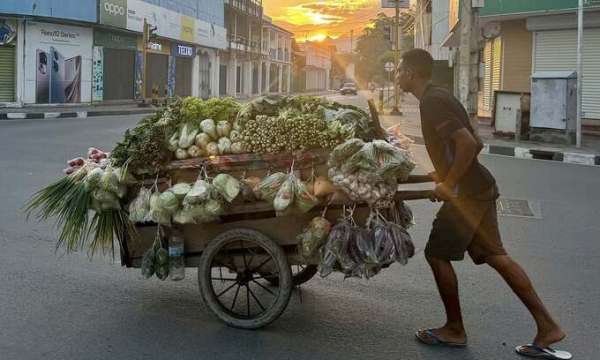
A resident pushes a cart of vegetables to a market in Dili, Timor-Leste on July 27, 2026. Photo courtesy of Tran Trong Hieu |
Hieu’s first impression of Dili was that it was “quiet and different.”
Unlike a typical crowded capital, Dili’s pace of life was slow, characterized by few vehicle horns and an absence of bustling commercial centers.
Instead of buses, its public transport relies on colorful “microlet” vans, which are also the main source of noise as they drive around playing loud music.
On his first afternoon, Hieu visited the Cristo Rei of Dilii, a famous landmark. At 27 meters tall, it is considered one of the world’s tallest statues of Jesus Christ, according to American-based travel and exploration company Atlas Obscura.
His itinerary also included the Tais Market, known for traditional handwoven textiles, and the Immaculate Conception Cathedral, a reflection of the strong Catholic influence on everyday life in Timor-Leste.
Alongside Catholicism, the Timorese also preserve deeply rooted traditional beliefs.
The saltwater crocodile is revered as a sacred animal tied to the nation’s origins. According to the legend of Lafaek Diak, an old crocodile transformed into the island of Timor to repay a boy who had once saved it.
Many locals refer to crocodiles as “grandfather” or “ancestor” as a sign of respect.
For further exploration, Hieu suggests Atauro Island, 30 kilometers off Dili. The ferry ride takes nearly four hours and can be delayed by cargo transport, but the slow trip gave him more time to take in local life.
The islanders’ hospitality left a lasting impression on Hieu. When he stopped by a local shop at noon to buy some coconuts, the owner smiled and said they did not have any ready at the moment.
He asked Hieu to wait while he went to pick some himself. A short while later, the owner returned with a few children, carrying three coconuts priced at $1 each.
“I felt bad that he had to climb the tree just to get coconuts for me.”
Rather than buying only what he needed, he and his friend bought all three coconuts and gave the children an extra $7 as a gesture of thanks.
One evening in Vila village, southern Atauro, Hieu was riding a motorbike when locals unexpectedly invited him to join a community gathering.
Unsure of what was going on, he hesitated at first.
Then, an elderly woman approached with a warm smile, took his hand and gently pulled him into the circle of dancers.
“We didn’t understand what the other was saying, but I clearly felt the connection through their smiles and eyes,” he says, calling it the most beautiful moment of his journey.
He says Timor Leste is not for tourists seeking a convenient resort getaway, but visitors are rewarded with a glimpse of a slow, intimate, and pristine Southeast Asia.
“You can find so many interesting things just by taking the time to observe the life around you.
-
Taurus Horoscope Today, September 8, 2026: Desired results will be achieved, health will remain good

-
Virgo Tarot Horoscope Today, September 8, 2026: Will Share Pleasant News, Will Take Advantage of Desired Environment

-
Love Horoscope Today for Tuesday, September 8, 2026: Scorpio Signs Will Receive Auspicious News, Know the Status of Other Signs

-
Aries Horoscope Today, September 8, 2026: Do Not Speak in Haste, Various Matters Will Be in Favour

-
Gold Price Today: Gold gets cheaper; check the latest rates for 24-carat to 18-carat gold in 10 cities before you shop..