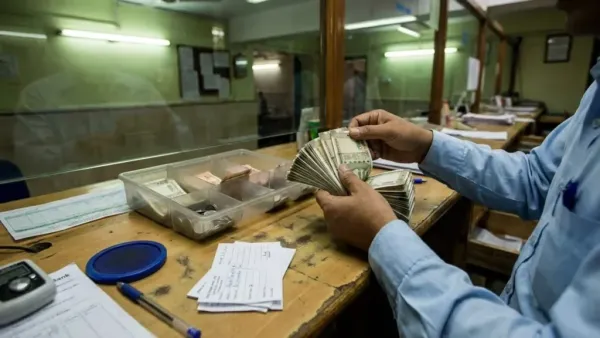
How much cash can you deposit in your bank account in a year?: Depositing cash into a savings account is a common practice. But if a large amount is deposited in the account in the form of cash, it may be noticed by the bank and the Income Tax Department. The information of cash transactions exceeding the limit set by the bank has to be given to the Income Tax Department. The aim is to monitor large transactions and prevent activities such as unaccounted money, tax evasion (tax evasion) or money laundering.
How much cash can be deposited in a savings account?
Under the existing rules, if a person accumulates cash of Rs 10 lakh or more in one or more savings accounts during a financial year, the bank has to report the same. This limit is calculated by adding up all the cash deposits made throughout the financial year, not just the money deposited in one go.
Note that depositing cash above Rs 10 lakh does not mean you will get a tax notice immediately. However, you may be asked for information or documents about the source of this money (means of income) when necessary.
Click on this link to join our WhatsApp channel
What happens on depositing more than 10 lakhs?
Depositing money in savings account itself is not taxable. But if the cash deposits in a financial year reach the prescribed reporting limit, it becomes necessary to account for the source of the money. If this money comes from your salary, business, rental income, shares or other taxable sources, it may be subject to tax as per applicable tax rules.
So it is better to preserve documents to large cash transactions. Such as salary slips, business income records, rent documents or other documents proving the source of the money. This will allow you to easily show where the money came from when needed.
PAN required for cash deposits above 50 thousand
If you deposit cash more than Rs 50,000 in a day in the bank, giving PAN (PAN card) is required. If you do not have PAN, Form 60 has to be submitted as per rules. The purpose of this is to help track cash transactions and the source of money.
Also rule of taking cash of 2 lakh rupees or more
There is another important rule to cash transactions. Under the Income Tax Act, accepting cash of Rs 2 lakh or more from a person in a day is prohibited. Avoidance of this limit is also not allowed by dividing the amount into separate transactions. Violation of the rule may result in a penalty equal to the transaction amount.
Keep a record of large cash transactions
If there are large cash transactions in your account, keep the bank statement and all the documents attached to it. Check your account statement from time to time and also see how much cash has been deposited or withdrawn throughout the financial year.
Most importantly, there is no direct restriction on depositing cash above the Rs 10 lakh limit; This is primarily a reporting limitation. So it is very important to keep a correct record of its source when depositing a large amount of money.
-
Banker-turned-hawker sells US$5.5 Levain-style cookies in Singapore

-
Usman Peerzada shares plans for autobiography and biopic
-
Kakora vegetable, available once a year, is beneficial for health along with taste, know its benefits.

-
3 Zodiac Signs Attract Luck & Good Fortune On August 20, 2026

-
Injuries as tourists swept away by flash flood in Thailand waterfall