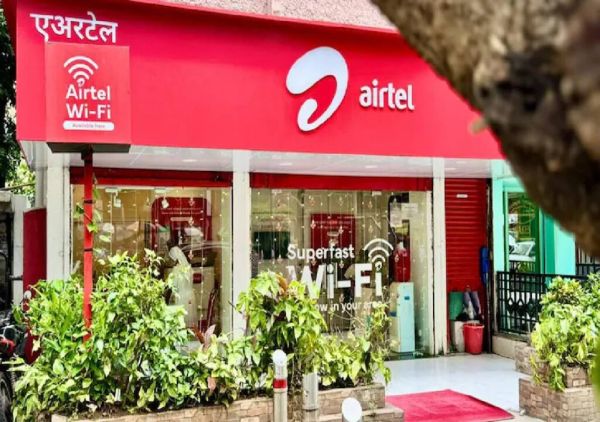
New Delhi: Bharti Airtel’s decision to withdraw select prepaid recharge plans could increase its average revenue per user (ARPU) by Rs 4-12 per month, according to estimates from brokerages. The move is being viewed as a strategy to encourage subscribers to shift towards higher-value plans rather than as a broad-based tariff hike.
The telecom operator recently removed four prepaid packs priced at Rs 299, Rs 579, Rs 619 and Rs 649, while retaining its entry-level Rs 199 and Rs 219 options. The changes have reduced the availability of some lower-priced plans and could encourage customers to select more expensive alternatives.
Airtel withdraws four prepaid plans
Airtel’s latest portfolio changes have particularly affected subscribers who previously relied on the Rs 299 prepaid plan.
With the Rs 299 option no longer available, customers looking for a comparable unlimited-calling and daily-data plan may need to move to the Rs 349 pack. This represents an increase of around 16% compared with the earlier Rs 299 recharge.
The company has also withdrawn the Rs 579, Rs 619 and Rs 649 plans, reducing the number of choices available across several prepaid price points.
However, Airtel has retained its Rs 199 and Rs 219 entry-level plans, meaning the changes do not amount to a complete withdrawal of low-cost prepaid offerings.
Why Airtel is changing its prepaid portfolio
The latest move is being interpreted as part of Airtel’s broader premiumisation strategy.
Instead of increasing the prices of all prepaid plans simultaneously, the company has removed selected plans and is effectively encouraging some users to move to higher-priced alternatives.
This allows Airtel to potentially improve revenue per subscriber without announcing a uniform tariff increase across its entire customer base.
Brokerages have therefore described the move as selective plan rationalisation rather than a formal, across-the-board tariff hike.
ARPU could rise by Rs 4-12
Brokerages have arrived at different estimates for the potential impact on Airtel’s ARPU.
The estimates depend largely on how many subscribers were using the discontinued plans and how many of them eventually move to more expensive alternatives.
Morgan Stanley has estimated a potential gross ARPU increase of around Rs 8-12 per month at the company level under its assumptions. The brokerage considered a scenario in which 20-30% of Airtel’s wireless subscribers using plans below Rs 349 move to the Rs 349 offering.
Citi, meanwhile, estimated an ARPU benefit of around Rs 4 per month, based on assumptions about the subscriber mix on the Rs 299 plan.
JM Financial has estimated a potential increase of around Rs 5-6, or approximately 2%, assuming a portion of subscribers upgrade to plans costing around Rs 50 more.
The range of estimates highlights that the actual impact will depend on subscriber behaviour.
Customers may move to higher-priced plans
The key assumption behind the brokerage estimates is that customers who lose access to their preferred lower-priced plans will not necessarily leave Airtel.
Instead, many could choose the next available plan with similar benefits.
For example, a customer previously paying Rs 299 could opt for the Rs 349 alternative rather than switch to another telecom operator.
If a substantial number of users make this choice, Airtel’s average revenue per user would increase even without a formal price increase across its entire prepaid portfolio.
This is the central logic behind the premiumisation strategy.
What is ARPU and why does it matter?
Average Revenue Per User, or ARPU, is an important performance metric for telecom companies.
It represents the average revenue generated from each subscriber over a particular period. A higher ARPU generally indicates that customers are spending more on telecom services.
For telecom operators, improving ARPU is particularly important because the industry requires significant investment in spectrum, network infrastructure and 4G and 5G expansion.
Operators therefore look for ways to increase revenue from existing customers while maintaining their subscriber base.
Rs 299 users face the biggest impact
Among the discontinued plans, the withdrawal of the Rs 299 recharge has attracted the most attention because of its popularity.
Customers who previously relied on the plan now have fewer comparable options at the same price point.
Moving to the Rs 349 plan would mean paying Rs 50 more per recharge, translating into an effective increase of about 16.7% over Rs 299.
For an individual customer, the additional amount may appear relatively small. However, if millions of subscribers upgrade to more expensive plans, the aggregate impact on Airtel’s revenue could be substantial.
This is why analysts are closely watching subscriber migration following the changes.
It is not an immediate tariff hike for everyone
Airtel’s decision should not be interpreted as an immediate price increase for every prepaid customer.
Subscribers who are already using plans that remain available can continue to recharge at those price points, subject to Airtel’s current plan availability and terms.
The impact is concentrated on users of the discontinued plans.
This distinction is important because the company has not simply increased the price of every recharge pack by a fixed percentage. Instead, it has altered the range of plans available to customers.
Airtel’s entry-level plans remain
Despite withdrawing several prepaid options, Airtel continues to offer lower-priced plans.
The Rs 199 and Rs 219 plans remain available, providing options for customers who are primarily looking for affordable connectivity rather than higher daily-data allowances.
At the same time, customers seeking unlimited calling combined with daily data may have to consider higher price points depending on their requirements.
The current portfolio therefore creates a wider gap between some of the entry-level options and higher-value plans.
Brokerages see premiumisation potential
The common theme across brokerage assessments is that Airtel is attempting to push subscribers towards plans that generate more revenue.
Morgan Stanley, IIFL Capital, JM Financial and Citi have all assessed the potential impact of the plan changes, although their estimates vary based on their assumptions about customer behaviour. (Rediff)
If customers accept the higher-priced alternatives, the strategy could provide a meaningful ARPU boost.
However, if a large number of subscribers downgrade, reduce their recharge frequency or move to competing operators, the eventual benefit could be smaller.
Could rivals follow Airtel?
Airtel’s move could also influence the broader telecom market.
The Indian telecom sector is dominated by a few major operators, meaning changes to pricing and plan structures by one large company are closely watched by competitors.
If Airtel successfully shifts customers towards higher-value plans without suffering significant subscriber losses, other operators could consider similar strategies.
Analysts have already suggested that the move could put pressure on rivals, particularly Vodafone Idea, to reassess their own lower-priced offerings.
However, whether competitors follow the same approach will depend on their subscriber mix, financial position and competitive strategy.
What it means for Airtel customers
For Airtel users, the biggest immediate impact is a reduction in prepaid choices.
Customers who previously used the Rs 299, Rs 579, Rs 619 or Rs 649 plans will need to select from the company’s remaining options when their existing validity expires.
Those who want similar benefits may have to spend more.
At the same time, customers who primarily need basic calling or limited data still have lower-priced alternatives available.
Therefore, the financial impact will differ depending on each subscriber’s usage pattern.
What it means for Airtel investors
From an investor perspective, higher ARPU could improve Airtel’s revenue and earnings outlook if the company manages to retain the subscribers affected by the changes.
The strategy could also improve monetisation without requiring a company-wide tariff hike.
However, investors will need to watch several factors, including subscriber churn, the proportion of customers upgrading to higher-value plans and the actual ARPU improvement reported in subsequent quarters.
The brokerage estimates are projections based on assumptions, rather than guaranteed outcomes.
Airtel’s wider focus on monetisation
The prepaid changes come as telecom companies continue to focus on improving monetisation from their customer bases.
Higher data consumption, increased adoption of 4G and 5G services and customers’ willingness to choose premium plans have created opportunities for operators to improve ARPU.
Airtel’s latest strategy appears to build on this trend by reshaping its prepaid portfolio rather than relying solely on a conventional tariff hike.
The success of the strategy will ultimately depend on whether customers accept the higher-value plans.
Conclusion
Bharti Airtel’s withdrawal of four prepaid plans — Rs 299, Rs 579, Rs 619 and Rs 649 — could provide an ARPU boost of between Rs 4 and Rs 12 per month, according to brokerage estimates.
The move is being viewed primarily as a premiumisation and plan-rationalisation strategy, rather than a uniform tariff increase. The biggest impact is likely to be felt by Rs 299-plan users, who may need to shift to the Rs 349 option for comparable benefits.
For Airtel, the strategy could strengthen revenue per subscriber if customers upgrade rather than switch operators. For consumers, however, the reduction in lower-priced options could mean higher monthly spending for those seeking similar data and calling benefits.
The actual impact on ARPU will become clearer as customers respond to the revised prepaid portfolio in the coming months.
-
Banker-turned-hawker sells US$5.5 Levain-style cookies in Singapore

-
Usman Peerzada shares plans for autobiography and biopic
-
Kakora vegetable, available once a year, is beneficial for health along with taste, know its benefits.

-
3 Zodiac Signs Attract Luck & Good Fortune On August 20, 2026

-
Injuries as tourists swept away by flash flood in Thailand waterfall