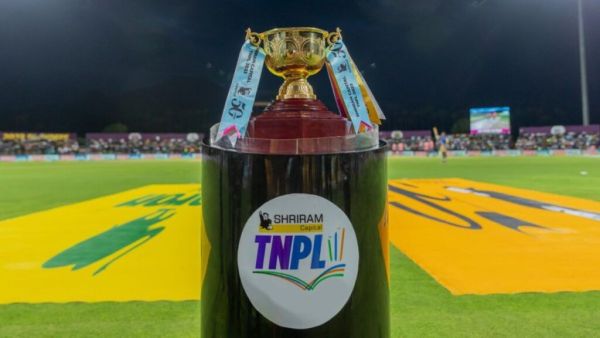
For years, India has had a flourishing cricket culture, with numerous state-run Twenty20 leagues serving as a breeding ground for emerging players and providing much-needed cricket action to fans during the off-season. However, it seems that people have taken advantage of the lack of security around these matches to make illicit profits.
The Board of Control for Cricket in India's (BCCI) Anti-Corruption and Security Unit (ACSU) will henceforth be monitoring all domestic Twenty20 matches in order to plug a critical governance gap. This is the first time that the BCCI has extended the jurisdiction of the ACSU to cover state-level competitions, which involve significantly less oversight than national fixtures do.
A Pattern of Unauthorized Approaches Noticed by BCCI
The decision to have full coverage of the state leagues by the anti-corruption staff was made after several disturbing reports. The investigating units found that many people were approaching players, coaches, team managers, and franchise owners in state tournaments with an ulterior motive.
Franchise owners in state leagues were more vulnerable as compared to IPL owners, as they were more reachable, and hence had higher chances of being bribed by illegal betting agencies. ACSU officials made it clear that nobody, regardless of their stature, would be tolerated if found guilty of tarnishing the image of the game.
There is a lot to this operation, as it covers multiple leagues in Mumbai, Saurashtra, Bengal, Karnataka, Delhi, Tamil Nadu, Uttar Pradesh, and several other states. During the initial phase, the surveillance was concentrated on team hotels to keep track of who was approaching whom. TNPL Breach and the Tech Menace
The recent spot-fixing scandal in the TNPL that saw an all-rounder, who was playing his first-ever first-class match for Tamil Nadu this season, being fined one lakh rupees and banned from all forms of the game for the balance of the 2025–26 Ranji Trophy campaign, was a wake-up call for the BCCI authorities. The problem started when the player was found to have walked into the Player and Match Officials Analysis (PMOA) with a phone that he did not declare upon entry.
As per the anti-corruption guidelines, phones and smart devices need to be surrendered at the PMOA. It has now come out that this was not the first instance of a player using a smartphone in the forbidden area. ACSU officials revealed that there were at least six other instances, including Rajasthan Royals team manager Ravinder Singh Bhinder, who was fined in the 2026 IPL for similar conduct. The security personnel have also been warning players about the new threat from electronic smart glasses that can record videos.
While it may seem that the BCCI is overreaching by putting full anti-corruption squads in low-profile leagues with relatively smaller prize money, the reason for such actions has been evident from similar scandals in the past.
For instance, the Karnataka Premier League spot-fixing scandal of 2019, which led to the arrest of six people, including four players, a coach, and a team owner.
In 2019, TNPL was again questioned for alleged corruption after illegal betting agencies were found to be in touch with several players. As former ACSU chief Ajit Singh often said, corruptors do not care if the tournament is big or small; they care if it is telecast or not.
State leagues provide exposure, young talent gets monetary rewards, and there is less internal control, which makes them a breeding ground for match-fixing and betting. With BCCI now covering all state T20 leagues with full anti-corruption coverage, the authorities are determined to protect the budding stars and the sport itself.
-
Exfoliation: An essential part of skin care

-
Cat returns home 10 years after disappearing, just before owner’s 30th birthday

-
Bollywood singer Shaan and Wife buy three luxury flats in Mumbai for Rs4.764 billion

-
The risk of dengue increases during the rainy season, do not ignore these signs

-
This Is The Biggest Stock Honda Motorcycle Engine You Can Get In 2026