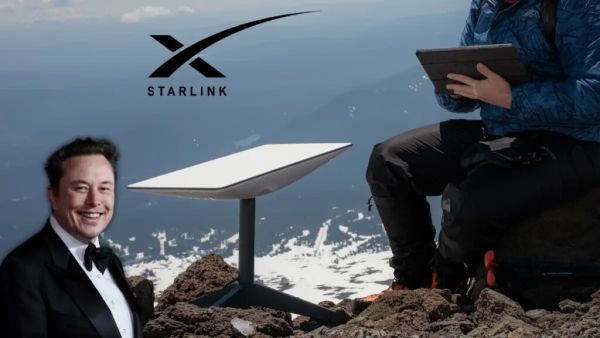
Competition among companies for satellite internet is continuously increasing in India. Meanwhile, Elon Musk's company Starlink has taken another step to strengthen its presence in the country. The company has re-applied to the Indian space regulator, IN-SPACE, for its next-generation 'Generation 2' satellite network. This network includes the facility of direct-to-device (D2D) connectivity. If it is approved, in the future mobile phones will be able to connect directly to satellite.
**Re-approval sought for Generation 2 network**
*According to a report in The Economic Times*, Starlink has once again sought approval for its Gen 2 network, which includes about 30,000 satellites. These satellites are planned to be deployed in Low Earth Orbit (LEO) at an altitude of about 340 to 615 kilometers. The company had previously applied for both Gen 1 and Gen 2 networks in India; However, IN-SPACE only approved Gen 1 networks in July 2025. That network consists of 4,408 LEO satellites intended to provide traditional satellite broadband Internet services.
**Why was the previous application not approved?**
Starlink's previous application for Gen 2 network was not approved due to some technical features and regulatory issues to the spectrum band. Keeping in mind the changing circumstances, the company has now applied again. This time, the application includes technologies like D2D. Negotiations are currently going on in India regarding the rules for satellite communication and D2D services.
**Direct phone-to-satellite connectivity**
The most important aspect of this development is direct-to-device (D2D) technology. It allows specially designed mobile phones and other devices to connect directly to the satellite. Normally mobile phones connect to the network through cell towers, but D2D technology creates a direct connection between the phone and the satellite. This can help in bringing connectivity in areas where it is difficult to install mobile towers.
**Competition will further increase in India's satellite internet sector**
Starlink is facing competition from many companies in India. Reliance Jio has proposed a network of around 1,600 LEO (Low Earth Orbit) satellites. Meanwhile, Eutelsat OneWeb and Amazon (Project Kuiper) are also preparing to enter the Indian satellite communication market. SpaceX's overall 'Gen 2' plan aims to build a network of approximately 42,000 satellites; At present, approval has been sought for about 30,000 satellites in India. Depending on needs, the company may apply for more satellites later.
**Multiple approvals required before starting services**
Starlink will have to complete several regulatory processes before starting commercial services in India. The main requirements include security clearance and allocation of spectrum. Although the Telecom Regulatory Authority of India (TRAI) has given suggestions on the pricing of satellite spectrum, the government has not yet taken any final decision. Rules for direct-to-device (D2D) services are also under negotiation. In this context, Starlink's new application is considered an important step for its satellite internet strategy in India. If the Gen 2 network and D2D services are approved, the company will be able to expand into satellite internet services as well as direct mobile connectivity in India.
-
Max Verstappen Stays with Red Bull Until 2030 in a Strong Vote of Confidence in the Team and Formula 1

-
Is Pani Puri Too Spicy For Jonty Rhodes? South African Cricketer Has The Perfect Desi Reply

-
How to turn white hair black without using mehndi or dye? Yoga guru 'Nithyanandam Sri' shared natural remedies

-
Is TCS Spying On Its Employees? Concerns Raised After Monitoring Tool Reportedly Installed On Company Laptops

-
How many SIMs are there in your name? Government limited the number of SIM cards, new rule will be implemented from August 24