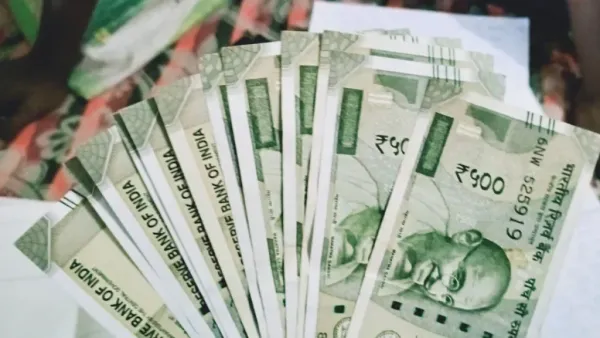
Nowadays, there is an era of digital payments, but cash transactions have not stopped completely. People often deposit cash in banks for marriage, property purchase or household needs. Generally, we keep depositing cash in our savings account without thinking, but do you know that the Income Tax Department keeps a close watch on every big cash deposited in your account? If cash is deposited more than the prescribed limit, then the bank directly sends its information to the tax department. In such bank cash deposit limit And it is very important to have accurate information about the rules to it, so that one does not have to face any kind of legal trouble later.
Actually, the aim of the government and the Income Tax Department is to curb financial irregularities like black money, tax evasion and money laundering. That is why banks have strict instructions to share details of large cash transactions with the department. Let us understand what is the limit for depositing cash in the bank and what mistakes can make you face tax notices.
Rs 10 lakh limit and bank reporting
According to income tax rules, if a person deposits a total of Rs 10 lakh or more in cash in one or more of his savings accounts in any one financial year, then the bank gives this information directly to the Income Tax Department.
Often people have the misconception that if they do not deposit Rs 10 lakh at once but deposit it in pieces of Rs 2 lakh each, then they will be saved from evil eyes. Actually it is not so. This limit is decided by adding up all the cash deposits made during the entire financial year (April 1 to March 31). However, this does not at all mean that as soon as you deposit Rs 10 lakh, your house will be raided by Income Tax or a notice will be received. This is just a reporting limitation. If you have a legitimate source of that money, then you do not need to be afraid at all.
Strict rules of Rs 50 thousand and Rs 2 lakh
The rules of the Income Tax Department are very clear even regarding daily transactions:
- PAN above Rs 50,000: If you go to the bank to deposit Rs 50,000 or more cash in a day, then it is mandatory for you to provide PAN number. If there is no PAN card, then Form 60 has to be filled.
- Restriction on taking cash more than Rs 2 lakh: Under Section 269ST of the Income Tax Act, there is a complete ban on accepting cash of Rs 2 lakh or more in a day from any person. If a person tries to break this rule or takes the amount by dividing it into several parts, then if caught, a fine equal to the amount taken (100% penalty) can be imposed.
Mathematics of bank cash deposit limit and tax
The simple thing is that there is no tax on depositing money in a savings account, tax is levied on your total earnings. Suppose you have deposited Rs 12 lakh in cash in your account and this money has come from your business income, salary, agricultural income, share sale or house rent, then you just have to show it correctly in your Income Tax Return (ITR).
The problem arises when there is a huge difference between the cash deposited in the account and your annual declared income. In such a situation, the Income Tax Department may ask for proof of the source of money i.e. source of income.
Therefore, it is wise that whenever you make any big cash transaction, keep all the documents to it like salary slip, rent agreement, invoice or bank statement safe. Keep an eye on the annual transactions of your account and file correct ITR on time, so that no one can raise unnecessary questions on your hard-earned money.
-
Exfoliation: An essential part of skin care

-
Cat returns home 10 years after disappearing, just before owner’s 30th birthday

-
Bollywood singer Shaan and Wife buy three luxury flats in Mumbai for Rs4.764 billion

-
The risk of dengue increases during the rainy season, do not ignore these signs

-
This Is The Biggest Stock Honda Motorcycle Engine You Can Get In 2026