Trump 50% Tariffs Push Canada to Diversify Trade Beyond United States/ TezzBuzz/ WASHINGTON/ J. Mansour/ The collapse of U.S.-Canada trade negotiations has deepened a historic rupture between the longtime allies and raised the risk of a full-scale trade war. The United States imposed 50% tariffs on about $20 billion in Canadian goods, while Canada promised dollar-for-dollar retaliation beginning Sept. 8. Prime Minister Mark Carney says Canada must reduce its dependence on the United States because the countries will “not return to our old relationship.”
Quick Look
- The U.S. imposed 50% tariffs on approximately $20 billion in Canadian goods.
- Canada plans dollar-for-dollar retaliation beginning Sept. 8.
- Targeted sectors include steel, dairy, appliances, farm equipment, paper and electronics.
- Carney said “America has changed.”
- Canadian political and labor leaders broadly supported rejecting the U.S. proposal.
- Canadian trips to the United States have dropped sharply.
- Nearly three-quarters of Canadian goods exports go to the U.S.
- The tariffs directly affect an estimated 0.4% of Canada’s GDP.
- Canada supplies most U.S. imports of natural gas, electricity and crude oil.
- Ottawa is seeking CA$1 trillion in new investment by 2030.
- Canada has signed more than 20 trade and security agreements in the past year.
- Analysts believe the shift in U.S. trade policy could outlast Trump.
Deep Look
Trade breakdown transforms a historic alliance
TORONTO — Canada built much of its prosperity over several decades on preferential access to the vast American market. The collapse of the latest trade negotiations has now fundamentally altered one of the world’s closest alliances and increased the risk of a full-scale economic confrontation.
Prime Minister Mark Carney acknowledged the rupture after last-minute negotiations failed Friday.
He said Canada had concluded that “America has changed” and that the neighboring countries would “not return to our old relationship.”
The United States imposed 50% tariffs on approximately $20 billion worth of Canadian goods early Saturday.
Carney said Canada would retaliate dollar for dollar beginning Sept. 8. The response will target industries including steel, dairy products, appliances, agricultural equipment, pulp and paper, and electronics.
Carney says his Davos warning has come true
Carney anticipated a broader change in the global economic order during a January speech at the World Economic Forum in Davos, Switzerland.
He described the transformation as “a rupture, not a transition” and urged middle powers such as Canada to reduce their vulnerability to economic coercion.
Carney called on governments to strengthen their domestic economies while expanding trade and investment relationships abroad.
Speaking in Ottawa on Saturday, the prime minister said recent developments had validated that warning.
Trump’s pressure extends beyond tariffs
President Donald Trump’s campaign against Canada has included more than import taxes.
Trump has questioned whether Canada is economically viable, repeatedly suggested turning it into the 51st American state and used tariffs to encourage companies to transfer production from Canada to the United States.
His approach has angered Canadians and generated a sense of betrayal in a country that traditionally viewed the United States as its closest ally.
Canadian travel to the United States has also declined sharply since the dispute began.
The number of Canadians returning from the U.S. by car in July was almost 29% lower than in July 2024, according to Statistics Canada. Return trips by air fell 27%.
Canada had been willing to accept some tariffs
The failed negotiations illustrated how much Canada’s expectations had changed.
Ottawa had been prepared to accept some American tariffs in exchange for continued access to the U.S. market and greater economic certainty.
That position represented a break with decades of Canadian policy focused on eliminating trade barriers.
Canadians have grown accustomed to preferential American market access under the 1989 Canada-U.S. Free Trade Agreement, the North American Free Trade Agreement and its successor, the US-Mexico-Canada Agreement.
Even an agreement involving reduced tariffs would therefore have represented a retreat from the countries’ previous relationship.
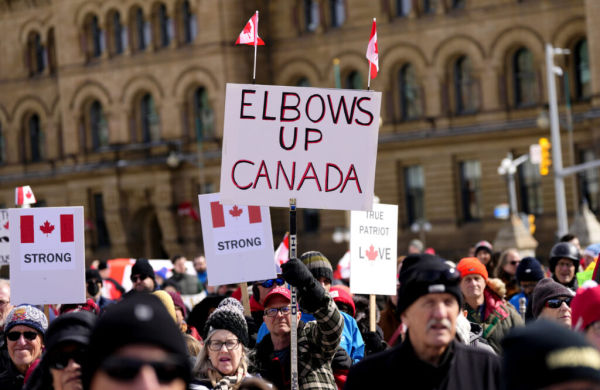
Carney’s ‘elbows up’ strategy faces a test
The breakdown places Carney’s approach to Trump under increased scrutiny.
That stance has helped Carney maintain public support at home. His refusal to accept Washington’s demands may also strengthen his international standing among countries attracted to his call for resistance to economic coercion.
Canadian provincial and conservative leaders broadly supported the prime minister’s decision.
Ontario Premier Doug Ford praised Carney for rejecting an agreement that he said would have harmed the province’s automotive, steel and manufacturing sectors.
Canada’s largest private-sector union backs resistance
Lana Payne, national president of Unifor, Canada’s largest private-sector union, accused Trump of attempting to weaken the Canadian industrial economy.
Trump has directed much of his trade pressure toward automobiles, steel and aluminum.
That focus has increased resentment among Canadians who view the policies as an effort to transfer important industries and jobs to the United States.
Retaliation presents major economic risks
Canada’s ability to fight a prolonged trade war is constrained by its dependence on the American market.
Nearly three-quarters of Canadian goods exports go to the United States. The American economy is approximately 10 times larger than Canada’s.
That imbalance limits Ottawa’s ability to retaliate dollar for dollar without causing disproportionate harm to Canadian consumers and businesses.
Royal Bank of Canada economists estimate that the U.S. tariffs directly affect approximately 0.4% of Canada’s gross domestic product because they apply to only about 5% of Canadian exports to the United States.
The economic damage could increase if retaliation expands, additional industries are targeted, investment declines or integrated supply chains are disrupted.
He said the government would announce additional assistance for affected companies and workers.
United States also relies heavily on Canada
The economic dependence between the two countries is not entirely one-sided.
The countries’ industrial supply chains are also deeply integrated, especially in automotive manufacturing, metals and energy.
Goldy Hyder, president and CEO of the Business Council of Canada, said Canadian businesses continue to regard the United States as their most important trading partner.
However, he said many companies increasingly believe the transformation in U.S. trade policy will extend beyond Trump’s presidency.
Canada accelerates international diversification
The breakdown has added urgency to Carney’s attempt to reduce Canada’s dependence on the United States.
He has traveled internationally to seek investment and establish new commercial relationships.
The Canadian government aims to attract CA$1 trillion, or approximately US$730 billion, in investment by 2030 and double non-U.S. investment during the next decade.
Canada has signed more than 20 trade and security agreements across five continents over the past year.
Washington’s reported attempt to restrict Canada’s ability to negotiate trade agreements with other nations was therefore particularly significant.
Ottawa and Alberta also advanced plans in July for a new Pacific Coast oil pipeline. The project would provide Canadian crude with greater access to Asian markets and reduce reliance on American buyers.
Analysts say the rupture may outlast Trump
The immediate question is how long the latest tariff confrontation will continue.
The deeper transformation in the relationship could be more permanent because protectionism is likely to remain influential in American politics after Trump leaves office, Béland said.
More on US News
-
Trip ideas from Hyderabad: Visit India’s first village

-
Kareena Kapoor reacts to pregnancy rumours, shares actual reason

-
Vaibhav Sooryavanshi's Big Red-Ball Test Falls Flat; This Bowler Gets Him Out

-
Shravan Somvar : Specially for Shravan Somvar, make 'Besnachi Barfi' to worship Lord Shankar.

-
Food divorce: new trend for couples