At least two of his distant predecessors did not forget to tell the lie on their visits to Kashmir Valley. Loy Henderson and Adlai Stevenson, both were mystifying and enigmatic. They preferred to meet their inside contact secretly in a houseboat moored in a hidden corner of the Dal Lake, or a less-talked about religious person’s private residence. For example, the real reason for the dismissal of Sheikh Abdullah as J&K Prime Minster in 1953 can be inferred from a letter of Bakhshi Ghulam Muhammad to Nehru on 25 June 1951 (cited by Sandeep Bamzai, OSD to Nehru in his monograph America’s Great Fishing Expedition in Kashmir, published Aug 26, 2016). The excerpt of the Bakhshi’s letter is, “It is clear that the UN Observers in the State don’t confine themselves to their legitimate function of watching the ceasefire line, but in greater part act as agents of Pakistan. They are obviously abusing their position as functionaries of UNO and are engaging in what appears to be spying within the State. It has been gathered that the Observers are chiefly directing their energies towards estimating reactions of people to this Government and the accession of the State to India, with a view to drawing inferences about people’s real political aspirations.”
Then came the bombshell, a revelation highly serious that it confirmed active US interest and intervention in Kashmir Valley at the time. The Bakhshi went on, “Mention may also be made of the activities of the wife of the US Ambassador in India, Mrs. Loy Henderson, who has been in Kashmir for some time. Ostensibly, she is here for reason of climate, but it has been noticed that her contacts are mostly with well-known Muslim Leaguers. The inference seems to be more than obvious. Pertinently, Mrs. Henderson even met Sheikh Abdullah during her sojourn in Kashmir”. Bakshi also sent Nehru an appendix of how for instance UN Observers were taking photographs of Mohra Bridge and river Jhelum.
Sandeep Bamzai adds: “Earlier, Sheikh Abdullah had a secret meeting with the United States Ambassador Loy Henderson in Srinagar, which was reported to the State Department on 29 September 1950, through a cable. Abdullah was “vigorous in restating that in his opinion it [Kashmir] should be independent; that overwhelming majority population desired this independence … Kashmir … people had language and cultural background [of] their own. Their Hindus by custom and tradition widely differed from Hindus [in] India, and outlook and background; their Muslims also quite different from Muslims in Pakistan. Fact was that population of Kashmir was homogeneous in spite of presence of Hindu minority.” But, “independent Kashmir could exist only in case it had friendship with both of India and Pakistan; in case both these countries had friendly relations with each other”. He even told Henderson that some of the Azad Kashmir leaders favoured this independent status for Kashmir. Then, in May 1953, Abdullah reiterated this to American Democratic leader Adlai Stevenson in Srinagar on similar lines. Stevenson was on a round-the-world trip after his defeat in the US presidential elections. When Abdullah was finally sacked and arrested, among the charges were collusion with a foreign imperialist power – hinting at a conspiracy with the United States to make Kashmir independent of Indian control. But this, too, was contradicted by Prime Minister Nehru himself when he wrote to Vijayalakshmi Pandit, his sister and a diplomat, on 3 October 1953, “As for Adlai Stevenson, I do not think that he is to blame in any way.”
Though on 5 July 1953, The New York Times did publish a map hinting at an independent Kashmir. But this was an age of smoke and mirrors in Kashmir; the only reality was that Abdullah was arrested later that year.
As if these comments were not damaging enough, particularly the bit about the American Ambassador’s wife, Bakshi also forwarded an intercept from Commander John Cadwalader, UNO HQ, Srinagar to one Dr Francis Fisher Hart in Ambler, Pennsylvania, USA which is nothing less than explosive.
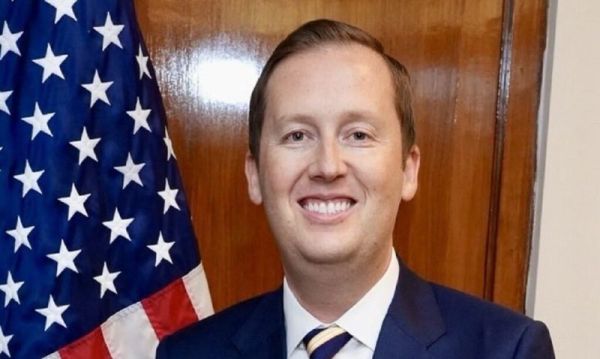
Returning to the theme in hand, Mr Gor’s recent visit to Srinagar was markedly different. It was open, transparent and somewhat civic. Media cameras recorded his visit to the Chief Minister’s residence in Srinagar, his interface with media and his hour-long boating at the Dal Lake.
Kashmir political dissident are awry of Ambassadors remark that Kashmir is an important part of India. Mehbooba Mufti, the chief of Peoples Democratic Party reacted strongly saying, “I don’t think we need to take America too seriously. You have seen that wherever America has intervened around the world, it has caused destruction…So, America is not our master that we need its certificate for something to matter…”
Turn coat diplomacy is the bane of Kashmir narrative. Mehbooba has perhaps forgotten that on November 13, 2006, her late father, Mufti Sayeed, visited the US as the head of a non-official delegation from India and outlined his party’s (PDP) Self-rule framework as a supranational, economic-based approach to help resolve the Kashmir conflict. That seminar was jointly organised by two US organisations, Center for Strategic and International Studies (CSIS) and the Stimson Centre.
The former generally analyzes Kashmir through the broader framework of U.S. relations with India and Pakistan. They know that the US considers Pakistan “more aligned than allies.” The latter — Stimson Centre — researchers frequently warn about the “stability-instability paradox. It is this centre that created the hoax of Kashmir as the nuclear flash point. Neither of them will talk about the root cause of Kashmir conundrum i.e., Pakistan’s 1947 incursion of Kasmir (read Gen Akbar Khan’s book The Raiders in Kashmir).
Chief Minister Mufti Mohammad Sayeed did not undertake an official state visit to the United States during his tenure. However, he frequently engaged with international diplomatic developments, such as expressing hope for bilateral dialogue between India and Pakistan during the 2015 United Nations General Assembly in New York. Analysts view these consistent calls for India-Pakistan diplomacy-shared by political figures like Farooq and Omar Abdullah — through differing lenses. To critics, this rhetoric suggests a continued questioning of the definitive nature of Jammu and Kashmir’s accession to India. Furthermore, some political observers argue that emphasizing ongoing bilateral negotiations serves to shift focus away from Pakistan’s historical culpability regarding its 1947 invasions of Kashmir.
None of these centres has ever held Pakistan responsible for the 1947 attack on Kashmir, nor have they endorsed the legality of Jammu and Kashmir’s accession to the Indian Union. They provided a conversant platform to Mufti Mohammad Sayeed, and he benefited from it. However, his daughter — who praised the United States until yesterday — now dismisses it just because the U.S. Ambassador to India did not tell the lie that she wanted.
Usually, the over-inquisitive vernacular media in Srinagar, does not miss the opportunity of building imaginary stories and fanciful interpretations of visits of foreign dignitaries to Kashmir. Ambassador Gor made a plain statement which sealed the lips of those who expected him to tell a lie.
Ambassador’s remark of Kashmir “an important part of India” is more an endorsement of genuine demands of agitating people of POJK, and indirectly Baluchistan. His comment of peaceful and prosperous Kashmir is to be interpreted in contrast to what we find on the other side of the LoC. And if his words meant a message, it was a message for China not its client sate. It is Chins which is building defence post along Aksaichin which Pakistan has illegally ceded to Beijing.
Islamabad quickly summoned the American charged affairs to deliver a formal demarche regarding the Ambassador Gor’s assertion. Given the diplomatic dynamics, this reaction was entirely expected. The move appeared aimed at placating an irritated Beijing rather than addressing the core issue. Meanwhile, critics argue that Pakistan’s actions in POJK — which have drawn concern from the UN Secretary-General and the British Parliament — contradict its professed concern for Kashmiri Muslims.
The diplomatic protocol lays down that an accredited Ambassador is formally appointed by the Head of the home state who assures the host government that the word of the ambassador is his word. Ambassador Gor was speaking the words of President Trump. Trump administration re-evaluated the situation in Kashmir and instructed the ambassador to forget the lie. He simply obeyed and suggested US revoke travel advisory.
It does not matter whether the assertion of the Ambassador is not palatable to dissidents in Kashmir. Now Mehbooba Mufti’s daughter — a budding political figure in Kashmir — has criticized Chief Minister Omar Abdullah for not confronting Ambassador Gor. We said that turn coat diplomacy is the bane of Kashmir narrative. The best example is the comment of chief minister that “it is a matter between Islamabad and America.” Examine the nuance of this statement. He neither endorses nor contradicts Gor’s statement. The is the precise psyche of Kashmir valley leadership that has done no good to the people of Kashmir.
-
Dial this number immediately in case of cyber fraud to recover the money deducted from your account..

-
When is installing a 10 kW solar panel a profitable move, and when is it a waste of money?

-
New Section of Delhi-Mumbai Expressway Opens: Know the Entry, Exit, and Toll Rules
-
Big Boost for Intern Doctors in This State: Stipend Increased Significantl

-
FD Rates: Not just government banks—these banks are offering impressive returns on FDs, with interest rates up to 8.5%