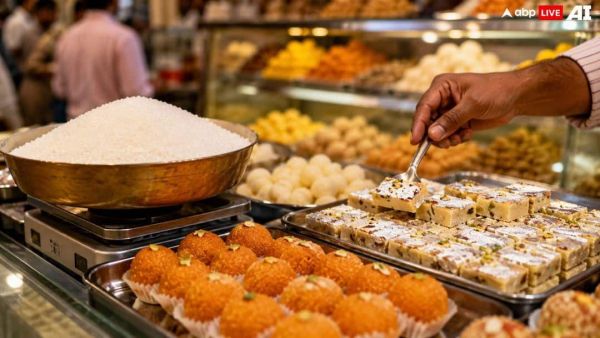
With Raksha Bandhan just a day away, sweet shops across Delhi are facing a familiar festive dilemma: whether to pass rising input costs on to customers or absorb them to protect sales.
A sharp increase in wholesale sugar prices has added to the pressure on sweet makers, who are already dealing with higher costs for milk, cheese, dry fruits, vegetable oil, ghee and commercial cooking gas. While some Delhi traders have raised prices, others are keeping rates unchanged until the festival to avoid putting additional pressure on customers.
Traders told ABP Live that the impact of the higher costs is already being felt in festive orders, with some reporting weaker pre-bookings compared with usual levels.
Sugar Prices Jump To Nearly Rs 7,000 Per Quintal
According to sweetmeat traders, wholesale sugar that was available at around Rs 4,900 per quintal until recently has risen to between Rs 6,600 and nearly Rs 7,000 per quintal.
The sudden increase has added directly to the cost of making sweets at a time when demand typically rises ahead of Raksha Bandhan.
For sweet shops, however, passing the entire increase on to customers is not straightforward. Traders said consumers are already dealing with higher household expenses, making them cautious about festive purchases.
Some Delhi Shops Have Raised Prices
Rahul Agarwal, owner of Agarwal Sweet Center in Janakpuri, West Delhi, said the rise in sugar prices had come on top of increases in several other costs.
He told ABP Live that commercial LPG cylinders, refined flour, vegetable oil and desi ghee had also become more expensive. His shop has consequently increased sweet prices by around Rs 20 per kg.
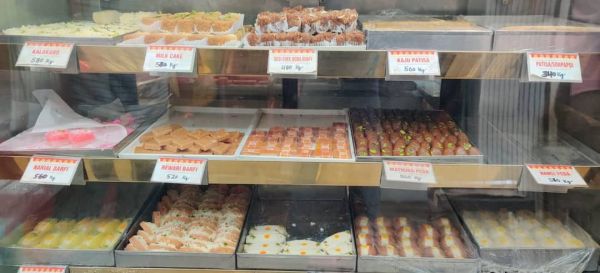
At the Janakpuri outlet, kaju barfi is currently priced at Rs 1,000 per kg, while kaju roll costs Rs 1,100 per kg. Varieties such as kaju chocolate barfi, kaju kesar and kaju rose are priced at around Rs 1,200 per kg.
Chocolate rolls and some speciality sweets are available at around Rs 600 per kg, while lachha dry-fruit laddus cost Rs 740 per kg and dry-fruit laddus can cost up to Rs 1,200 per kg. Dalda motichoor laddus are priced at Rs 300 per kg, while desi ghee laddus and patisa are around Rs 500 per kg.
Among the milk-based offerings, rasmalai is priced at Rs 45 per piece and rabri rasmalai at Rs 55. Rasgulla costs Rs 25 per piece and rajbhog Rs 35.
Chocolate barfi and special kalakand are priced at around Rs 600 per kg, while milk cake and doda barfi cost Rs 520. Chana barfi is Rs 640, pista barfi Rs 580 and plain barfi Rs 560 per kg.
Other Shops Are Absorbing The Higher Costs
Not all traders have followed the same approach.
A wholesale and retail sweets trader in Uttam Nagar, West Delhi, who did not wish to be identified, told ABP Live that his business had decided against another price increase for now.
The trader said the business has spent more than 35 years building customer trust around quality and reasonable pricing. Raising rates immediately before Raksha Bandhan, he said, would not be appropriate.
The shop had earlier raised prices by around 8-10 per cent following an increase in commercial cylinder prices. Although there had been plans to reduce prices after costs eased, the subsequent increase in sugar prices changed the situation.
For now, the business plans to hold prices until the festival and review the market over the next 10-15 days. Sweets made with vegetable ghee are currently selling for around Rs 250-Rs 300 per kg, while those made with pure desi ghee cost approximately Rs 500-Rs 600 per kg.
Bikaner Mithai Wala Also Holds Prices
Dinesh Agarwal, owner of Bikaner Mithai Wala, has also decided against an immediate price increase.
Speaking about the business, which has been operating for more than two decades, Agarwal said a sudden increase during Raksha Bandhan could affect customer confidence.
He said the business had previously adjusted prices following changes in commercial cylinder costs and had reduced them when those costs eased. This time, the shop is absorbing some of the additional sugar expense.
Any decision to change prices will depend on how raw material costs and market conditions develop.
Some Traders Have Increased Rates By 10-12%
While some businesses are holding the line, others have already passed on higher production costs.
Sahil, a wholesale and retail sweets dealer in West Delhi, told ABP Live that his shop had increased prices across almost its entire range by 10-12 per cent.
He said the higher costs are being reflected even at the production stage, leaving retailers with little choice but to pass some of the increase on to wholesale and retail buyers.
The trader said the effect of the higher prices on sales will become clearer only after the festival.
Customers Are Rethinking Their Festive Budgets
The price increase is also changing how some consumers are approaching Raksha Bandhan shopping.
According to traders, pre-orders for the festival are down by nearly 10 per cent. They estimate current business at around 80-85 per cent of normal levels.
Demand remains relatively strong for kaju katli, dry sweets, barfi and sonpapdi. However, customers are increasingly reassessing how much they want to spend.
Traders said a budget of Rs 500 that previously bought a certain quantity of sweets may now require Rs 650-Rs 700 for a similar purchase.
Some customers are also turning to chocolate gift packs as an alternative. Products such as Cadbury Celebrations, Dairy Milk, KitKat and Ferrero Rocher are among the options being purchased for gifting, although traditional sweets continue to see demand around Raksha Bandhan.
Customers Say Festive Inflation Is Straining Budgets
Nisha, a customer who was shopping for sweets, told ABP Live that she understood why prices had increased following the rise in sugar costs but said the additional expense was affecting household budgets.
She said sweets remain an important part of Raksha Bandhan celebrations and therefore are difficult to avoid altogether, even when prices rise. She also called for greater monitoring of prices of essential commodities during the festive period.
Another customer, Gagan Sharma, said the increase had disrupted the budget he had set aside for Raksha Bandhan purchases. He said his family traditionally buys sweets for the occasion and that higher prices were adding to the financial pressure.
He also called for action against traders involved in hoarding, while blaming the government for failing to prevent the sudden rise in sugar prices.
Sweet Prices Could Be Reassessed After Raksha Bandhan
For now, Delhi's sweet market remains divided between traders willing to absorb higher costs and those who have already revised their prices.
The next move will depend largely on how sugar and other raw material prices behave and how festive demand develops after Raksha Bandhan.
Traders who have frozen their prices have indicated that they may reconsider their rates after the festival if input costs remain elevated. For consumers, that means the current prices at sweet shops may not necessarily remain unchanged in the weeks ahead.
-
Saudi Arabia move on! Al-Hilal edge towards £50m-plus deal for Aston Villa star Ollie Watkins as Nicolas Jackson signing clears the path

-
Stock markets decline in early trade, dragged by HDFC Bank
-
Fadnavis felicitates Samay Raina, he jokes: Cyber Cell se rishta purana hai
-
Swine Flu Vaccine: When Should You Get Vaccinated? Doctors Answer 10 Key Questions

-
IP University Introduces Online BBA, B.Com Courses; More Programmes Coming Soon