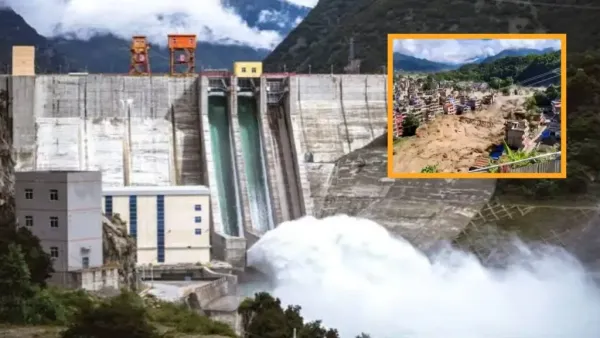
Tezzbuzz Desk – Sudden flood in Bhote Koshi river in Rasuwa district of Nepal caused massive destruction. This river originates in the region of Tibet and after entering Nepal, it passes through many sensitive districts. Houses, roads, bridges and power projects have been damaged due to the strong flood currents. A large number of people are reported missing, including Indian citizens.
Nepal has alleged that due to the bursting of a lake in the Kerung area of China, a huge amount of water suddenly came downwards. The Nepali side says that if information and warning had been received in time, the affected areas could have been alerted earlier. However, all aspects to this claim require independent verification. Amidst this tragedy in Nepal, India is also eyeing China's Medog hydropower project. China is developing one of the world's largest hydropower projects on the Yarlung Tsangpo River in Tibet. After entering India, this river becomes known as Siang and later on as Brahmaputra.
India's concerns regarding this project are not limited to water flow only. The proposed project is located in a highly sensitive and earthquake prone area of the Himalayas. In case of a major earthquake, incidents like landslides in the mountains along the dam, slipping of rocks and sudden blockage of the river can occur. In such circumstances, the danger to areas living downstream may increase. The capacity of this Chinese project is said to be around 60 gigawatts. Under the plan, several dams and power generation structures are to be developed in the large diversion area of the Yarlung Tsangpo. Due to the scale of the project, its environmental and strategic impacts have long been discussed in India.
Arunachal Pradesh Chief Minister Pema Khandu has already expressed concern over the Medog project and even called it a 'water bomb'. They argue that due to such a big project on the river in the upper reaches, changes in the natural flow of water may affect the lower areas. However, expert assessments of the potential impacts of the dam vary and no definite disaster can be predicted. After the current floods in Nepal, India has also increased vigilance in the border areas. The water level of rivers coming from Nepal is being monitored in Bihar and Uttar Pradesh. The administration has also been alerted around the Gandak river and relief agencies have been kept ready.
This entire situation has sparked new debates on water flow of trans-border rivers, timely information sharing, disaster management and safety of big dams. At present, the biggest challenge is to keep an eye on the threat of possible floods in low-lying areas of India along with relief and rescue operations in Nepal.
-
USWNT Abroad: Emily Fox wants every trophy with Arsenal, Chelsea to depend heavily on Alyssa Thompson and Naomi Girma looks for a breakthrough

-
NEET PG 2026: 2.73 lakh candidates to take the exam; number of questions reduced—previously there were 200 questions..

-
HTET 2026: When will the November session of the Haryana Teacher Eligibility Test be held? Find out the tentative date..
-
Uttarakhand: NEET UG rank list released; Gauri Srivastava emerges as state topper; this task must be completed by September 5..

-
ICSI: Registration for CS December exams begins; fill out the form by September 25; late fees apply for delayed submission..