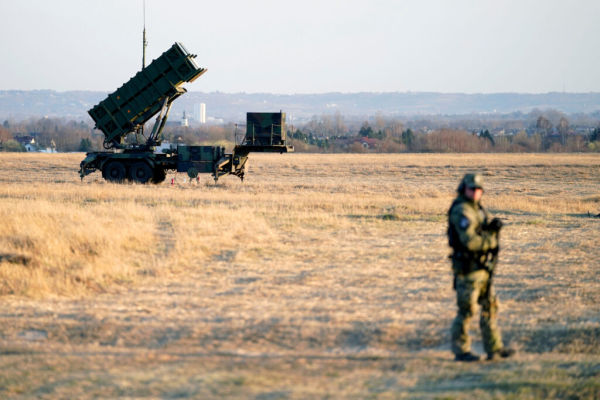
US Patriot Missile Stocks in Europe ‘Beyond Critical,’ Officials Warn/ TezzBuzz/ WASHINGTON/ J. Mansour/ A U.S. defense official and a NATO official say Patriot interceptor inventories in Europe have fallen to “beyond critical” levels after large numbers were transferred to the Middle East and used during the Iran war. The shortage could leave NATO with limited protection against Russian ballistic missiles, although the Pentagon and a senior NATO spokesperson reject claims that allied stocks are dangerously low. U.S. production is expanding and a new European facility is expected to open in Germany, but significant replenishment could take years. President Donald Trump said he is not concerned that Russia will attack NATO territory and denied reports that CIA Director John Ratcliffe delivered a warning during a covert visit to Moscow. Russia’s intelligence chief characterized his meeting with Ratcliffe as routine, supporting Trump’s account that no unusual message was conveyed. European concerns persist amid Russian drone incursions into NATO airspace, Moscow’s threats against British targets and reports of a possible Russian military buildup.
Quick Look
- Two officials described Patriot stocks in Europe as critically low.
- Both spoke anonymously because of the sensitivity of military inventories.
- The Pentagon and a senior NATO spokesperson disputed their assessment.
- Patriots can intercept advanced, high-speed ballistic missiles.
- U.S. interceptors were moved from Europe to the Middle East during the Iran war.
- Previous transfers to Ukraine also contributed to declining inventories.
- CSIS estimates the Iran conflict consumed about 1,500 U.S. Patriot interceptors.
- That would represent approximately 65% of a reported 2,330-missile inventory.
- The U.S. military in Europe also reportedly faces ATACMS shortages.
- NATO officials do not expect an imminent Russian ballistic missile attack.
- European officials warn Russia could be positioned to attack NATO by 2030.
- Approximately 600 Patriot interceptors are expected to be manufactured this year.
- The U.S. aims to produce 2,000 annually by 2030.
- Europe’s first Patriot production facility is expected to open in Germany in September.
- Trump said he is not concerned about a Russian attack on NATO.
- He insisted Russia is “not going to attack NATO territory.”
- CIA Director John Ratcliffe traveled covertly to Moscow on Tuesday.
- Ratcliffe met Russian intelligence chief Sergey Naryshkin.
- Media reports said Ratcliffe warned Moscow against attacking NATO.
- Trump denied that Ratcliffe delivered such a message.
- Trump described the visit as “standard business.”
- Naryshkin also called the meeting routine.
- European leaders fear Russia could test NATO’s Article 5 commitment.
- Russian drones recently entered Romanian and Polish airspace.
- Ukrainian President Volodymyr Zelensky says Russia plans to mobilize 500,000 troops.
- Zelensky also alleges Russia is preparing for 30,000 additional North Korean troops.
- Moscow threatened possible strikes against British military targets.
Deep Look
Officials Warn of Severe Patriot Shortage
(AP)- The U.S. military is facing what two officials described as a “beyond critical” shortage of advanced missile interceptors in Europe, largely because of the heavy use of air defenses during President Donald Trump’s war with Iran.
A U.S. defense official based in Europe said the most serious shortage involves Patriot interceptors, which are among the few weapons capable of destroying Russia’s advanced ballistic missiles.
A NATO official confirmed that Patriot inventories among American and allied forces in Europe are low.
Both officials spoke anonymously because they were discussing sensitive military stockpiles.
Pentagon and NATO Dispute the Assessment
The Pentagon and a senior NATO military spokesperson publicly rejected claims that Patriot supplies in Europe have reached dangerously low levels.
U.S. Army Col. Martin O’Donnell said it is “simply not the case” that the number of Patriot missiles in Europe is beyond critical.
He said NATO can “block punches” and maintains enough air defense ammunition to protect alliance territory while continuing to provide weapons to Ukraine.
Pentagon spokesperson Sean Parnell described reports of American munitions shortages as “false.”
The conflicting statements reflect the secrecy surrounding military inventories and differing assessments of how many missiles would be necessary during a major conflict.
Europe Could Have Limited Defense Against Missile Attack
The U.S. defense official said American forces in Europe “definitely” do not have enough Patriot interceptors to defeat a sustained ballistic missile assault.
The official described NATO’s current ability to defend against even a single strike—or a stray Russian missile that veers off course—as “very limited.”
If Russia attacked a military headquarters, power plant or another important target, NATO could find itself in a position similar to Ukraine, which has repeatedly requested additional Patriot missiles.
The alliance could be forced “to take punch after punch in the mouth,” the official said.
Iran War Accelerated Inventory Decline
The United States moved missile interceptors from Europe to the Middle East, where American forces and Gulf allies have used significant numbers of Patriots and other air defense weapons against Iranian drones and missiles.
Some Iranian attacks have killed or wounded U.S. troops.
While earlier transfers to Ukraine had already reduced available stocks, experts said the unexpected scale and pace of interceptor use against Iran created the most serious pressure.
CIA Director Reportedly Warned Moscow
A Russian missile attack on NATO territory is not considered imminent.
CIA Director John Ratcliffe nevertheless traveled to Moscow this week to warn Russia against attacking the alliance, according to The Wall Street Journal.
European and NATO officials have warned that Russia could be capable of attacking an alliance member by 2030.
Patriot production is expected to expand significantly before then. Russia’s ongoing war in Ukraine may also limit its ability to open a second major air campaign against NATO.
Trump Says Russia Will Not Attack NATO, Dismissing European Fears
President Donald Trump said Thursday that he is not concerned Russia could attack NATO territory, dismissing warnings from European leaders about possible military provocations by Moscow.
Asked again about the threat while speaking to reporters approximately two hours later, Trump said he did not want to discuss whether Washington had warned Russian President Vladimir Putin.
He nevertheless offered an unequivocal prediction.
European Leaders Fear Test of Article 5
Trump’s assessment contrasts with growing alarm among European leaders who believe Russia could test NATO’s resolve with a limited attack, drone incursion or another form of military provocation.
Such action could also test Trump’s willingness to honor Article 5, the alliance’s collective-defense clause.
Article 5 states that an armed attack against one NATO member is considered an attack against all members. The credibility of the alliance depends heavily on the United States’ commitment to that guarantee.
European officials have publicly warned that Russia could be capable of attacking an alliance member by the end of the decade.
Trump Denies Ratcliffe Delivered Warning
CIA Director John Ratcliffe made a covert visit to Moscow on Tuesday and met his Russian counterpart, Sergey Naryshkin.
Multiple news organizations reported that Ratcliffe’s mission included warning Moscow not to attack a NATO country.
Trump disputed those accounts and said no such message was delivered.
He characterized the meeting as part of routine communication between the leaders of the American and Russian intelligence services.
Trump Calls Moscow Visit ‘Standard Business’
Trump described Ratcliffe’s trip as “standard business” and expressed confusion about reports portraying it as an extraordinary warning mission.
The trip attracted attention because it was Ratcliffe’s first visit to Moscow since becoming CIA director and one of the highest-level visits by a Trump administration official to Russia this year.
Russian Intelligence Chief Confirms Meeting
Naryshkin, director of Russia’s Foreign Intelligence Service, confirmed Thursday that he met Ratcliffe during the visit.
Naryshkin said the two officials discussed “intelligence matters” but did not provide additional details.
His description aligned with Trump’s insistence that the meeting was routine rather than an effort to deliver a specific threat or warning.
Zelensky Warns of Massive Russian Mobilization
Ukrainian President Volodymyr Zelensky offered a sharply different assessment of Russia’s military intentions during an Axios interview in July.
Zelensky claimed Putin was preparing to mobilize 500,000 troops in the coming months for a renewed offensive in Ukraine.
He also alleged that Russia was building infrastructure to accommodate an additional 30,000 North Korean troops who would be deployed to the war.
Those claims have not been independently confirmed in the information provided.
A major mobilization could intensify Russia’s campaign in Ukraine while increasing concerns about Moscow’s longer-term military ambitions in Europe.
Russian Drones Enter NATO Airspace
Concerns have also been fueled by recent incursions involving Russian drones.
Even if such incursions are accidental, they create a risk of military escalation. If deliberate, they could represent an attempt to test NATO’s air defenses and political unity.
The incidents have intensified European calls for stronger air defense systems and clearer commitments from Washington.
Moscow Threatens British Military Targets
Tensions increased further Thursday when Russia’s Foreign Ministry accused Britain and France of enabling Ukrainian strikes deep inside Russian territory.
The ministry said the two countries “are playing with fire” by providing Ukraine with technology used for long-range attacks.
A Russian Foreign Ministry spokesperson threatened retaliation against British military targets inside and outside Ukraine over London’s military assistance to Kyiv.
The threat adds to concerns that the war could expand beyond Ukraine or create direct confrontation between Russia and NATO members.
Trump and European Allies Offer Contrasting Assessments
Trump’s public confidence that Russia will not attack NATO stands in contrast to the preparations and warnings coming from European capitals.
His comments could reassure some allies that Washington has information suggesting an attack is unlikely. They could also deepen concern among governments seeking a stronger deterrent message toward Moscow.
The disagreement highlights a broader question facing NATO: whether Russian military pressure around Ukraine and alliance borders represents manageable risk or preparation for a wider confrontation.
Ukraine Transfers Were Planned, Iran Use Was Not
Ukraine has experienced the most severe shortage of Patriot interceptors as Russia increasingly uses advanced ballistic missiles capable of penetrating other air defenses.
Kyiv says the U.S.-made system is the only weapon in its arsenal capable of reliably stopping those missiles.
The United States supplied hundreds of Patriot interceptors to Ukraine during the 4½-year war, contributing to the reduction in inventories available elsewhere.
Ed Arnold, a senior associate fellow at London’s Royal United Services Institute, said the transfers to Ukraine were planned and reasonably measured.
The rapid expenditure of missiles in the Middle East was not anticipated to the same extent, he said, exposing production and supply-chain limitations.
ATACMS Supplies Also Reportedly Critical
The U.S. military in Europe is also struggling with critical shortages of Army Tactical Missile Systems, according to the two officials.
ATACMS are medium-range ballistic missiles designed to strike command centers, supply sites and other targets behind enemy lines.
Europe’s overall offensive missile situation is less severe than its air defense shortage because several allied militaries possess their own long-range weapons.
Those include Germany’s Taurus and the British-French Storm Shadow, air-launched missiles capable of striking hardened targets.
Few Alternatives Can Stop Ballistic Missiles
Europe has limited alternatives to Patriot interceptors for defending against Russia’s most sophisticated ballistic missiles.
Some allied systems can destroy slower drones without using costly advanced missiles. Ballistic weapons present a greater challenge because they descend steeply toward their targets at more than five times the speed of sound.
A Patriot system must rapidly track an incoming missile, calculate its likely trajectory and launch an interceptor within minutes.
Even then, one Patriot battery protects only a limited area, such as a military base, rather than an entire city.
Russia could make the challenge harder by combining ballistic missiles with swarms of inexpensive drones intended to overwhelm defenses.
European SAMP/T System Offers Possible Alternative
One potential alternative is the SAMP/T NG air defense system developed by France and Italy.
France has promised to accelerate deliveries of the upgraded system to Ukraine. Its manufacturer says the new version is better equipped to counter ballistic missiles.
The SAMP/T NG has not yet been tested in combat, however, and the current SAMP/T has a shorter range than the Patriot system.
American and European warships can also provide mobile air defense, but their usefulness depends on proximity to the target. Moving them closer could leave the vessels vulnerable to attack.
CSIS Estimates Iran War Used 65% of US Patriots
Ukraine has received Patriot missiles from both American and European inventories since Russia’s 2022 invasion.
The Biden administration supplied approximately 600 interceptors to Ukraine, according to Mark Cancian, a retired Marine colonel and senior adviser at the Center for Strategic and International Studies.
CSIS estimates that the Iran war consumed roughly 1,500 of the United States’ approximately 2,330 Patriot interceptors—about 65% of the inventory.
Those figures are estimates and have not been confirmed publicly by the Pentagon.
Approximately 600 missiles, including some originally intended for Europe, are expected to be manufactured this year, Cancian said.
The production goal is to reach 2,000 Patriot interceptors annually by 2030.
European Production Facility Set to Open
NATO says Europe’s first Patriot missile production facility is scheduled to open in Germany in September.
Deliveries could begin early next year.
The first interceptors are expected to go to countries that have already placed orders, including Germany, the Netherlands, Romania and Spain, according to the U.S. defense official.
The new facility should eventually strengthen European supplies, but it cannot immediately resolve the current shortfall.
Some Systems Reportedly Lack Ammunition
Arnold said some European countries have purchased expensive Patriot launch systems but lack enough interceptors to operate them effectively.
He described Germany as being in the “ridiculous” position of possessing Patriot systems without ammunition to fire from them.
Germany’s Defense Ministry declined to discuss its stockpiles.
Because interceptor numbers are classified, it is not possible to independently determine how many missiles each country has or how long they would last during an attack.
Russia’s Own Constraints Reduce Immediate Risk
Russia may not currently be capable of carrying out a sustained missile campaign against NATO while continuing almost nightly attacks on Ukraine, Arnold said.
Launching a major air war on two fronts would place additional pressure on Russian missile stocks, aircraft and command systems.
Ukraine’s recent attacks inside Russia have also exposed gaps in Moscow’s air defenses, potentially making President Vladimir Putin more cautious about provoking NATO retaliation.
More on US News
-
Milk to Cost ₹9 More from September 1; Dairy Association Announces Hike in This City

-
PM Modi, RSS, China References At Centre Of Sonia Gandhi Book Row?

-
UEFA Champions League draw: Bayern Munich and Borussia Dortmund to take on English champions Arsenal

-
Everton forward Iliman Ndiaye keen on Manchester City switch

-
Why Bradley Barcola could be the ideal fit for Andoni Iraola’s Liverpool