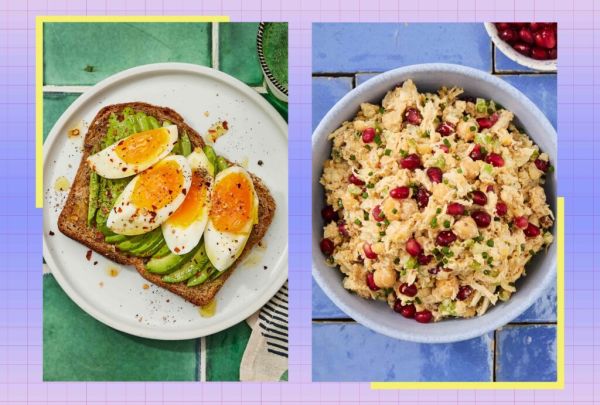
Skip added sugar and pump up the fiber in this blood sugar–friendly plan.
Reviewed by Dietitian Jessica Ball, M.S., RD
About This Plan
- This 7-day plan is set at 1,800 daily calories, with modifications for 1,500 and 2,000 calories.
- Each day provides at least 104 grams of protein and 36 grams of fiber to promote stable blood sugar.
- This plan focuses on fiber-rich carbs while skipping added sugar.
Looking for strategies to improve your blood sugar? This seven-day meal plan may be able to help. To make it blood sugar–friendly, we’ve pumped up the fiber, which is a type of indigestible carbohydrate with many health benefits, including better blood sugar, weight loss, improved heart health and more regular digestion. You also won’t find any added sugar in this plan, as regularly consuming excess added sugar is linked to an increased risk of developing obesity and type 2 diabetes. Lastly, we spread fiber-rich carbs throughout each day’s meals and snacks and included at least 104 grams of protein per day—two strategies that promote more stable blood sugar and energy. Whether you’re currently managing your blood sugar or aiming for diabetes prevention, this meal plan can work for most people. We include three different calorie levels to choose from plus a meal-prep lunch and snack for a simpler routine. Let’s get started.
| Meal Plan At-a-Glance | |||||||
|---|---|---|---|---|---|---|---|
| DAYS | 1 | 2 | 3 | 4 | 5 | 6 | 7 |
| MEALS | Breakfast: Avocado Toast with Jammy Eggs Lunch: Chickpea & Chicken Salad; Sliced Strawberries Dinner: Lemony-Garlic Pan-Seared Salmon; Chopped Salad with Italian Vinaigrette; Whole-Wheat Baguette |
Breakfast: Raspberry-Banana Yogurt Parfait Lunch: High-Protein, High-Fiber Chicken Soup; Clementine Dinner: Tofu & Zucchini Piccata |
Breakfast: Savory Oatmeal Grain Bowl Lunch: High-Protein, High-Fiber Chicken Soup; Clementine Dinner: Herb-Marinated Chicken Thighs with Grilled Vegetable Salad |
Breakfast: Savory Oatmeal Grain Bowl Lunch: High-Protein, High-Fiber Chicken Soup; Clementine Dinner: Roasted Potato Tzatziki Bowls |
Breakfast: Avocado Toast with Jammy Eggs Lunch: High-Protein, High-Fiber Chicken Soup; Clementine Dinner: One-Pot Chicken, Spinach & Sun-Dried Tomato Orzo |
Breakfast: Raspberry-Banana Yogurt Parfait Lunch: High-Protein Veggie Salad Dinner: Tuna & Veggie Grain Bowl |
Breakfast:Raspberry-Banana Yogurt Parfait Lunch: High-Protein Veggie Salad Dinner: Chicken Parmesan Casserole |
| DAILY TOTALS | Calories: 1,804, Fat: 90g, Protein: 112g, Carbs: 151g, Fiber: 39g, Sodium: 2,126mg | Calories: 1,793, Fat: 65g, Protein: 104g, Carbs: 206g, Fiber: 46g, Sodium: 1,642mg | Calories: 1,781, Fat: 72g, Protein: 136g, Carbs: 169g, Fiber: 39g, Sodium: 2,235mg | Calories: 1,783, Fat: 72g, Protein: 109g, Carbs: 179g, Fiber: 36g, Sodium: 2,103mg | Calories: 1,795, Fat: 74g, Protein: 129g, Carbs: 162g, Fiber: 37g, Sodium: 2,075mg | Calories: 1,798, Fat: 59g, Protein: 106g, Carbs: 224g, Fiber: 48g, Sodium: 1,829mg | Calories: 1,779, Fat: 62g, Protein: 119g, Carbs: 201g, Fiber: 49g, Sodium: 1,573mg |
Day 1
Daily Totals: 1,804 calories, 90g fat, 16g saturated fat, 112g protein, 151g carbohydrate, 39g fiber, 2,126mg sodium
Breakfast (407 calories, 28g carbs)
Lunch (406 calories, 42g carbs)
- 1 cup sliced strawberries
Dinner (537 calories, 36g carbs)
- 1 thin (0.5-oz.) slice whole-wheat baguette
Snacks
- ½ cup nonfat plain strained (Greek-style) yogurt + 1 medium peach (125 calories, 18g carbs)
- ¼ cup unsalted dry-roasted shelled pistachios (176 calories, 9g carbs)
Make it 1,500 calories: Omit both the yogurt snack and the pistachios.
Make it 2,000 calories: Add 1 serving Chocolate-Strawberry Protein Shake to breakfast and reduce to ½ cup sliced strawberries at lunch.
Meal-Prep Tips:
- Prepare High-Protein, High-Fiber Chicken Soup to have for lunch on Days 2 through 5.
- Make Ranch Roasted Chickpeas to have for a snack on Days 1 through 3.
Day 2
Daily Totals: 1,793 calories, 65g fat, 12g saturated fat, 104g protein, 206g carbohydrate, 46g fiber, 1,642mg sodium
Breakfast (409 calories, 48g carbs)
Lunch (356 calories, 42g carbs)
- 1 clementine
Dinner (413 calories, 51g carbs)
Snacks
- 1 serving Ranch Roasted Chickpeas (150 calories, 18g carbs)
- ¼ cup unsalted dry-roasted shelled pistachios + 1 medium apple (271 calories, 34g carbs)
Make it 1,500 calories: Omit the pistachio +apple snack.
Make it 2,000 calories: Add 1 serving Green Goddess Salad with Chickpeas to dinner.
Day 3
Daily Totals: 1,781 calories, 72g fat, 14g saturated fat, 136g protein, 169g carbohydrate, 39g fiber, 2,235mg sodium
Breakfast (431 calories, 42g carbs)
Lunch (356 calories, 42g carbs)
- 1 serving High-Protein, High-Fiber Chicken Soup
- 1 clementine
Dinner (456 calories, 35g carbs)
Snacks
- 1 serving Ranch Roasted Chickpeas (150 calories, 18g carbs)
- 1 serving Cottage Cheese Snack Jar with Tomatoes, Cucumbers & Bell Peppers (101 calories, 1g carbs)
- 1 cup nonfat plain strained (Greek-style) yogurt + 1 medium peach + 2 Tbsp. chopped walnuts (287 calories, 24g carbs)
Make it 1,500 calories: Omit the yogurt snack.
Make it 2,000 calories: Add 1¼ cups nonfat plain kefir to breakfast and increase to ¼ cup chopped walnuts at the yogurt snack.
Day 4
Daily Totals: 1,783 calories, 72g fat, 13g saturated fat, 109g protein, 179g carbohydrate, 36g fiber, 2,103mg sodium
Breakfast (431 calories, 42g carbs)
- 1 serving Savory Oatmeal Grain Bowl
Lunch (356 calories, 42g carbs)
- 1 serving High-Protein, High-Fiber Chicken Soup
- 1 clementine
Dinner (514 calories, 57g carbs)
Snacks
- 1 serving Everything Bagel Cottage Cheese Snack Jar with Bell Peppers & Chickpeas (195 calories, 14g carbs)
- 1 cup nonfat plain strained (Greek-style) yogurt + 1 medium peach + 2 Tbsp. chopped walnuts (287 calories, 24g carbs)
Make it 1,500 calories: Omit the yogurt snack.
Make it 2,000 calories: Add 1¼ cups nonfat plain kefir to breakfast and increase to ¼ cup chopped walnuts at the yogurt snack.
Day 5
Daily Totals: 1,795 calories, 74g fat, 14g saturated fat, 129g protein, 162g carbohydrate, 37g fiber, 2,075mg sodium
Breakfast (407 calories, 28g carbs)
- 1 serving Avocado Toast with Jammy Eggs
Lunch (356 calories, 42g carbs)
- 1 serving High-Protein, High-Fiber Chicken Soup
- 1 clementine
Dinner (548 calories, 54g carbs)
Snacks
- 1 serving Everything Bagel Cottage Cheese Snack Jar with Bell Peppers & Chickpeas (195 calories, 14g carbs)
- 1 cup nonfat plain strained (Greek-style) yogurt + 1 medium peach + 2 Tbsp. chopped walnuts (287 calories, 24g carbs)
Make it 1,500 calories: Omit the yogurt snack.
Make it 2,000 calories: Add 1 serving Chocolate-Strawberry Protein Shake to breakfast.
Day 6
Daily Totals: 1,798 calories, 59g fat, 13g saturated fat, 106g protein, 224g carbohydrate, 48g fiber, 1,829mg sodium
Breakfast (409 calories, 48g carbs)
- 1 serving Raspberry-Banana Yogurt Parfait
Lunch (421 calories, 52g carbs)
Dinner (429 calories, 53g carbs)
Snacks
- 1 serving Everything Bagel Cottage Cheese Snack Jar with Bell Peppers & Chickpeas (195 calories, 14g carbs)
- 1 medium apple + 1 Tbsp. natural peanut butter (190 calories, 29g carbs)
- 1 cup plain nonfat kefir + ⅔ cup cherries (154 calories, 28g carbs)
Make it 1,500 calories: Omit the apple snack. For the kefir snack, reduce to ¾ cup kefir and omit the cherries.
Make it 2,000 calories: Increase to 2 Tbsp. natural peanut butter at the apple snack and substitute ¼ cup unsalted dry-roasted shelled pistachios for the cherries at the kefir snack.
Day 7
Daily Totals: 1,779 calories, 62g fat, 13g saturated fat, 119g protein, 201g carbohydrate, 49g fiber, 1,573mg sodium
Breakfast (409 calories, 48g carbs)
- 1 serving Raspberry-Banana Yogurt Parfait
Lunch (421 calories, 52g carbs)
- 1 serving High-Protein Veggie Salad
Dinner (412 calories, 43g carbs)
Snacks
- 1 serving Everything Bagel Cottage Cheese Snack Jar with Bell Peppers & Chickpeas (195 calories, 14g carbs)
- 1 cup plain nonfat kefir + ¾ cup cherries (163 calories, 30g carbs)
- 1 cup edamame, in pods, thawed from frozen (179 calories, 14g carbs)
Make it 1,500 calories: Omit the kefir snack and reduce the edamame snack to ½ cup.
Make it 2,000 calories: Add 1 serving Citrus-Arugula Salad to dinner and increase the edamame snack to 1¼ cups.
Frequently asked Questions
Is it OK to mix and match meals if there is one I do not like?
If there’s a meal you don’t like, feel free to mix and match meals in this plan or browse some of our other diabetes-friendly recipes for additional inspiration. Each meal was chosen because it meets our diabetes-friendly parameters, has zero added sugar and is rich in fiber. While they share similar qualities, the meals vary in calories, carbs, protein and other nutrients. A simple swap should work for most people, though you may want to make adjustments to meet your specific goals, if necessary.
Can I eat the same breakfast or lunch every day?
Yes, feel free to eat the same breakfast or lunch every day if it’s easier for your routine. Each breakfast has 407 to 431 calories and 28 to 48 grams of carbohydrates, while the lunches span 356 to 421 calories and 42 to 52 grams of carbs. The ranges are fairly similar, so choosing to eat the same option every day is likely fine for many people. If you have personal nutrient goals, you could adjust a snack or two.
Why is there not a modification for 1,200 calories?
We no longer provide modifications for 1,200-calorie days in our meal plans. Research suggests that 1,200 calories per day is too low for most people to meet their nutritional needs, may lead to lean muscle loss and is unsustainable for long-term health and well-being.
Is this plan heart-healthy?
Because people with type 2 diabetes are twice as likely to be diagnosed with heart disease, we created this plan with heart health in mind. To do this, we limited saturated fat as recommended by the American Heart Association. Each day includes no more than 14 grams of saturated fat, with an upper limit of 20 grams on days we include fatty fish, like salmon. In addition to promoting healthy blood sugar, the high fiber content of this plan can help protect the heart and reduce cholesterol.
How Carbs Impact Healthy Blood Sugar Levels
Yes, you absolutely can eat carbohydrates if you have type 2 diabetes or are trying to manage your blood sugar. While it’s true that carbs can raise blood sugar, their impact on health greatly depends on the type of carbohydrates you’re eating, what foods they are paired with and the portion size. In fact, research shows that regularly eating certain types of carbohydrates, like whole grains, is linked to a reduced risk of developing type 2 diabetes and lowers fasting blood sugar levels. When eating carbohydrates for better blood sugar, here are a few simple strategies to keep in mind:
- Focus on Fiber-Rich Carbs: Good sources of fiber include whole grains, beans, lentils, nuts, vegetables and fruit. Because fiber is not digested, it’s a type of carbohydrate that doesn’t raise blood sugar levels. Instead, it promotes a more stable blood sugar response after eating by reducing spikes and can help you feel fuller for longer. Fiber is also the reason why the total grams of carbohydrate in foods is only part of the picture. If a food has 40 grams of carbohydrates but 0 grams of fiber, it will impact your blood sugar very differently than a food with 40 grams of total carbohydrates and 10 grams of fiber. Including more fiber-rich foods is an effective research-backed strategy for better blood sugar.
- Be Mindful of Portions: How each person responds to carbs can vary quite a bit depending on factors like activity level, meal composition and body size. Being mindful of the portions of carbs you eat and your body response is key. Working with a dietitian or certified diabetes educator can help fine-tune your approach and determine what works best for you.
- Pair with Protein: Pairing protein with carbs can help slow down digestion and reduce blood sugar spikes. Research shows that aiming for a higher-protein diet, defined as protein accounting for 30% of the day’s total calories, can help improve blood sugar and reduce the risk of developing type 2 diabetes. In this plan, we were mindful to pair protein, like yogurt, nuts, cottage cheese or kefir, with carbs, like fruit, to help promote more stable blood sugar levels.
How We Create Meal Plans
Registered dietitians thoughtfully create EatingWell’s meal plans to be easy-to-follow and delicious. Each meal plan meets specific parameters depending on the health condition and/or lifestyle goal it is targeting and is analyzed for accuracy using the nutrition database, ESHA Food Processor. As nutritional needs differ from person to person, we encourage you to use these plans as inspiration and adjust as you see fit.
-
Heavy rain again in Madhya Pradesh, alert of heavy rain in 11 districts

-
Sir Geoff Hurst says 1966 World Cup ‘was never really on my radar’ as late England call-up paved the way for career-defining tournament

-
Neil Sullivan recalls surreal Tottenham move in 2000 after Wimbledon days: “My agent got me a move to Spurs through his connections... I was used to training on Wimbledon Common, clearing up all the dog s**t before we could start”

-
When SRK revealed reason behind not going to Kashmir for longest time

-
Death toll rises to 903 in Nepal flash floods