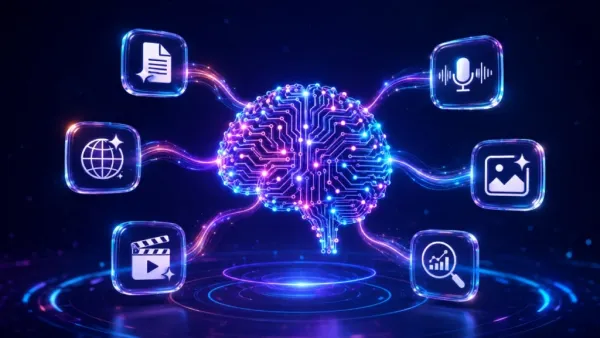
Artificial intelligence has already changed the way people use software. We can ask a chatbot a question, generate an image from a sentence, or use voice commands to complete simple tasks. But human communication has never depended on just one format. When someone is explaining a problem, they may say something, show a picture, share a recording, or send a video at the same time. This is where multimodal AI is becoming increasingly interesting for software teams.
Multimodal AI allows applications to work with different forms of information together, including text, images, audio, and video; instead of building an application that understands only what a user types, developers can create experiences that understand the bigger picture. That shift is encouraging software teams to rethink how applications should work and, more importantly, how people should interact with them.
What Makes Multimodal AI Different?
The basic idea behind multimodal AI is quite simple. Traditional AI applications may be designed around one type of input. A text-based system understands written instructions, while a computer vision system focuses on images. A multimodal system can bring these different inputs together.
Imagine that someone has a problem with their laptop. They could type, “My laptop is making a strange noise,” attach a photograph of the device, and upload a short recording of the sound. Instead of treating these as completely separate pieces of information, a multimodal application can analyze them together to better understand the situation. This is closer to how people naturally communicate. For software developers, that means applications can become more flexible because users do not always have to explain everything through text.
Text, Images and Audio Can Work Together
One of the most practical uses of multimodal AI is combining written instructions with visual information. Think about an online shopping application. A customer could upload a photograph of a chair and ask, “Can you find something similar under ₹10,000?” The AI can use the image to understand what the customer is looking for while using the text to understand the price requirement.
The same idea can work in technical support. Someone seeing an unfamiliar warning light on a device may not know what it is called. Instead of searching through a manual, they could take a photograph and ask the application what the warning means.
Audio can add another layer. A customer could send a voice explanation of the problem along with a screenshot or photograph. The AI can then use both sources instead of asking the customer to type everything out. For developers, this creates a more natural way of designing customer-facing applications.
Video Can Give AI More Context
Video takes multimodal AI a step further because it can contain several kinds of information at once. A video may include movement, spoken words, images, on-screen text, and background sounds. An AI system capable of processing these elements can potentially understand a situation more completely than it could from a single image. Consider an online education platform. A student could upload a recorded lecture and ask the AI to explain a particular section. The system could use the speaker’s explanation along with slides, diagrams, or demonstrations shown during the lesson.

The same approach could be useful for software troubleshooting. A developer could record a screen while reproducing an error and ask an AI application what might have gone wrong. Instead of describing every click and every error message, the user can simply show the application what happened.
Why Software Teams Are Building Around It
The attraction for software teams goes beyond making AI applications more impressive. Multimodal inputs can solve real problems with traditional user interfaces. A user may not know the technical name for an object, error, or problem. Asking them to describe it accurately through text can create unnecessary friction.
With multimodal AI, they can simply show it. A healthcare application, for example, could potentially combine a patient’s written information with medical images or voice notes. An educational application could combine a student’s written question with a photograph of their homework. A customer service platform could use a screenshot, product image, and spoken explanation together. These possibilities give developers more ways to design applications around what users actually have, rather than what the software expects them to type.
Multimodal AI Is Changing Customer Support
Customer service is one area where the difference could be particularly noticeable. Imagine buying a washing machine and finding an unfamiliar error on its display. Instead of searching online for the exact error code and explaining the problem to customer support, you could take a picture of the display and ask an AI assistant what is wrong. Or imagine a smartphone problem. A user could upload a screen recording, attach a screenshot, and explain the issue through voice.
A multimodal support system could analyze those different inputs together and provide a more relevant response. This does not necessarily mean human support agents become unnecessary. Instead, AI can help them understand the problem before they take over the conversation, potentially reducing repetitive questions and making support faster.
Developers Are Getting More Ways to Experiment
Another reason multimodal AI is gaining attention is that developers no longer necessarily need to build these systems completely from scratch. AI companies are increasingly providing models and APIs capable of processing different types of inputs. Software teams can use these tools to experiment with new features and integrate multimodal capabilities into existing applications.
For a small development team, this can make experimentation much easier. A developer could build a prototype that accepts an image and a written question, then later add voice or video. A company could test an AI support assistant without having to develop an entirely new AI model internally. This makes multimodal AI interesting not only to major technology companies but also to startups and smaller software teams.
The Technology Still Has Some Big Challenges
Multimodal AI may be powerful, but it is not perfect. An AI can misunderstand an image, miss something in a video, or interpret an audio recording incorrectly. Processing several types of information can also require more computing resources, potentially increasing costs and response times.
Privacy is another major concern. Photos, recordings and videos can contain extremely personal information. Developers therefore need to think carefully about how this information is processed, stored and protected. There are also concerns around misuse. The same technologies that make voice assistants, image analysis and video understanding possible can contribute to problems such as deepfakes and unauthorized voice cloning.
For software teams, building a multimodal application therefore involves more than simply adding as many AI capabilities as possible. Accuracy, security and responsible data handling have to be part of the design.
Conclusion
Multimodal AI is pushing software beyond the traditional keyboard-and-screen experience. By allowing applications to understand text, images, audio and video together, developers can create systems that respond more naturally to how people communicate in everyday life. The technology could make customer support more useful, education more interactive, software troubleshooting easier and digital assistants more capable.
At the same time, challenges around accuracy, privacy, cost and responsible use cannot be ignored. For software teams, however, the direction is becoming clear. The next generation of AI applications may not simply read what users type — they may understand what users show, say and share as well.
-
Heavy rain again in Madhya Pradesh, alert of heavy rain in 11 districts

-
Sir Geoff Hurst says 1966 World Cup ‘was never really on my radar’ as late England call-up paved the way for career-defining tournament

-
Neil Sullivan recalls surreal Tottenham move in 2000 after Wimbledon days: “My agent got me a move to Spurs through his connections... I was used to training on Wimbledon Common, clearing up all the dog s**t before we could start”

-
When SRK revealed reason behind not going to Kashmir for longest time

-
Death toll rises to 903 in Nepal flash floods