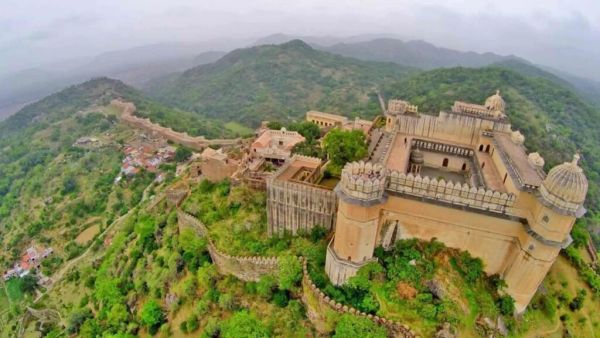
Kumbhalgarh Fort, located amidst the high hills of Aravali in Rajsamand district of Rajasthan, is counted among the most magnificent historical forts of India. Due to strong security system, huge ramparts and inaccessible hilly geographical location, it remained an important center of military power of Mewar. The biggest identity of the fort is its huge wall, which is said to extend for about 36 kilometers. For this reason it is often known as the 'second longest wall' of India.
Maharana Kumbha got the construction done
The present form of Kumbhalgarh Fort was mainly dedicated to the rulers of Mewar. Maharana Kumbha Developed in the 15th century during the reign of. According to historians, the construction and expansion work of the fort took place between 1443 and 1458. It was built at a strategic location where the Aravalli hills provided natural protection.
The fort was also named after Maharana Kumbha. Many forts and architectural projects were built in Mewar during his reign and Kumbhalgarh is considered the most important among them.
Strong bastion of security of Mewar
Kumbhalgarh was not just a palace, but a huge military fort. Its high walls, strong towers and many gateways were built to protect against enemies. The Aravali hills surrounding the fort provided natural protection to it.
The fort wall is so wide that several horses can walk simultaneously on some parts of it. Although this is often reported on social media with claims such as 'seven horses can run together', it is better to view such claims as popular descriptions.
Birthplace of Maharana Pratap
The history of Kumbhalgarh is the most Maharana Pratap Is connected to. It is believed that Maharana Pratap, the great warrior of Mewar, was born on 9 May 1540 in Kumbhalgarh. Maharana Pratap later became famous in Indian history for his struggle against the Mughal emperor Akbar and his strong spirit of independence.
Due to its association with his life, Kumbhalgarh has become a symbol of bravery and self-respect of Rajasthan.
Temple and palace inside the fort
The Kumbhalgarh complex is quite vast and contains many temples, palaces, reservoirs and other historical structures. Remains of temples associated with Hindu and Jain traditions are found in the fort.
located on the upper part of the fort cloud palace is particularly famous. Due to its location at a height, a spectacular view of the surrounding Aravalli hills is visible from here. The architecture of Badal Mahal looks different and attractive from other parts of the fort.
There were many conflicts
Despite such strong security, the history of Kumbhalgarh was full of conflicts. The fort was attacked several times. It was not easy to conquer due to its geographical location and strong fortifications. It is also mentioned in history that the enemies had to conduct a long siege to capture the fort.
Kumbhalgarh was also important as a safe haven for the rulers of Mewar. When there was a crisis in Chittor, the strategic importance of Kumbhalgarh increased further.
Included in UNESCO's World Heritage List
Kumbhalgarh Fort was included in the UNESCO World Heritage List in 2013 as part of the 'Hill Forts of Rajasthan' group. This group includes six major hill forts of Rajasthan.
Today Kumbhalgarh is a major attraction for tourists coming from India and abroad. The huge wall of the fort, Aravali hills, ancient temples and Rajput architecture make it special.
The story of Kumbhalgarh is not just the story of a fort. It contains within itself the military strategy of Mewar, Rajput architecture, the legacy of Maharana Kumbha and the history to the birth of Maharana Pratap. This fort, standing on the Aravalli hills for centuries, still tells the story of Rajasthan's pride and bravery.
-
Everton make move for Folarin Balogun as Beto nears Fiorentina exit

-
‘A great opportunity’ - Chelsea youngster Dastan Satpayev completes Burnley loan move

-
Postal para badminton, table tennis meet begins in Hyderabad

-
India rejects The Hague court’s ruling on Indus Waters Treaty
-
Everton are a footballing institution and a community asset... the near-sale of Harrison Armstrong exposed the owners’ lack of understanding and arrogance