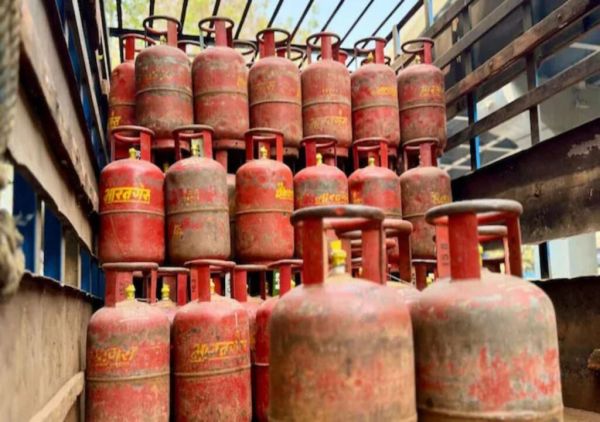
New Delhi: Commercial LPG cylinder prices have been increased by Rs 9.50 per 19-kg cylinder from September 1, adding to the cost pressures faced by restaurants, hotels, caterers and other businesses that rely on commercial cooking gas.
The latest revision comes at a time when the government is taking steps to strengthen domestic LPG availability following disruptions and supply concerns linked to the escalating conflict in West Asia. The move is aimed at creating a stronger domestic supply buffer and reducing the country’s vulnerability to international disruptions in imported cooking gas.
The increase applies to 19-kg commercial LPG cylinders, which are widely used by commercial establishments. Domestic LPG cylinders used by households are a separate category and should not be confused with the commercial cylinder price revision.
The latest development comes shortly after the government announced measures to increase and regulate domestic LPG production by refineries and upstream companies.
Commercial LPG cylinder price increased
The price of a 19-kg commercial LPG cylinder has been raised by Rs 9.50 from September 1.
Commercial LPG prices are reviewed periodically, with changes influenced by international energy prices, domestic supply conditions, taxes, transportation costs and other market factors.
For businesses, even a relatively small increase in the price of a cylinder can add to operating expenses because commercial kitchens can consume multiple cylinders over a short period.
Restaurants, food outlets, hotels, bakeries, catering companies and other establishments that depend heavily on LPG are therefore likely to monitor the latest revision closely.
The price increase comes against the backdrop of heightened uncertainty in international energy markets.
West Asia conflict raises LPG supply concerns
The latest LPG developments come as the conflict in West Asia has created concerns about energy supplies and international trade routes.
India imports a substantial portion of its LPG requirements. Any disruption to global supply chains can therefore affect the availability and cost of cooking gas in the domestic market.
The government has been attempting to strengthen domestic production to create a buffer against such disruptions.
The objective is to ensure that domestic LPG supplies remain more resilient even if international markets face prolonged uncertainty.
The latest commercial cylinder price increase should therefore be viewed against a wider energy-market backdrop rather than as an isolated revision.
Government sets LPG production targets
Last week, the government fixed maximum LPG production targets for individual public- and private-sector refineries as well as upstream companies.
The Petroleum and Natural Gas Ministry issued an order on August 13 specifying maximum LPG production levels for 21 refineries and upstream companies.
Their combined production potential has been set at 63,810 tonnes per day.
The figure is significant because it represents more than double India’s domestic LPG output during the financial year ended March 31, 2026.
The targeted production capacity is also equivalent to around 70 per cent of India’s daily LPG consumption, highlighting the scale of the government’s effort to strengthen domestic supply.
Why domestic LPG production matters
India’s dependence on imported LPG makes international developments particularly important for consumers and businesses.
When global supply is disrupted, the country can face challenges in securing adequate volumes at predictable prices.
Increasing domestic production can provide a degree of protection by ensuring that a larger portion of consumption requirements can be met from within the country.
The government’s latest production targets are consequently part of a broader effort to build resilience in the energy sector.
The strategy is especially important during periods of geopolitical instability, when international energy markets can become volatile.
MGL increases CNG and PNG prices in Mumbai
The LPG price increase comes alongside another significant energy-price revision in Mumbai.
Mahanagar Gas Ltd. (MGL) has increased the prices of compressed natural gas and domestic piped natural gas in Mumbai, citing higher input gas costs linked to international markets.
According to the company’s statement, the ongoing crisis in the Middle East has resulted in a significant increase in input gas prices linked to international indices.
MGL has consequently raised the price of CNG by Rs 2 per kg, taking the revised price to Rs 88 per kg in Mumbai.
The company has also increased the price of domestic PNG by Rs 1 per standard cubic metre (SCM).
Both revisions came into effect from September 1.
CNG price rises to Rs 88 per kg
The increase in CNG prices will affect motorists and commercial vehicle operators in Mumbai who use compressed natural gas.
CNG has traditionally been preferred by many urban vehicle owners because of its operating economics and lower emissions compared with several conventional fuels.
However, CNG prices are influenced by the cost and availability of natural gas.
MGL’s latest revision indicates that international gas-market pressures are being reflected in domestic energy prices.
For consumers, the increase means that running costs for CNG-powered vehicles will rise, although the overall impact will depend on individual driving patterns and fuel consumption.
Domestic PNG price also increased
MGL has also increased domestic PNG prices by Rs 1 per SCM.
Piped natural gas is supplied directly to homes through a distribution network and is used primarily for cooking and other household requirements.
The price revision will therefore affect domestic consumers in Mumbai who depend on PNG for cooking.
The company attributed the latest changes to higher input gas prices associated with international indices amid the continuing crisis in the Middle East.
Energy prices remain sensitive to global events
The simultaneous changes to LPG, CNG and PNG prices highlight the influence that international energy markets can have on India’s domestic fuel costs.
Although LPG, CNG and PNG are different fuels with distinct supply chains, their pricing can be affected by international commodity markets and geopolitical developments.
The West Asia conflict has increased uncertainty across energy markets, making supply security an important priority for governments and energy companies.
For India, ensuring adequate availability of cooking gas is particularly important because LPG is used extensively by households, restaurants and other establishments.
Impact on restaurants and businesses
Commercial LPG is particularly important for the hospitality and food-service industries.
Restaurants, hotels, canteens, bakeries and catering businesses often use several 19-kg cylinders depending on the size of their operations.
An increase of Rs 9.50 per cylinder may appear modest, but businesses operating on narrow margins have to account for every increase in input costs.
Higher cooking-gas expenses can eventually influence operating costs and, depending on market conditions, may be reflected in menu prices.
The impact will vary significantly between businesses because LPG consumption differs according to the scale and nature of operations.
Government focuses on supply security
The government’s decision to set production targets for 21 refineries and upstream companies demonstrates the importance being placed on domestic LPG availability.
The combined production potential of 63,810 tonnes a day is intended to create a substantial domestic supply base.
The move follows concerns that India’s reliance on imported LPG could leave the country exposed to international supply disruptions.
A stronger domestic production network could help reduce this vulnerability and provide greater flexibility during periods of geopolitical or logistical uncertainty.
What consumers should watch
For consumers, the immediate impact of the latest changes will depend on the type of fuel they use.
The Rs 9.50 increase applies to 19-kg commercial LPG cylinders, meaning businesses are the primary users affected by this particular LPG revision.
In Mumbai, CNG users will pay Rs 88 per kg following MGL’s Rs 2 per kg increase, while domestic PNG prices have risen by Rs 1 per SCM.
Household LPG pricing is a separate matter and should not be automatically interpreted as having increased by the same amount.
Consumers and businesses should therefore check the applicable fuel category and latest local rates before calculating the impact on their monthly expenses.
Outlook for domestic LPG supply
The government’s production push could become increasingly important if international energy disruptions continue.
By encouraging higher domestic LPG production, India can potentially improve its ability to respond to supply shocks.
However, domestic production alone cannot completely insulate the country from international energy markets.
Import requirements, global prices, shipping conditions and geopolitical developments will continue to influence the domestic energy landscape.
The coming months will therefore be important in determining how effectively the government’s supply-buffer strategy can protect consumers and businesses from major disruptions.
Conclusion
Commercial LPG cylinder prices have increased by Rs 9.50 for a 19-kg cylinder from September 1, adding to the operating costs of restaurants, hotels, caterers and other commercial users.
The revision comes as the government works to strengthen India’s domestic LPG supply following concerns over the country’s vulnerability to disruptions in imported cooking gas amid the West Asia conflict.
The Petroleum and Natural Gas Ministry has set maximum LPG production levels for 21 refineries and upstream companies, with combined production potential of 63,810 tonnes per day. This is more than double domestic LPG output in the financial year ended March 31, 2026 and represents around 70 per cent of India’s daily consumption.
Meanwhile, Mahanagar Gas Ltd. has increased CNG prices in Mumbai by Rs 2 per kg to Rs 88, while domestic PNG prices have risen by Rs 1 per SCM.
The latest revisions underline how geopolitical developments and international energy prices continue to influence India’s domestic fuel market. With the government seeking to build a stronger domestic LPG buffer, supply security is likely to remain a key focus in the months ahead.
-
Application process for Bihar TRE 4.0 recruitment postponed; BPSC to announce new dates soon..

-
The running test for UP Home Guard recruitment will be held at 15 locations; candidates will have chips attached to their legs..

-
AIIMS CRE 2026 exam cancelled at two Jaipur centres; new date announced..

-
Freshers are also getting jobs; the Government of India's NCS portal is providing the opportunity..

-
If you want to get rich, take note of these 7 foolproof investment rules—your pockets will never be empty..