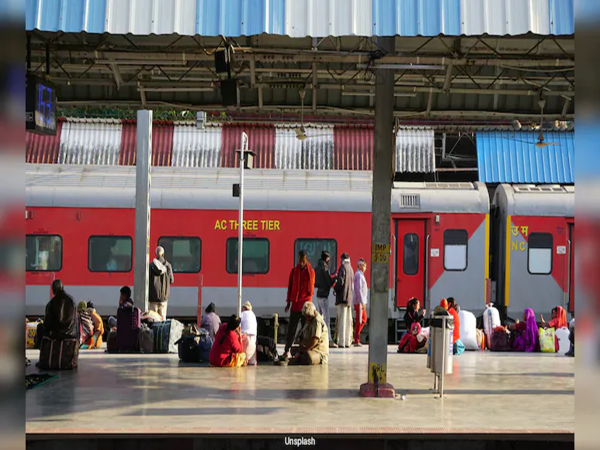
Jan Vishwas Act Railway Fine Revision: With the implementation of the Jan Vishwas Act—passed by Parliament to make rail travel safer and more organized—significant changes are being observed in Indian Railways' rules and penalties.
Indian Railways has implemented comprehensive amendments to the Railways Act, 1989, under the Jan Vishwas (Amendment) Act to ensure rail travel is safer, more orderly, and disciplined. The primary objective of this historic move is to decriminalize minor offenses and impose stricter administrative penalties on those who violate railway regulations.
**Fine for Entering Women's Coach Now ₹2,500**
The Railway Protection Force (RPF) in the Delhi Division of Northern Railway has initiated action based on the revised penalty rates. A sharp surge in fine collections has been recorded since the new rates came into effect. To ensure women's safety, Railways has significantly tightened the rules regarding women's coaches following this amendment. Previously, the fine for the unauthorized entry of men into coaches reserved for women was up to ₹500; this has now been raised to ₹2,500. Following the implementation of this rule, the RPF apprehended 302 male passengers traveling in women's coaches in July and collected fines totaling approximately ₹7.5 lakh, whereas the collection under the old rates in May was merely ₹33,000.
**Fines Revised for Smoking, Vending, and Unauthorized Entry**
Penalty amounts for various other offenses—both minor and major—have also been revised under the Jan Vishwas Act. Consequently, the fine for smoking *bidis* or cigarettes on trains or platforms has been increased from ₹100 to ₹2,000. Meanwhile, the RPF collected fines amounting to ₹5.9 lakh in July alone for unauthorized entry into railway stations or onto the tracks. Hefty civil penalties are now being imposed for selling goods without a license or begging on trains; fine collections in this category have reached ₹5.3 lakh. Additionally, ₹7.2 lakh was collected in July for disregarding instructions from railway staff—such as drivers, guards, or TTEs.
**Here are the new fine rates:**
Traveling without a valid ticket or pass now attracts a minimum fine of ₹500 (previously ₹250). Smoking *bidis* or cigarettes at railway stations or inside coaches now incurs a steep penalty of ₹2,000. Male passengers traveling in ladies' coaches will be fined ₹2,500. A fine of ₹2,000 is fixed for a first-time offense of selling goods or begging on trains or at stations without permission. Forcibly occupying another passenger's confirmed berth will result in a civil penalty of up to ₹1,000. Creating a disturbance while under the influence of alcohol or other intoxicants can lead to expulsion from the train, 24 hours in jail, or a fine of ₹1,000. Carrying hazardous or explosive materials without permission will attract a fine of up to ₹10,000.
**Fines will no longer be reduced**
Commenting on the matter, Senior RPF Divisional Security Commissioner Ashutosh Pandey stated that the implementation of the *Jan Vishwas Act* has brought significant changes to legal procedures and administrative processes. He explained that under this amendment, certain offenses have been reclassified from criminal acts to civil violations, allowing issues to be resolved administratively on the spot rather than going to court. Previously, if a passenger cited financial hardship, magistrates or officials could reduce the fine. However, fixed fines ranging from ₹500 to ₹2,500 have now been established, with no provision for waivers or concessions.
Three Key Features of the Jan Vishwas Act
For minor infractions, the matter is now resolved on the spot by the Railway Police or the TTE through the collection of a penalty; a criminal case will be registered in court only if the passenger flatly refuses to pay the prescribed administrative penalty.
The Act clearly delineates the legal distinction between penalties collected on the spot by administrative officials and fines imposed by a competent court.
The Act includes a special provision to account for inflation and ensure the continued effectiveness of the regulations. Under this provision, all penalty amounts prescribed for rule violations will automatically increase by 10 percent every three years.
Disclaimer: This content has been sourced and edited from NDTV India. While we have made modifications for clarity and presentation, the original content belongs to its respective authors and website. We do not claim ownership of the content.
-
South African envoy to India cleared of protocol breach after row over temple visit by ex-president

-
Nico O'Reilly reveals the blunt Pep Guardiola advice that helped turn him into a Manchester City star

-
Iliman Ndiaye explains why he picked Manchester City over Tottenham as Etihad club confirm dramatic £65m deadline-day swoop for Everton forward

-
More than half of Premier League clubs smash transfer records as spending hits a new high

-
Transfer Deadline Day 2026: Every Premier League deal completed