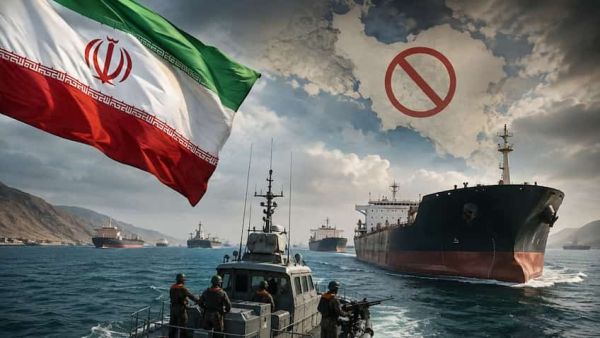
Amidst the increasing military conflict in the Middle East and the ongoing tension between Washington-Tehran, Iran has tightened its grip on the world's most sensitive maritime oil supply lifeline 'Strait of Hormuz'. Iranian Maritime Administration has blacklisted 11 more ships passing through international waterways with immediate effect, citing alleged non-compliance with navigation rules and safety guidelines. Just a week ago, Tehran had imposed sanctions on 45 oil tankers. Now with the addition of 11 new ships, the total number of ships sanctioned by Iran has increased to 56. Nearly 20 percent of global crude oil moves through this narrow sea route, so Iran's aggressive move has created panic among global shipping companies, oil traders and international energy markets. Strict decision of the Persian Gulf Strait Authority (PGSA) The Persian Gulf Strait Authority (PGSA), formed by Iran to monitor and control the movement of ships in the Strait of Hormuz, has formally announced this ban on its official website: Reason for the ban: According to PGSA, these 11 ships did not follow the security, transponder and navigation protocols set by the Iranian Maritime Authority while passing through the regional waterway. Those who cooperate will also be punished: Iran has issued a blunt warning that if any other cargo or support vessel is found assisting these blacklisted ships in bunkering, cargo transfer or any other operation, it will also be immediately put in this blacklist. Legal process for removal: Authorities have clarified that if a ship wants to be removed from the list, it will have to file a formal legal application and provide strong evidence of no violations. Increasing pressure on global shipping: Route diversion and heavy insurance This strict blockade and scrutiny of Iran is directly impacting international commercial shipping: Search for alternative routes: International shipping operators are now re-evaluating their routes passing through Hormuz. Many companies are considering stopping ships or choosing long-distance routes. Rise in War Risk Insurance: Due to the increasing danger to ships in the Persian Gulf and the Gulf of Oman and the fear of legal seizure, maritime insurance companies have increased the 'War Risk Premium' drastically, due to which the freight cost has increased manifold. Delay in supply chain: Due to strict inspection and restrictions on tankers, there are obstacles in the delivery of crude oil and LNG consignments from Gulf countries to Asian and European markets. Geopolitical confrontation: Impact of US-Iran tension Experts believe that Iran's crackdown on ships in the Strait of Hormuz is not purely administrative, but part of geopolitical retaliation: In recent days, the US has imposed new financial sanctions on Iran on the oil and shipping sector under 'Operation Economic Outcast'. In response, Tehran has used its geographical dominance to tighten control over this chokepoint. Iranian military officials have previously indicated that if Western sanctions were to completely halt its legitimate oil exports, it would also make it difficult for any other country's oil tankers to safely transit through the waterway. This action of sanctions on 56 ships in the Strait of Hormuz shows that the maritime front of the Middle East is now turning into a direct economic and strategic war. If this tension escalates further, there may once again be a big jump in the prices of crude oil in the international market.
-
Is it possible to become a mother with PCOD? Learn the methods of pregnancy and treatment from expert Dr. Chanchal Sharma

-
Want to look different in school-college on Teachers Day? These 4 trendy looks will enhance your beauty!

-
Breastfeeding: Why is breastfeeding more challenging now than it used to be? Difficulties may increase due to 'these' reasons

-
ISRO's 'Naughty Boy' Rocket Returns Tonight: Can GSLV Restore India's Space Glory?

-
Dell Launches New Al PCs: Dell's AI Blast! Launch of new AI PCs, workstations and monitors for Indian companies