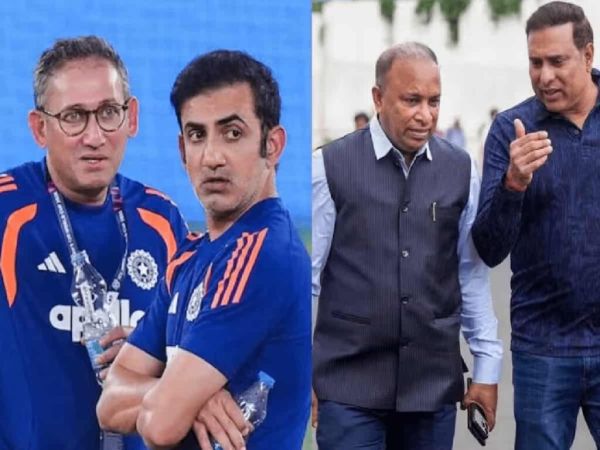
High-stakes internal friction is set to dominate Indian cricket administration as the Board of Control for Cricket in India (BCCI) convenes for a critical review meeting in Mumbai on Thursday. Beyond analyzing the national team’s disappointing recent performances on the Ireland and England tours, the spotlight will squarely fall on mounting administrative tensions. A fiery confrontation is widely anticipated between Chief Selector Ajit Agarkar and Center of Excellence (COE) head VVS Laxman regarding recurring player injuries, rehabilitation protocols, and fitness clearance procedures.
Reviewing Team India’s Struggles on Ireland and England Tours
The high-level gathering will bring together top brass, including BCCI Secretary Devajit Saikia, Head Coach Gautam Gambhir, Chief Selector Ajit Agarkar, and COE head VVS Laxman. A primary agenda item involves a thorough post-mortem of Team India’s recent shortcomings, particularly the alarming setbacks during the T20 series against Ireland and the subsequent underwhelming outings in England. Head Coach Gautam Gambhir is expected to face pointed questions from the board regarding tactical errors, team composition, and overall performance as the management seeks immediate course correction ahead of upcoming major international tournaments.
Chronic Fitness Concerns and the Agarkar-Laxman Flashpoint
While on-field losses remain a major talking point, player fitness and injury management have emerged as the single biggest crisis plaguing Indian cricket. The selection committee has found its hands repeatedly tied due to a persistent wave of injuries forcing mid-series squad replacements. Sources indicate that Chief Selector Ajit Agarkar is profoundly frustrated by the unending cycle of injuries, setting the stage for a tense showdown with VVS Laxman over how medical clearances are granted to recovering athletes.
The debate centers on why players continue to break down shortly after completing rehabilitation programs at the Centre of Excellence. High-profile names such as Jasprit Bumrah, Harshit Rana, Washington Sundar, Nitish Kumar Reddy, and star all-rounder Hardik Pandya have faced recurring fitness hurdles in recent months. Hardik’s prolonged absence—marked by his withdrawal from the Afghanistan ODI series due to a quadriceps injury and ongoing delays in securing full match-fitness—has intensified scrutiny regarding rehabilitation timelines.
Four Players Selected “Subject to Fitness” for Afghanistan T20 Series
The underlying administrative friction was laid bare during the recent announcement of the Indian squad for the upcoming three-match T20I series against Afghanistan. The selection panel named Jasprit Bumrah, Harshit Rana, Washington Sundar, and Nitish Kumar Reddy in the lineup, but explicitly conditioned their availability on “fitness clearance.”
This unusual move has forced selectors to publicly question the coordination between national selectors and the Centre of Excellence. Questions are mounting over why multiple players are drafted into active squads while still wrapped in physical uncertainty, and whether return-to-play protocols require an immediate, stringent overhaul.
Although VVS Laxman has previously defended the rigorous, multi-stage diagnostic and match-simulation protocols practiced at the COE, the sheer volume of recurring injuries has put the entire system under intense pressure. As Thursday’s meeting gets underway, all eyes will be locked on Mumbai to see how the BCCI addresses the accountability gap between coaching staff, selectors, and medical administrators to safeguard the future of Indian cricket.
-
Railways: Recruitment for 77 posts at Container Corporation of India Limited—who can apply and what is the fee?

-
SSC JE 2026: Junior Engineer recruitment notification released; applications open for 1,748 posts..

-
‘No Sound, Interval Scene Played After Intro’: Dulquer Salmaan’s ‘I’m Game’ Shows Cancelled On Opening Day

-
Doc Talk | Expert Explains Why Is H1N1 Spreading Despite Being A Familiar Seasonal Flu Virus

-
From Milk Handling To Integrated Processing: The Changing Face Of Dairy Infrastructure