Known for its buzzing commercial and entertainment district, Shinjuku has around 4,000 short-term rentals, according to the ward’s official website. That is nearly 10% of Japan’s total.
But its large residential population has become increasingly exasperated with tourists who fail to properly dispose of rubbish, smoke where they are not supposed to and make too much noise.
|
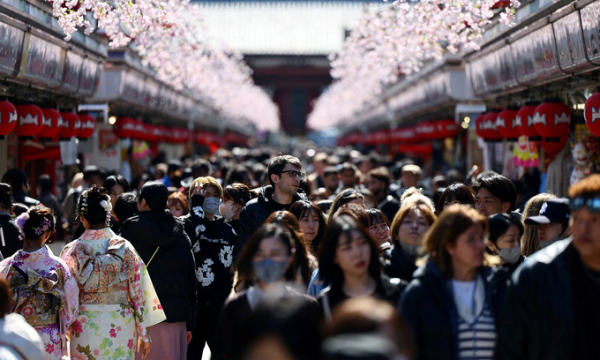
Visitors walk along Nakamise-dori street as they visit Sensoji temple at Asakusa District, a popular sightseeing spot in Tokyo, Japan, March 10, 2025. Photo by Reuters |
A Shinjuku official supervising holiday rentals told AFP on Monday that the district was “planning to revise the current ordinance… to ban private lodging” in residential zones and areas near schools.
“As the number of private lodging businesses has risen, complaints and troubles around them have increased,” the official said on customary condition of anonymity.
More than 50% of short-term rentals in Shinjuku face a ban under the new rules, he said, adding that the plan would formally be announced by the Shinjuku mayor on Tuesday.
The policy will only apply to existing rentals, the official said. It is likely to result in the closure of around 2,000 properties, including an unknown number on Airbnb.
Japan, voted the “world’s most favorite destination” in the Condé Nast Traveler Readers’ Choice Awards, received over 24.5 million tourists in the first seven months of the year, down slightly by 1.7% compared to the same period in 2025.
The country aims to attract 60 million foreign tourists by 2030, up from 42 million in 2025, but overtourism has emerged as a major challenge.
Residents of Japan’s former imperial capital Kyoto and other hotspots have expressed annoyance at selfie-taking crowds as well as traffic congestion and soaring land prices.
In Shinjuku, the number of complaints over vacation rentals increased by around 40% in the fiscal year to March, the official said.
“Many complaints are about the violation of trash disposal rules while others include smoking and trespassing,” he said.
American tourist Luke Jemison, 24, told AFP that the rules “make sense, because of noise”.
Masaru Sato, a Shinjuku resident in his 70s, said “many foreigners, including operators of private lodgings, don’t follow local rules”.
“This area gets dirty because the way they dispose of trash is very messy,” he told AFP.
-
Common cat behaviour every owner has seen but few understand

-
Oil-smelling air fryer after long use, clean it at home in these 3 ways

-
13 September Rashifal: These people keep outsiders away in personal matters, who will take care of their health, with whom will they get angry?

-
Nubia NaviX Ultra: Will be launched on September 16 with 7,100mAh battery and slim design, know the features

-
India is rapidly emerging as a global AI hub in AI and digital innovation: Experts