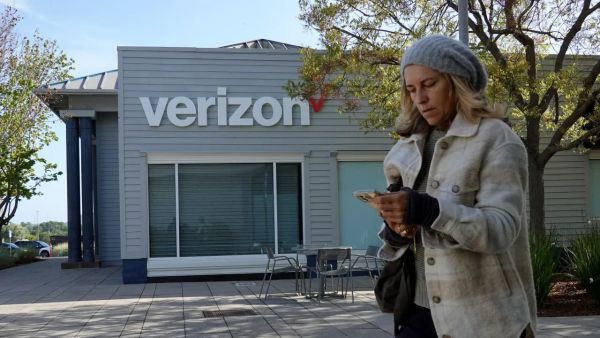
CEO Dan Schulman told Goldman Sachs Verizon has seen “zero discernible impact” on broadband growth from any low-Earth-orbit provider, including Starlink.
- Satellites cannot compete without a terrestrial network, the CEO said.
- The dismissal sits on a broader plan involving fewer free phones, tighter costs, faster fiber, and a new AI-fiber business.
- CFO Tony Skiadas called its AI connect business a multibillion-dollar opportunity.
Verizon executives used two investor conferences on Wednesday to wave off Starlink as a core threat and argue the company is now playing offense in the dense markets that produce nearly all of its revenue.
Starlink Is Rural. Verizon Is Not.
CEO Dan Schulman told Goldman Sachs Verizon has seen “zero discernible impact” on broadband growth from any low-Earth-orbit (LEO) provider, including Starlink. The more he studies the physics, he said, the more convinced he is that satellite is complementary — even over the medium to long term — and “not a direct competitor.”
Satellites cannot compete without a terrestrial network, he said. In urban and suburban areas, where 95% to 98% of Verizon’s revenue is made, the company is “100 times, in some cases 1,000 times more efficient.” Satellite belongs in very rural terrain that “will never pencil out” for Verizon to build. Schulman put a price on the gap: Starlink offers 400 megabits to the home for $130; Verizon’s $70 Verizon One bundle includes 500-megabit broadband plus mobile.
CFO Tony Skiadas told Citi the same story. Verizon’s network already covers 99% of where people live and work. Partnerships with AST, Skylo, and Globalstar fill remote gaps. “Satellite works well in sparse terrain… It is a market, it is just not our market.” He pointed to MetLife Stadium at the World Cup — fiber, wireless, and a distributed antenna system built over decades — as the kind of dense network LEOs cannot match.
Both men closed the door on a satellite MVNO (Mobile Virtual Network Operator) deal. Schulman said there is “absolutely no advantage” in extending one to any LEO provider and “no backdoors” in existing deals. Skiadas said it would not add distribution or let Verizon sell anything it cannot sell today. Satellite, they said, is a partner.
Fewer Free Phones, Tighter Costs
The dismissal sits on a broader plan involving fewer free phones, tighter costs, faster fiber, and a new AI-fiber business that should start showing up in results next year.
Schulman said he is done “giving away handsets.” Simplicity plans launched in mid-June carry no device subsidy. He said they already account for most new adds, lifting net additions while cutting acquisition costs to three-year lows.
Skiadas called the first half a sudden jump, not a slow climb: more than 1 million new wireless and home-internet customers, a record 40.1% profit margin (before interest, taxes, and certain accounting charges), cash left after running and investing in the business up 16%, and $9.4 billion returned to shareholders. The company still expects profit per share to rise 6% to 7% and leftover cash to rise 9% to 10% this year. A $9 billion cost-cutting plan is on schedule.
Both executives said more savings are coming in 2027 and 2028. “No company cost-cut its way to greatness,” Schulman said. He noted the savings are meant to pay for better service and bigger returns to shareholders.
Verizon’s New AI Play
The newest business is AI Connect. Verizon is selling unused fiber lines that link big data centers, plus space, power, and cooling in old phone buildings so AI computers can sit closer to users. A long-term Google deal is already worth more than $1 billion. CFO Tony Skiadas called the whole opportunity multibillion-dollar and said it should start to show up in results in 2027. A multiyear deal with Corning locks in fiber supply so those builds are not delayed by shortages.
Schulman called Verizon financials versus a year ago “night and day,” but said he is “far from complacent.” Verizon is targeting up to $4.5 billion of buybacks this year.
How Did Stocktwits Retail Traders React?
On Stocktwits, retail sentiment around VZ stock jumped from bearish to neutral territory over the past 24 hours, while message volume stayed at normal levels.
A Stocktwits user applauded Verizon as a strong, stable company and termed the stock a buying opportunity under $50.
View this Stocktwits post
Another user expressed disappointment that the company did not raise its quarterly dividend. Earlier today, the company said that its Board has declared a quarterly dividend of 70.75 cents per outstanding share, consistent with the prior quarter's dividend rate.
View this Stocktwits post
VZ stock has gained 22% year-to-date.
For updates and corrections, email newsroom[at]stocktwits[dot]com.
-
Atlético Madrid star torments Liverpool again with another Champions League goal

-
Arsenal may have found the missing element and could finally be ready to win the Champions League

-
Manchester United tracking two Club Brugge players, scouts attend Champions League tie this week

-
Fruit flies or vinegar flies in your kitchen? How to tell them apart and keep them out

-
Andrew Garfield plays Sam Altman in ‘Artificial’