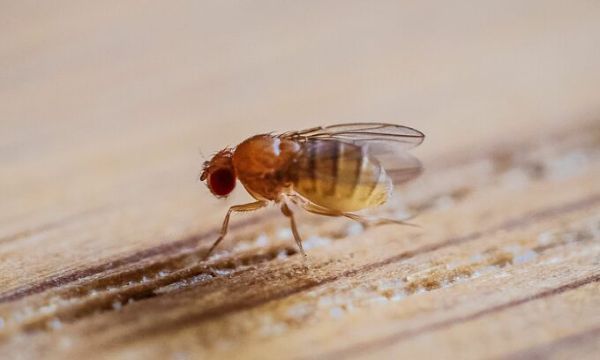
Vinegar flies are extremely small, roughly the size of a pinhead, and typically have red eyes, Dr Brendan Missenden, senior entomologist at Queensland’s Department of Agriculture and Fisheries, told The Guardian.
True fruit flies, by contrast, are much larger, about the size of a housefly, and have a noticeably bulkier body.
|
A vinegar fly. Photo from Pexels |
Actual fruit flies can sometimes turn up in gardens and even around fruit bowls and should be reported immediately where required by local authorities. Infestations can cause serious damage to fruit crops and threaten farmers’ livelihoods. They can also lay eggs inside fruit, leaving maggots hidden beneath an otherwise fresh-looking exterior.
Vinegar flies, meanwhile, are attracted to rotten fruit, vinegar, ermenting and sugary substances such as soda, wine and beer, according to CNET. They are also commonly found near trash bins, drains and other damp areas where decomposing food provides a breeding source.
One of the simplest ways to trap them is to pour about an inch of apple cider vinegar into a glass or bowl and add a small amount of dishwashing liquid. The smell of fermented vinegar attracts the flies, while the detergent breaks the surface tension of the liquid, causing them to sink and drown.
Preventing an infestation largely comes down to storing fruit properly.
Fruit piled together in a bowl can ripen more quickly because gases released during the ripening process accumulate around it. Stacked fruit also makes it easier to overlook pieces that have become bruised, damaged or overripe.
Fruit that is already ripening should therefore be eaten promptly or transferred to the refrigerator.
Thick-skinned fruits such as mangoes are generally less vulnerable to vinegar flies, while thin-skinned fruits such as bananas are more attractive to them. Keeping bananas separate from other fruit can therefore help reduce the risk of an infestation.
-
Where will the 2027 Champions League Final be played? Madrid confirmed as a far more accessible host city

-
Hansi Flick speaks on Lamine Yamal, Raphinha and the Ballon d’Or after Barcelona’s 5-1 win over Feyenoord

-
Make delicious masala oats cheela with tea, it will be ready in minutes
-
6 Best Cloud Kitchens You Can Order Asian Food From In Delhi-NCR
-
Shadab Khan created a stir, created a storm with the bat and then did wonders with the ball; Team became number-1 in CPL