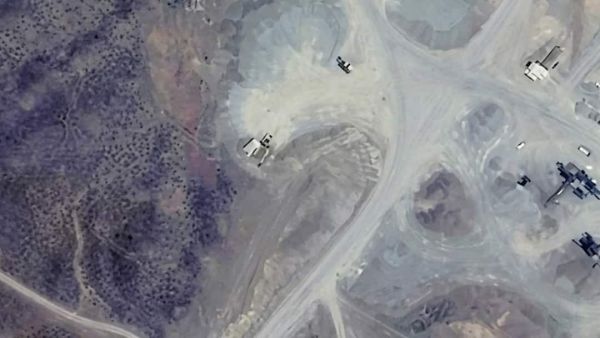
Iran appears to have significantly accelerated construction at the deeply buried Pickaxe Mountain site near its Natanz nuclear complex, according to a six-year review of satellite imagery by analysts at the Washington-based Centre for Strategic and International Studies (CSIS). The latest images, captured on August 9, show a marked increase in activity at the facility during 2026, including work around tunnel entrances, internal roads and security infrastructure. CSIS said the site appears to have moved beyond its earlier excavation phase towards probable internal construction and further reinforcement.
Pickaxe Mountain, also known as Kuh-e Kolang Gaz La, is located roughly 2 kilometres from the Natanz nuclear facility and about 220 kilometres (140 miles) south of Tehran. Its underground tunnels are protected by the surrounding granite, making the facility particularly difficult to target with conventional weapons.
Construction Activity Intensifies
Researchers examined satellite imagery covering six years and identified what they described as a distinct change in activity during 2026.
In their assessment, as per the report, the CSIS team wrote that "Multi-source imagery analysis of Pickaxe Mountain and the Natanz Nuclear Facility from 2020 to the present reveals a clear three-phase activity signature across the five key points of interest and the roads connecting them, indicating a site that has shifted from active excavation toward probable internal construction and continued exterior reinforcement."
The analysts also highlighted an unprecedented level of road activity at the site this year. The analysis does not establish what activities are taking place inside the mountain. CSIS said it could neither confirm nor rule out earlier Israeli intelligence assessments that Iran had moved uranium centrifuges and related components to the site.
What Is Inside Pickaxe Mountain?
The construction surge has renewed questions about the intended purpose of the underground complex. Iranian President Masoud Pezeshkian had previously argued that satellite imagery by itself could not establish what was happening inside the facility and called for an inspection by the International Atomic Energy Agency (IAEA). However, Tehran did not arrange access for the UN nuclear watchdog.
The IAEA has continued to seek information about Pickaxe Mountain and access to the facility.
The location's depth and geological protection have also made it a significant concern for US military planners. Analysts say the mountain could remain difficult to penetrate even with America's most powerful conventional bunker-busting weapons.
The facility has not been previously targeted in the major US-Israeli strikes on Iranian nuclear infrastructure, according to nuclear security analysts.
Pentagon Explores New Bunker-Buster
The difficulty of reaching deeply buried Iranian facilities has reportedly prompted the US military to explore new capabilities. The material provided indicates that four days before the launch of Operation Epic Fury, a Pentagon agency responsible for countering weapons of mass destruction approved an emergency $1.2 million contract to repair a subterranean test facility at New Mexico's White Sands Missile Range.
The project was intended to support a live-fire test designed to evaluate classified capabilities against emerging threats. A Defense Threat Reduction Agency justification document said the work needed to be completed within two to three weeks because of a "time-sensitive national security directive."
Three sources familiar with the matter told CNN that the planned test was connected to the Iran conflict and was aimed at developing a way to strike facilities buried deep underground.
Satellite imagery reviewed for the report also indicated excavation activity at the White Sands site between February 16 and 18. The location is used to assess the performance of weapons against hardened and deeply buried targets.
US Already Tested MOP Bombs
Washington has previously attempted to destroy Iran's nuclear infrastructure with powerful bunker-busting weapons.
In June 2025, the US conducted Operation Midnight Hammer, striking several sites associated with Iran's nuclear programme. However, a senior US general later told lawmakers that the deeply buried Isfahan facility had essentially been sealed at its entrances because the Pentagon doubted whether its Massive Ordnance Penetrator (MOP) bombs could completely destroy the underground complex.
The US military has since been pursuing a next-generation penetrator designed to reach targets buried deeper than those accessible to existing weapons. A prototype contract was awarded in September 2025, while the Air Force approached defence contractors about the proposed weapon in June.
The development comes as Pickaxe Mountain remains one of the most challenging potential targets associated with Iran's nuclear infrastructure.
Trump Threatens Pickaxe Strike
The latest satellite findings have emerged amid renewed threats from US President Donald Trump to strike the site.
Trump has repeatedly identified Pickaxe Mountain as a possible target. On Wednesday, he warned Iran after US officials observed activity at the location.
"We notice there's a little activity at Pickaxe. I would advise Iran not to get cute because we will have to hit them very hard," Trump said.
Trump had also said earlier this month that the US could target Pickaxe Mountain "very soon". The site contains two deeply buried tunnel complexes and has remained outside the strikes that heavily damaged the nearby Natanz facility.
-
BRICS Summit 2026: What’s Open, What’s Shut In Delhi On September 11?

-
Mayhem at Stamford Bridge! Cole Palmer sparks remarkable Chelsea fightback as Leeds crumble in a nine-goal Carabao Cup thriller

-
Assam’s Rangpur Sivasagar Ensemble Nominated For UNESCO World Heritage Status; Know About The Historic Ahom Capital

-
Pakistan U-19 Cricket Team Reportedly Mistaken For Asylum Seekers As Anti-Immigration Protesters Gather Outside Hotel In Portsmouth

-
'If Pakistan Makes 150, I'll Shave My Head': Fan's Hilarious Poster Backfires As PAK Gets Bowled Out For 133 Runs Against England