Second Federal Judge Blocks Trump Mail Ballot Rules Before Midterms/ TezzBuzz/ WASHINGTON/ J. Mansour/ A second federal judge has temporarily blocked the Postal Service from implementing President Donald Trump’s new mail-ballot requirements. The ruling follows a similar injunction from a Boston judge, which the administration has appealed to the US Supreme Court. Election officials say the requirements cannot be implemented safely because ballots are already being distributed for the midterm elections.
Quick Look
- Judge Carl J. Nichols issued the latest preliminary injunction.
- Judge Indira Talwani previously blocked the same Postal Service rules.
- The Supreme Court is considering the administration’s appeal.
- The regulations were issued on Aug. 21.
- Ballot-envelope designs would require Postal Service approval.
- States would have to upload voter identities to an inactive online portal.
- Mail ballots are already being distributed in several states.
- A whistleblower warned that millions of voters could be affected.
- Postal unions oppose making employees responsible for verifying voter eligibility.
Deep Look
Second judge blocks the mail-ballot rules
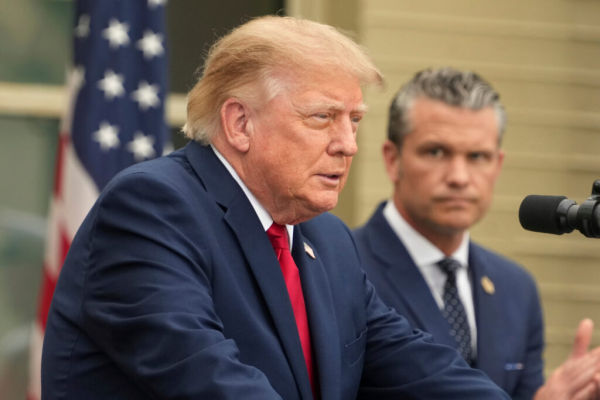
A federal judge ordered the US Postal Service late Sunday not to implement new mail-voting requirements stemming from an executive order signed by President Donald Trump.
US District Judge Carl J. Nichols in Washington issued a preliminary injunction against the regulations, creating another obstacle for the administration as the Supreme Court prepares to consider a appeal.
The Postal Service issued the contested rule on Aug. 21 as states were preparing to distribute ballots for the midterm elections.
The ruling does not provide a final resolution of the legal challenge. It prevents implementation of the requirements while the litigation continues.
Boston judge issued a similar injunction
Nichols’ decision follows a comparable order issued by US District Judge Indira Talwani in Boston.
Talwani prohibited the Postal Service from enforcing the new mail-ballot regulations before the 2026 midterm elections.
The Trump administration appealed her ruling to the US Supreme Court, which is now considering the dispute.
Talwani was nominated to the federal bench by former President Barack Obama. Nichols was nominated by Trump.
Earlier lawsuits were considered premature
Nichols previously declined to issue an injunction in May because he concluded that the plaintiffs had filed their challenge before the regulations were ready to take effect.
The Supreme Court used similar reasoning when it lifted an earlier freeze imposed by Talwani. At that stage, the administration had not finalized the Postal Service rule implementing Trump’s executive order.
The legal circumstances changed after the regulations were formally issued in August.
Plaintiffs in Boston and Washington then refiled their lawsuits, arguing that the newly issued requirements created an immediate threat to voters and state election systems.
Rules would require approval of ballot envelopes
The new regulations would require election authorities to submit all mail-ballot envelope designs to the Postal Service for advance approval.
States would also need to upload identifying information about people scheduled to receive mail ballots to a new online portal.
That portal was still inactive when the lawsuits were filed.
The administration’s Supreme Court filings describe notification and implementation deadlines connected to the Nov. 3 general election.
Election officials cite timing problems
State and local election officials say it would be impossible to carry out the changes so close to a general election without disrupting established procedures.
Election departments generally design, print, test and distribute ballot materials weeks or months before Election Day.
Mail ballots were already being sent to voters in Alabama, North Carolina and Wisconsin when Nichols issued his ruling. Additional states were preparing to begin distribution during the same week.
Officials contend that changing envelope designs, obtaining federal approval and uploading voter information at this stage could delay ballots or cause otherwise valid votes to be rejected.
Whistleblower warns of widespread disruption
A whistleblower report submitted to Congress warned that millions of people could be disenfranchised if the Postal Service requirements took effect during the midterm election.
The report raised concerns about the agency’s technical readiness and its ability to process election information through a portal that was not yet operating.
The union representing Postal Service employees has also opposed the executive order.
Union officials argue that postal workers are responsible for transporting and delivering election mail, not deciding whether individual voters are eligible to receive or cast ballots.
Supreme Court will consider the dispute
The administration’s appeal of Talwani’s injunction places the controversy before the Supreme Court.
The justices could determine whether the Postal Service may begin enforcing the regulations or whether the injunction should remain in effect while the underlying case proceeds.
Nichols’ separate order means two federal judges have now found sufficient grounds to prevent the rules from taking effect immediately.
Until a higher court modifies or overturns the injunctions, the Postal Service cannot enforce the disputed requirements against the plaintiffs covered by the court orders.
Trump has repeatedly criticized mail voting
Trump has long criticized mail balloting and has repeatedly claimed that it creates opportunities for widespread fraud.
He falsely blamed mail voting for his loss to Democrat Joe Biden in the 2020 presidential election. Courts, election officials and members of Trump’s first administration found no evidence of fraud sufficient to alter that result.
Trump has also personally voted using a mail ballot.
The current litigation focuses on whether the president and the Postal Service have legal authority to impose the new requirements and whether they can be implemented without preventing eligible voters’ ballots from being counted.
The Supreme Court’s response to the administration’s appeal could determine whether the regulations remain frozen through the midterm elections.
More on US News
-
Frank Lampard remains secure despite Coventry City's dreadful start — Doug King knows better than to panic

-
Gold Prices Plunge; What’s the Status of Silver Today? Check the Latest Rates for September 15

-
UPI: If a 0.3% charge is applied, how much will be deducted for a ₹2,500 bill payment? Understand the full calculation.

-
Major Update for Android Users! Google May Soon Alter This Security Feature
-
How much electricity does a 2kW solar panel generate per month, and what are the savings?