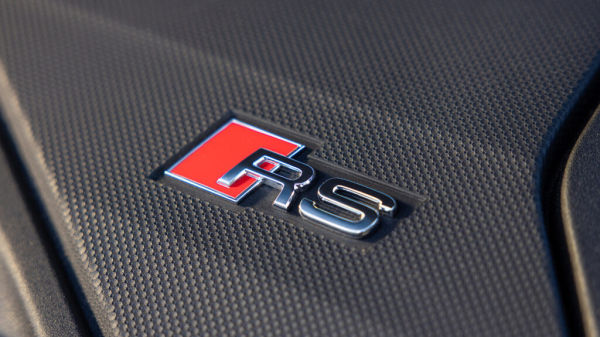
When it comes to cars, and German performance cars in particular, a simple letter — or a combination of letters — can have a whole lot of meaning. BMW is, of course, famous for its M performance brand, while Mercedes’ AMG-branded vehicles bring an equal level of respect on the street and the race track. Then there’s Audi, which offers performance models that use both S and RS designations.
In either case, an S- or RS-badged Audi will offer a significant performance boost over a base trim, including large increases in horsepower and drivetrain changes. The jump from an S model to a flagship RS model can be even more dramatic. In Audi terms, the “S” designation stands for “sport”, while Audi’s “RS” badge stands for RennSport — which means “racing sport” in German.
That clears up the branding differences, but the exact changes Audi makes between an S-badged model and an RS-badged one vary between vehicles. In many cases, RS-badged models don’t just offer extra horsepower and higher-end performance hardware, but also larger and completely different engines.
From S-line to RS
Audi’s S badge dates back to 1990 and the debut of the S2 Coupe, which packed a turbocharged five-cylinder engine and the company’s Quattro all-wheel-drive system. The RS designation arrived a few years later in the form of the 1994 RS2 Avant, which was co-engineered with Porsche and took Audi’s factory performance efforts to a new level. That’s how it’s been ever since, with RS models offering more performance than the already-potent S-badged cars.
Technically, Audi actually has three different levels of performance branding that use the letter S. At the bottom of the ladder are the S Line models. Despite the S branding, these cars aren’t performance models; instead, they’re cosmetic packages with sportier interiors and exteriors. The proper S version of a vehicle brings substantial mechanical changes, and an RS version — if available — will push the performance upgrades even higher.
Audi doesn’t offer multiple performance variations for all its models, and the RS treatment is limited to certain models. The Audi Q5 SUV, for example, is currently offered in the base Q5 guise and a more powerful SQ5 variant, but not in an RS trim. On the contrary, the sleek Audi A7 is currently only available as the fire-breathing RS7 Performance model, with a twin-turbocharged V8 under the hood.
More than just an extra letter
Over the years, Audi has given the RS treatment to everything from sedans and station wagons to coupes, convertibles, and even SUVs. If you want a perfect example of how the current Audi performance offerings change as you move up the ladder, look no further than the A3/S3/RS3 family. In its base form, the American-market A3 sedan is powered by a turbocharged 2.0-liter four-cylinder engine that makes 201 hp and has a standard all-wheel drive system.
Stepping to the more expensive S3 brings a substantial jump in performance. It still has a 2.0-liter turbo engine, but the S3’s version makes 328 hp and delivers that power through an upgraded all-wheel-drive system with a trick rear differential. Then, on top of the food chain sits the Audi RS3.
To some eyes, the exterior differences between the S3 and RS3 might seem minimal, but it’s a completely different beast under the skin — and the differences start under the hood. Instead of the turbo four-pot, you’ll find Audi’s legendary turbocharged five-cylinder, with its stout 394 hp and 369 lb-ft of torque taking the car to 60 mph in just over three seconds. The RS3 looks meaner and goes faster, and our experience behind the wheel of a 2025 RS3 showed that it’s one of Audi’s most exciting vehicles — and that the extra “R” offers more than just extra power.