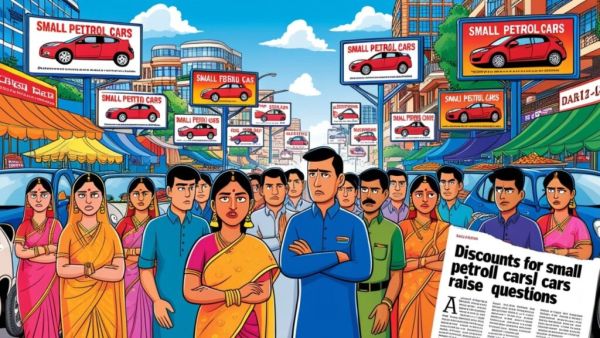
EV Transition India: A major controversy has arisen in the automobile industry over the new fuel efficiency rules in India. Major vehicle manufacturing companies of the country Tata Motors, Hyundai Motor India, Mahindra & Mahindra And JSW MG Motor Strongly opposing the weight-based relaxation proposed by the government. Companies say the policy will distort competition and undermine India’s electric vehicle transition.
Controversy over special exemption given to small petrol cars
Auto companies have asked the government to withdraw the proposed exemption for small petrol cars weighing 909 kg or less, according to letters from companies seen by Reuters. Maruti Suzuki is likely to get the biggest benefit from this proposed rule, as about 16% of its domestic sales come from sub-909 kg cars.
Objective of the new CAFE rules
India is set to reduce the average carbon dioxide emission from 113 g/km to 91.7 g/km. The new target will motivate auto companies to rapidly increase EV sales. But the government in its draft has proposed to give relief to small petrol cars less than 4 meters in length, less than 1200cc engine and weighing up to 909 kg on the basis of “limited efficiency improvement potential”. Three top industry officials described the 909 kg limit as “non-scientific and inconsistent with global standards”.
Strong objection from Tata, Hyundai, Mahindra
“Creating a special category based on size or weight would level the playing field and harm progress towards safer and cleaner vehicles,” Mahindra & Mahindra said in a letter to the Energy Ministry. Hyundai called this exemption a policy that tarnishes India’s image at the international level. It says that “such sudden changes can affect the stability of the industry and customer interests.” JSW MG Motor said 95% of vehicles weighing less than 909 kg come from a single manufacturer, so the proposal would “create an imbalance.”
Maruti Suzuki replied
Maruti Suzuki says the small, fuel-efficient vehicles are being privately marketed in many countries, including Europe, the US, China, South Korea and Japan. The company argues that small vehicles emit much less CO₂ than SUVs, so the rebate will help meet national emissions targets. However, it is also true that the demand for small cars is continuously falling in India and people are leaning more towards SUVs.
Final decision on rules stuck
There is a delay in finalizing the policy due to lack of consensus on the new CAFE rules. This delay may impact investment plans in EV and hybrid technology. Several ministries did not respond to Reuters questions on the subject. Now the industry is keeping an eye on whether the government will reconsider this proposed exemption or make it a part of the final rule.
-
Stubborn facial pigmentation disappears! This face pack of turmeric and milk will lighten the blemishes.

-
Lip fillers and cheek contouring? Ramsha Khan’s new look revealed

-
If You Say This To Your Kid Multiple Times A Day, They’re Going To Go Far In Life

-
5 Zodiac Signs Experience Great Horoscopes All Day On December 1, 2025

-
Most Asian tourists prefer accommodations under $100 per night: Agoda