Highlights
- AI illustration, video, and music tools augment creativity with speed, variation, and collaboration.
- Platforms differ in automation vs. control, balancing usability with professional precision.
- Hybrid workflows show AI as a partner, not a replacement, in creative processes by 2025.
By the year 2025, the application of artificial intelligence (AI) in creative processes will have gone beyond mere curiosity and will be part of daily practice. The ups and downs of relying on AI-powered tools have become a common scenario for artists, designers, content creators, musicians, educators, and marketers.
The development of AI has not only improved collaboration but also broadened the spectrum of creativity. However, the term “AI creative tool” spans a fleet of completely different applications, each with its own compass of specific strengths, limitations, pricing options, and machine-human interaction concepts. This article makes a comparison of one of the best-known AIs for illustration, video, and music creation based on four core aspects – user-friendliness, output quality, price, and target use case – while supporting the analysis on product testing instead of vague claims.
The evolving landscape of AI creativity
The AI creative tools of 2025 have resulted from the rapid progress of generative models and the AI creative tools that have emerged. This operating principle involves extensive multimodal architectures that are trained on various modalities and huge datasets that can generate images, video, and sound from corresponding textual descriptions or guided interactions, such as example inputs. Still, the user experience and the creative output are extremely different depending on the design, end-to-end integration, and ethical guardrails.
The major software tools are usually classified into one of the three large groups, namely: AI-based systems for illustrations, AI-based video systems, which include all aspects of animation, films, and even video quality, and AI compositions with music creation tools that let input stay or entirely take over in the creation of musical scores. Some software is very specialised and focuses on one medium, while others are more like a toolbox that allows users to work with a combination of text, image, sound, and animation.
AI illustration: balancing control and creativity
AI illustration tools excel at transforming ideas into visual form quickly, but each platform interprets “creativity” through a different lens. Midjourney has become a favourite among artists wanting very stylised, painterly outputs that are still very imaginative and expressive. Its power is in the more abstract, concept-driven visuals, where the user’s prompt is merely a conversation with the model. The interface remains text-oriented, with iterative refining being achieved through prompt adjustment and alternative selection. Midjourney’s output quality is appreciated for being rich and stylistically versatile, yet it demands a lot from prompt engineering — those who are proficient in prompt syntax get to see a dramatic improvement in the results.
Adobe Firefly’s integration into the Creative Cloud gives it an upper hand for designers working within the established workflows. Firefly is incorporated in Photoshop, Illustrator, and Express so that users can combine AI generation with manual editing effortlessly, maintaining layers and design assets rather than merging them into a final image. For professionals, Firefly’s ability to generate variations on demand, refine specific regions, or suggest design alternatives makes it a practical choice, though the subscription cost reflects its broader ecosystem.
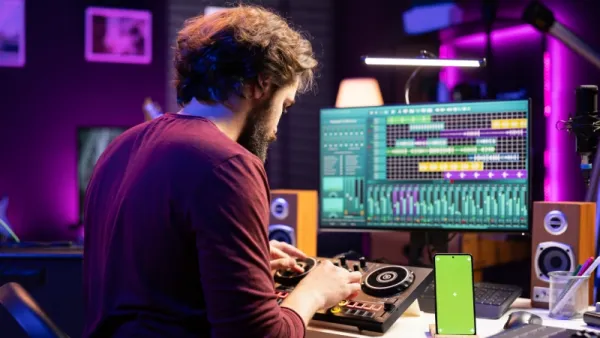
There is a general trend that runs across these illustration tools, which shows that the simplicity of use has an inverse correlation with the freedom of creativity; the consumer-oriented interfaces that are extensively automated and user-friendly produce results that are rapid but generalised, while the more technical environments require effort but yield control at the granular level. The evaluators of these tools have concluded that the best output quality is when the human and the AI cooperate through iteration – AI lengthens the idea-generating stage, while human evaluation and polishing make sure that the project fits into a given
AI video creation: from concept to cinematic
AI video tools in 2025 encompass a spectrum from assistive to generative systems. Products such as RunwayML, Synthesia, Pika Labs, and Adobe’s expanding Premiere Pro generative features represent different points along this spectrum.
RunwayML occupies a hybrid space: it provides generative models for background removal, motion interpolation, style transfer, and clip generation, while interoperating with professional editing software. For creators who understand post-production workflows, this balance between automation and hands-on control is valuable. Generating entire scenes from prompts remains challenging, particularly for complex narratives, but Runway’s tools accelerate mundane tasks that once consumed hours in a timeline.
Synthesia focuses on AI avatars and text-to-video for scripted content, a boon for corporate communications, e-learning, and marketing. Users type a script, choose an avatar and language, and the system produces a presentation-style video in minutes. While not suited to cinematic storytelling, Synthesia excels in its niche of fast, multilingual, polished speaker-led content — a use case that has rapidly grown in corporate production calendars.
Adobe’s generative video features, increasingly integrated into Premiere Pro and After Effects, aim to keep professional editors within familiar toolsets. Features like background synthesis, scene continuation, and automated variation generation are tailored to augment existing workflows rather than replace editors. This distinction matters: in professional environments where visual intent must be tightly controlled, AI becomes an assistant rather than an autopilot.
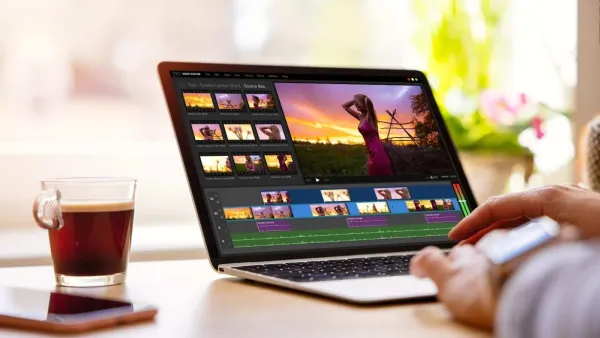
The evaluation of these video tools highlights two axes: automation versus precision, and speed versus narrative depth. Generative AI dramatically accelerates ideation and iteration, but crafted storytelling and nuanced motion still benefit from human direction and keyframe-level precision.
AI music creation: composition, collaboration, and the human touch
Generative music tools in 2025 include platforms such as AIVA, Soundation AI, Amper Music, and BandLab’s AI features. These environments offer varying degrees of autonomy, from fully generated tracks to assistive tools that co-compose with human input.
AIVA’s strength is in structured composition, creating orchestral, ambient, or background tracks based on mood, genre, and tempo specifications. It offers adjustable arrangements that composers can refine, providing stems that export into DAWs (Digital Audio Workstations) for further editing. Professional evaluators note that AIVA’s orchestral textures are particularly strong and usable in commercial media projects where bespoke composition is cost-prohibitive.
Soundation AI and BandLab have incorporated the suggestions generated by the AI into the wider music production environments. The tools enable users to create and edit their music in a cloud platform for collaboration only. They are not seen as solo composers but rather creators of the music-making process, where they bring in the novice with less technical skills and, at the same time, also open the door for deeper musical craftsmanship.
Amper Music provides fast, template-based music tracks that are ready to use for content creators who require royalty-free music as background and do not have a staff of in-house composers. The output is often usable, and the process is very fast, but it does not have the finesse of a skilled musician for complex arrangements.
The entire music creation category sees the highest accessibility in the use of thematic and generative presets, the middle range for DAW integrations, and the hardest for those users who want to have outstanding compositional control. Quality of output depends on the genre: ambient and background genres are adequately served, while intricate jazz or improvisational genres are still difficult for AI to produce with convincing quality.
Conclusion: augmentation, not replacement
By the year 2025, AI-powered digital creativity tools will be neither a magic wand nor a human replacement. They are best used as partners who not only help the creators to reach larger audiences and enhance their creative powers but also reduce the time taken for the whole process in the fields of illustration, video, and music.
The most efficient of creative processes in 2025 are hybrid: humans are in charge of giving their ideas, tastes, and conceptual clarity, while the machines are taking over the execution, generating variations, and doing exploratory trials at a faster pace. In this respect, the evaluation of the AI creative tools will consist not only of the assessment of the model capacity but also of how well the platform is integrated with human practices and professional standards.
-
Crown Prince Pahlavi says he will lead Iran's transition
-
BBC The Traitors star drops shock 'sister bombshell' in huge castle twist

-
Horror new virus fears as mosquitoes thirstier than ever for human blood

-
Six groups urged to get free NHS flu jab as H3N2 strain spreads across UK

-
Urmston shooting LIVE: One person injured as gunshots fired in Manchester