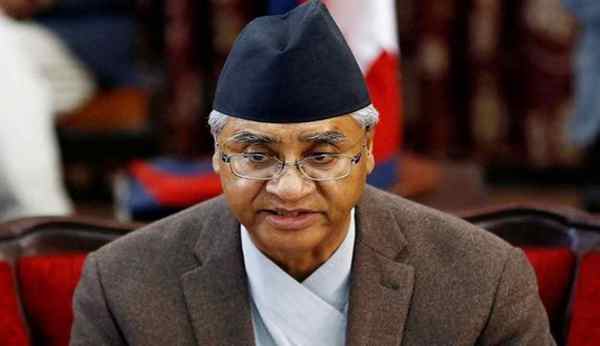
Nepal: political landscape is witnessing a significant transition as veteran leader Sher Bahadur Deuba has decided not to contest the upcoming House of Representatives election scheduled for March 5. This announcement, made through his secretariat, effectively closes a long and influential chapter in modern Nepali politics. Deuba’s decision is not merely a personal choice but a reflection of shifting power dynamics, internal party transformations, and growing generational pressure within the country’s democratic framework.
Official Announcement and Public Confirmation
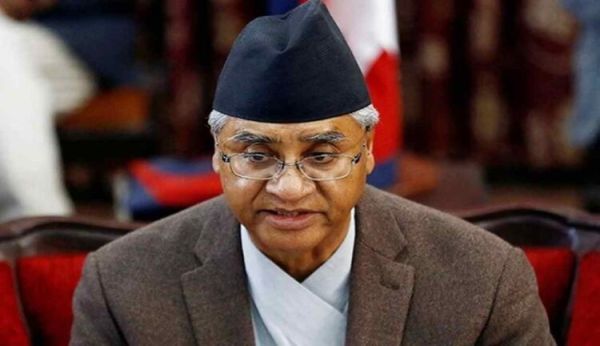
The decision was formally communicated by Bhanu Deuba, the chief personal secretary of Sher Bahadur Deuba, through social media. The statement confirmed that the former Prime Minister and long-time President of the Nepali Congress would not seek re-election to the House of Representatives. This announcement quickly drew national attention, as it marked the first time since the early 1990s that Deuba would be absent from a parliamentary race.
A Political Journey Spanning More Than Three Decades
Deuba’s parliamentary career began in 1991 when he was elected from Dadeldhura district in far-western Nepal, shortly after the restoration of multiparty democracy. Over the next 34 years, he maintained an uninterrupted electoral presence, winning seven consecutive elections. His longevity made him one of the most enduring figures in Nepal’s democratic era, shaping policy debates and coalition politics across changing constitutional frameworks.
Unfulfilled Ambitions and Coalition Politics
Despite being barred by party statute from seeking another term as party president, Deuba had still harbored hopes of returning to the premiership. A power-sharing agreement between the Nepali Congress and the Communist Party of Nepal (Unified Marxist–Leninist) had once opened that possibility. Under this arrangement, leadership rotation would have allowed Deuba and K P Sharma Oli to alternately serve as Prime Minister until the next general election in 2027. However, political instability and a youth-driven revolt led to the collapse of the Oli-led government, abruptly ending that prospect.
Internal Party Upheaval and Leadership Change
A major setback followed within the Nepali Congress itself. In early January, a Special General Convention resulted in the election of new leadership under Gagan Thapa, a move strongly opposed by Deuba. The Election Commission’s recognition of the new leadership marginalized Deuba’s faction and left the Supreme Court as its only remaining avenue for legal redress. As several loyalists defected, the political ground beneath Deuba steadily eroded.
Strategic Accommodation Within the Party
Interestingly, the new party leadership adopted a conciliatory approach toward Deuba’s supporters. Nain Singh Mahar, a known loyalist, was nominated from the constituency Deuba had represented for over three decades. This decision suggested a strategic effort to maintain party unity while signaling that the era of centralized leadership under Deuba had concluded.
Five-Time Prime Minister and National Influence
Deuba’s national stature remains undeniable. He served as Prime Minister five times, first in 1995 and later in 2001, 2004, 2017, and 2021. Few leaders in Nepal have held executive authority so frequently across different political systems. His repeated returns to power reflected both his negotiation skills and the fragmented nature of Nepal’s coalition politics.
The Role of Generational Pressure
Deuba’s exit must also be viewed in the context of rising Gen-Z political activism. Young voters and party cadres have increasingly demanded leadership renewal across major parties. While Oli has managed to retain control within his party and Pushpa Kamal Dahal has attempted consolidation through leftist mergers, Deuba struggled to maintain relevance amid internal rebellion and public fatigue with long-standing elites.
End of an Era and Questions for the Future
By choosing not to contest the election, Deuba has effectively ended his pathway back to power through democratic means. His withdrawal may have prevented a damaging party split, but it also symbolizes the decline of a political generation that dominated Nepal for decades. The larger question now facing voters is whether the country is ready to move beyond familiar faces and embrace leadership that reflects contemporary aspirations.
Conclusion: A Defining Moment in Nepali Democracy
Sher Bahadur Deuba’s departure from electoral politics is more than the retirement of a single leader. It represents a defining moment for Nepal’s democratic evolution, where institutional change, youth engagement, and internal party democracy are reshaping the future. As the nation moves forward, the legacy of Deuba’s long career will remain a reference point, even as new leaders redefine the political narrative.
-
Tiranga Dhokla: The best and easiest way to make Tiranga Dhokla, know here...
-
Akhilesh blames surge in gold, silver prices on BJP's 'corruption-driven' economics
-
'Newspaper cannot be stopped': SC grants interim relief to media outlet
-
Businessman saves 25 million Lego bricks from landfill - this is how he does it

-
Helmut Marko names two favourites for 2026 F1 title as Max Verstappen snubbed