SC calls for immediate halt to illegal mining in Aravallis
Sanjeev Kumar | January 22, 2026 10:21 AM CST
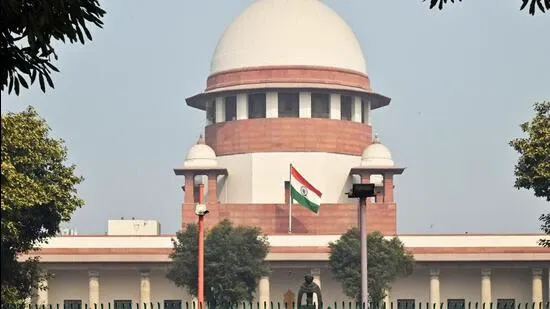
The Supreme Court on Wednesday directed states, especially Rajasthan, to ensure the immediate stoppage of illegal mining and felling of trees in the ecologically sensitive Aravalli range, even as it clarified that a high-powered panel of independent domain experts would soon be constituted to comprehensively re-examine issues arising from its earlier judgment that narrowed the definition of the Aravallis to landforms rising at least 100 metres above the surrounding terrain.
A bench led by Chief Justice of India Surya Kant continued its stay on the court's November 20 judgment, as well as the recommendations of a court-appointed committee that had triggered a mapping and delineation exercise by the Centre and states based solely on the elevation criterion - an exercise meant to serve as the foundation for future mining decisions in the region.
The bench, also comprising justices Joymalya Bagchi and Vipul M Pancholi, underscored that while regulatory frameworks may exist, "indiscriminate mining cannot be allowed", warning that illegal activity in the Aravallis leads to "irreversible consequences and destructive results".
"Any illegal activity has to be stopped immediately," the bench told the Union government and the state of Rajasthan, after senior advocate Raju Ramachandran flagged ongoing instances of illegal mining and felling of trees in the region despite prohibitory directions issued by the court.
Responding to the concern, additional solicitor general K M Nataraj, appearing for Rajasthan, assured the court that the state would act promptly if any such instance was brought to its notice.
The court made it clear that it did not view the proceedings as adversarial and that its objective was to take a holistic and scientifically informed view of the matter. "We don't want anyone to take this as an adversarial issue," observed the bench, adding that it would first identify preliminary issues and then proceed further after receiving responses from all stakeholders.
As part of this exercise, the court said it would constitute an expert body comprising specialists from diverse and related fields such as forestry, environment and geology. The panel will work under the "direct supervision" of the Supreme Court and will examine all pertinent questions surrounding the definition, delineation and protection of the Aravalli range.
Senior advocate Kapil Sibal, appearing for an intervenor, urged the court to consider a preliminary hearing, arguing that the Aravallis could not be defined in the same manner as other mountain ranges because of their unique geological history, including tectonic movements and erosion patterns spanning billions of years. The bench assured all parties that they would be heard.
Recording these submissions, the court directed the amicus curiae and other counsel to submit comprehensive notes identifying the issues likely to arise and to suggest names of suitable domain experts. It clarified that the interim directions issued on December 29 would continue to operate until further orders, and posted the matter for further hearing after four weeks.
The court's intervention builds on its December 29 order, when it stayed its own November 20 judgment narrowing the definition of the Aravalli hills to landforms rising at least 100 metres above the local relief. The court had then held that there was a "dire need to further probe and clarify" the issue to prevent regulatory gaps that could undermine the ecological integrity of one of India's oldest and most fragile mountain systems.
The November ruling had accepted an expert committee's recommendation to adopt a purely elevation-based definition, a move that sparked widespread concern among environmentalists and conservationists. Critics warned that such a definition could exclude vast tracts of smaller hills, ridges and undulating terrain that are geologically and ecologically integral to the Aravallis, potentially opening them up to mining and development.
The Supreme Court had noted that claims suggesting only about 1,048 of Rajasthan's 12,081 hills meet the 100-metre threshold, if scientifically accurate, pointed to a serious regulatory vacuum. It had also flagged concerns over whether restricting the Aravallis to a 500-metre proximity between qualifying hills could paradoxically shrink the conservation footprint while expanding so-called "non-Aravalli" areas where mining could continue.
Describing the Aravallis as the "green lungs of north-western India", the court had underlined their critical role in preventing desertification, aiding groundwater recharge and sustaining ecosystems across Gujarat, Rajasthan, Haryana and Delhi. It had cautioned that decades of unchecked urbanisation, deforestation and intensive resource extraction had already placed immense strain on what it described as an "inherently fragile ecosystem".
Until the proceedings reach "logical finality", the Supreme Court has reiterated that no permissions -- whether for new mining leases or renewal of existing ones, shall be granted in the Aravalli hills and ranges as identified in the Forest Survey of India's 2010 report, without prior approval of the apex court.
The suo motu proceedings were initiated on December 27 amid growing criticism of the November 20 judgment.
To be sure, there was no uniform definition of the Aravallis earlier. Of the four states that the mountains pass through -- Gujarat, Haryana, Rajasthan and Delhi -- only Rajasthan had a definition for the hills -- terrain with a slope greater than 3 degrees.
The controversy intensified after the Union environment ministry, on December 8, convened a meeting to initiate groundwork for delineating Aravalli areas "as per the definition accepted by the SC on November 20", with state governments and the Survey of India tasked with mapping qualifying landforms. That exercise was intended to serve as the baseline for preparing a Management Plan for Sustainable Mining (MPSM) through the Indian Council of Forestry Research and Education (ICFRE).
With the November ruling stayed, that delineation process is expected to be paused until the Supreme Court settles the definition question.
The Aravalli range is one of the world's oldest fold mountains, which stretch over 700 kilometres from eastern Gujarat to Delhi through Rajasthan and Haryana, and plays a crucial ecological role. It acts as a natural barrier against desertification, aids groundwater recharge, and supports a diverse ecosystem of flora and fauna in an otherwise arid landscape.
READ NEXT
-
Bipartisan US : Lawmakers Push Regional Quantum Hubs to Secure Tech Leadership

-
Balochistan: Multiple Alleged Enforced Disappearances Deepen Human Rights Crisis in
-
Kech: Teenager’s Night Arrest in Sparks Fresh Debate on Enforced Disappearances
-
Election: Commission Expresses Displeasure Over Delayed FIRs in West Bengal Electoral Incidents

-
Pimples and acne on face? These 4 can be signs of body disorders!