
Listen to this article in summarized format
Loading...
××
Subscribe to

Unlock AI Briefing and Premium Content
Subscribe NowWhat's Included
- Exclusive Stories
- Daily ePaper Access
- Smart Market Tools
- Curated Investment Ideas
- Ad-lite Experience
Subscription

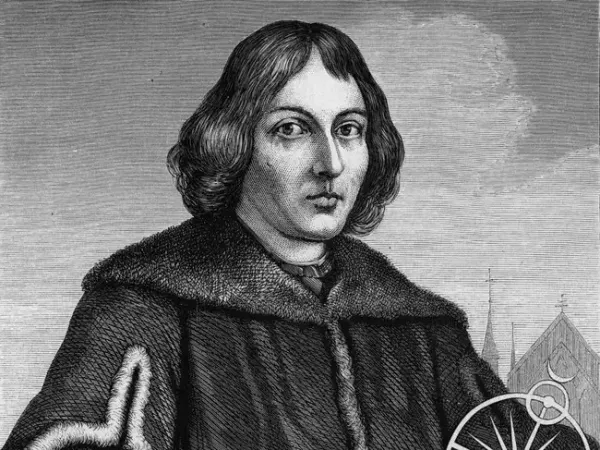
Nicolaus Copernicus, whose ideas reshaped humanity’s understanding of the universe, is remembered not only for his scientific courage but also for his thoughtful approach to knowledge and debate. One of his lesser-known reflections offers insight into the mindset behind his revolutionary work and continues to hold relevance in modern times, especially in discussions around intellectual honesty and openness.
“I am not so enamoured of my own opinions that I disregard what others may think of them.” — Nicolaus Copernicus
The quote reflects Copernicus’s belief that strong ideas should not exist in isolation. Rather than placing blind faith in his own thinking, he acknowledged the importance of considering how others evaluate and challenge those ideas. At a time when authority and tradition dominated scholarship, this attitude showed a rare willingness to accept that truth is refined through dialogue, not personal pride.
It also points to a deeper sense of responsibility that Copernicus felt as a scholar. He understood that new ideas, especially those that questioned accepted worldviews, needed careful handling. By remaining receptive to criticism and alternative perspectives, he demonstrated that intellectual progress depends on patience and restraint as much as conviction. The quote underlines the idea that listening is as important as reasoning.
Although his heliocentric theory was controversial, it marked the beginning of a fundamental shift in scientific thought. Over time, his work came to be seen as the starting point of the Scientific Revolution, altering how humanity viewed both the universe and its place within it.
He went on to study canon law, medicine, and astronomy at universities in Bologna, Padua, and Ferrara. During this period, he gained access to Greek scientific texts, which proved essential for his later astronomical research. His broad education allowed him to combine scientific observation with philosophical reasoning.
“I am not so enamoured of my own opinions that I disregard what others may think of them.” — Nicolaus Copernicus
The quote reflects Copernicus’s belief that strong ideas should not exist in isolation. Rather than placing blind faith in his own thinking, he acknowledged the importance of considering how others evaluate and challenge those ideas. At a time when authority and tradition dominated scholarship, this attitude showed a rare willingness to accept that truth is refined through dialogue, not personal pride.
It also points to a deeper sense of responsibility that Copernicus felt as a scholar. He understood that new ideas, especially those that questioned accepted worldviews, needed careful handling. By remaining receptive to criticism and alternative perspectives, he demonstrated that intellectual progress depends on patience and restraint as much as conviction. The quote underlines the idea that listening is as important as reasoning.
The Thinker Who Changed the Universe
According to the Stanford Encyclopedia of Philosophy, Nicolaus Copernicus (1473–1543) was a mathematician and astronomer who proposed that the Earth revolves around the Sun, directly challenging the long-standing geocentric model of the universe. He was dissatisfied with Ptolemy’s system, which relied on complex adjustments to explain planetary motion and failed to meet philosophical expectations of uniform movement. Copernicus believed a Sun-centred model offered a more coherent explanation of the cosmos, introducing a new way to understand planetary distances and motion.Although his heliocentric theory was controversial, it marked the beginning of a fundamental shift in scientific thought. Over time, his work came to be seen as the starting point of the Scientific Revolution, altering how humanity viewed both the universe and its place within it.
Early Life and Education
Copernicus was born on 19 February 1473 in Torun, a city that later became part of the Polish kingdom. After losing his father at a young age, he was taken under the care of his uncle, Lucas Watzenrode, a powerful church figure who guided his education and career. Copernicus studied at the University of Cracow, where his interest in mathematics and astronomy first took shape, before continuing his education in Italy.He went on to study canon law, medicine, and astronomy at universities in Bologna, Padua, and Ferrara. During this period, he gained access to Greek scientific texts, which proved essential for his later astronomical research. His broad education allowed him to combine scientific observation with philosophical reasoning.