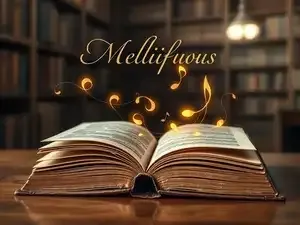
Word of the day: Words often reveal more than their surface meanings. Some carry texture, sound and emotion within them. One such word that continues to fascinate linguists, writers and readers alike is mellifluous, a term that describes not just beauty, but beauty that can be heard.
The word mellifluous is commonly used to describe sounds that are smooth, rich and pleasing to the ear. While it often appears in literary writing and music criticism, the word has steadily found a place in modern journalism, cultural commentary and even political reporting.
Pronounced as meh-LIF-loo-uhs, the word itself mirrors its meaning, flowing gently when spoken aloud.
In simpler terms, something mellifluous is not merely pleasant, it is soothing, fluid and effortless to listen to.
The word is frequently applied to:
The term entered the English language in the late 14th century, initially used in religious and poetic texts to describe divine speech, hymns and sacred readings. Over time, its usage expanded to include secular music, storytelling and oratory.
/məˈlɪf.lu.əs/
(meh-LIF-loo-uhs)
The emphasis falls on the second syllable, giving the word its signature lyrical rhythm.
“The author’s mellifluous prose carried readers gently through scenes of loss and longing.”
Writers often use the word to describe language that feels poetic even in the absence of verse.
In Music Reviews:
“The singer’s mellifluous voice elevated the acoustic performance, drawing prolonged applause from the audience.”
Music journalism frequently relies on the term to convey emotional texture rather than technical detail.
In Political Reporting:
“The leader’s mellifluous speech masked the absence of concrete policy commitments.”
Here, the word subtly suggests charm that may distract from substance.
In Cinema and Pop Culture:
“The narration, delivered in a mellifluous baritone, added depth to the documentary.”
Voiceovers and storytelling formats often invite the use of this adjective.
In Everyday Usage:
“She found comfort in the mellifluous hum of evening prayers drifting through the neighbourhood.”
Though considered formal, the word adapts well to descriptive daily writing.
In an age dominated by speed, noise and abbreviated communication, words like mellifluous remind readers of language’s sensory power. The word does not merely describe sound; it evokes feeling, mood and atmosphere.
Journalists, writers and speakers continue to rely on such vocabulary to bring nuance into storytelling, whether covering art, politics or human interest stories.
Word of the Day Today: Mellifluous
The word mellifluous is commonly used to describe sounds that are smooth, rich and pleasing to the ear. While it often appears in literary writing and music criticism, the word has steadily found a place in modern journalism, cultural commentary and even political reporting.Pronounced as meh-LIF-loo-uhs, the word itself mirrors its meaning, flowing gently when spoken aloud.
Word of the Day Meaning
Mellifluous is an adjective used to describe speech, voices, music or language that sounds sweet and harmonious.In simpler terms, something mellifluous is not merely pleasant, it is soothing, fluid and effortless to listen to.
The word is frequently applied to:
- A singer’s voice
- A poet’s verse
- A speaker’s tone
- Musical compositions
- Well-crafted prose
Mellifluous: Origin and Etymology
The word mellifluous traces its roots to Latin. It is derived from:- mel meaning “honey”
- fluere meaning “to flow”
The term entered the English language in the late 14th century, initially used in religious and poetic texts to describe divine speech, hymns and sacred readings. Over time, its usage expanded to include secular music, storytelling and oratory.
Word of the Day Pronunciation
Mellifluous is pronounced as:/məˈlɪf.lu.əs/
(meh-LIF-loo-uhs)
The emphasis falls on the second syllable, giving the word its signature lyrical rhythm.
Synonyms of Mellifluous
Some commonly used synonyms include:- Melodious
- Euphonious
- Harmonic
- Lyrical
- Smooth-sounding
- Musical
Antonyms of Mellifluous
Words that convey the opposite meaning include:- Harsh
- Jarring
- Discordant
- Grating
- Strident
- Cacophonous
Mellifluous Usage in Different Genres
In Literature:“The author’s mellifluous prose carried readers gently through scenes of loss and longing.”
Writers often use the word to describe language that feels poetic even in the absence of verse.
In Music Reviews:
“The singer’s mellifluous voice elevated the acoustic performance, drawing prolonged applause from the audience.”
Music journalism frequently relies on the term to convey emotional texture rather than technical detail.
In Political Reporting:
“The leader’s mellifluous speech masked the absence of concrete policy commitments.”
Here, the word subtly suggests charm that may distract from substance.
In Cinema and Pop Culture:
“The narration, delivered in a mellifluous baritone, added depth to the documentary.”
Voiceovers and storytelling formats often invite the use of this adjective.
In Everyday Usage:
“She found comfort in the mellifluous hum of evening prayers drifting through the neighbourhood.”
Though considered formal, the word adapts well to descriptive daily writing.
In an age dominated by speed, noise and abbreviated communication, words like mellifluous remind readers of language’s sensory power. The word does not merely describe sound; it evokes feeling, mood and atmosphere.
Journalists, writers and speakers continue to rely on such vocabulary to bring nuance into storytelling, whether covering art, politics or human interest stories.