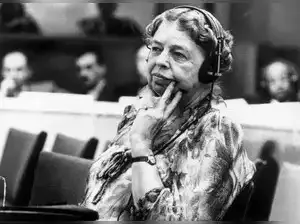
Quote of the day: Some observations outlive their moment, travelling across decades because they articulate a truth that societies continue to grapple with. One such reflection, attributed to Eleanor Roosevelt, remains especially relevant in conversations around women’s resilience, leadership and quiet strength. Framed simply yet powerfully, the thought captures how adversity often reveals qualities that routine circumstances conceal. As discussions around gender equity and personal fortitude gain renewed urgency, the words associated with the former US first lady are frequently revisited, shared and interpreted anew across generations and cultures.
In an era shaped by rapid change, economic uncertainty and evolving roles for women globally, the idea resonates not as a slogan but as lived experience. From boardrooms to households, the notion that endurance is tested, and proven under strain continues to find affirmation.
The imagery reflects a broader truth: resilience is often underestimated until circumstances demand it. For many readers, the quote functions as both reassurance and reminder that endurance is cultivated through experience, not bestowed in advance.
The sentiment also reflects a departure from traditional portrayals of strength as purely physical or overtly assertive, emphasising instead emotional endurance, adaptability and resolve.
Her education at Allenswood, a boarding school outside London, proved transformative. Under the mentorship of headmistress Marie Souvestre, Roosevelt developed intellectual confidence, independence and a commitment to social responsibility, values that would guide her throughout her life.
World War I marked a turning point, as she immersed herself in volunteer work, visiting wounded soldiers and serving with relief organisations. The experience expanded her sense of purpose and agency, laying the groundwork for a public role that would eventually redefine the position of first lady.
When Franklin Roosevelt was stricken with polio in 1921, Eleanor emerged as a crucial political partner, helping sustain his public career while cultivating her own. She became active in the Democratic Party, labour rights movements and women’s organisations, studying legislation and public policy with growing authority.
Her advocacy extended to civil rights, youth welfare, housing reform and women’s employment. At times controversial, her actions nevertheless broadened public engagement with the presidency and amplified voices previously excluded from political discourse.
In her later years, she continued to write, speak and campaign for social justice, remaining an active figure in American public life until her death in 1962.
Quote of the day
Quote of the day by Eleanor Roosevelt, “A woman is like a tea bag - you can't tell how strong she is until you put her in hot water.”Quote of the day today
The Quote of the day today centres on strength revealed through pressure, a theme that has gained traction in modern discourse, particularly in times of crisis. The saying compares inner resilience to an everyday object, suggesting that true capacity often becomes visible only when circumstances turn difficult.In an era shaped by rapid change, economic uncertainty and evolving roles for women globally, the idea resonates not as a slogan but as lived experience. From boardrooms to households, the notion that endurance is tested, and proven under strain continues to find affirmation.
Quote of the day meaning
The Quote of the day meaning lies in its understated wisdom. At its core, the metaphor suggests that strength is not always loud, obvious or immediately measurable. Instead, it often emerges when individuals are pushed beyond comfort, faced with loss, responsibility or moral challenge.The imagery reflects a broader truth: resilience is often underestimated until circumstances demand it. For many readers, the quote functions as both reassurance and reminder that endurance is cultivated through experience, not bestowed in advance.
The sentiment also reflects a departure from traditional portrayals of strength as purely physical or overtly assertive, emphasising instead emotional endurance, adaptability and resolve.
Quote of the day by Eleanor Roosevelt
The Quote of the day by Eleanor Roosevelt gains deeper weight when viewed alongside her own life story. Born Anna Eleanor Roosevelt in 1884 into a prominent New York family, she faced personal hardship early, losing both parents before the age of ten. Raised by relatives, she grew up reserved and uncertain, far removed from the public figure she would later become.Her education at Allenswood, a boarding school outside London, proved transformative. Under the mentorship of headmistress Marie Souvestre, Roosevelt developed intellectual confidence, independence and a commitment to social responsibility, values that would guide her throughout her life.
Eleanor Roosevelt: From political spouse to public force
Eleanor Roosevelt married Franklin D. Roosevelt in 1905, entering a life that would place her at the heart of American political history. While early years were shaped by the conventional expectations of a political wife, her trajectory shifted dramatically over time.World War I marked a turning point, as she immersed herself in volunteer work, visiting wounded soldiers and serving with relief organisations. The experience expanded her sense of purpose and agency, laying the groundwork for a public role that would eventually redefine the position of first lady.
Eleanor Roosevelt: Trial, transformation and independence
Personal trials further shaped Roosevelt’s worldview. The discovery of her husband’s extramarital relationship in 1918 was a profound emotional blow. Rather than retreat, she gradually forged an independent identity, pursuing political engagement and social advocacy.When Franklin Roosevelt was stricken with polio in 1921, Eleanor emerged as a crucial political partner, helping sustain his public career while cultivating her own. She became active in the Democratic Party, labour rights movements and women’s organisations, studying legislation and public policy with growing authority.
Eleanor Roosevelt: A new model of leadership at the White House
As first lady from 1933 to 1945, Eleanor Roosevelt redefined the role. She held regular press conferences exclusively for women reporters, wrote a daily syndicated column titled My Day, and travelled extensively across the United States to observe conditions firsthand.Her advocacy extended to civil rights, youth welfare, housing reform and women’s employment. At times controversial, her actions nevertheless broadened public engagement with the presidency and amplified voices previously excluded from political discourse.
Eleanor Roosevelt: Global legacy beyond the presidency
Following President Roosevelt’s death in 1945, Eleanor Roosevelt’s influence expanded onto the global stage. Appointed by President Harry S. Truman as a delegate to the United Nations, she chaired the Commission on Human Rights and played a central role in drafting the Universal Declaration of Human Rights in 1948.In her later years, she continued to write, speak and campaign for social justice, remaining an active figure in American public life until her death in 1962.