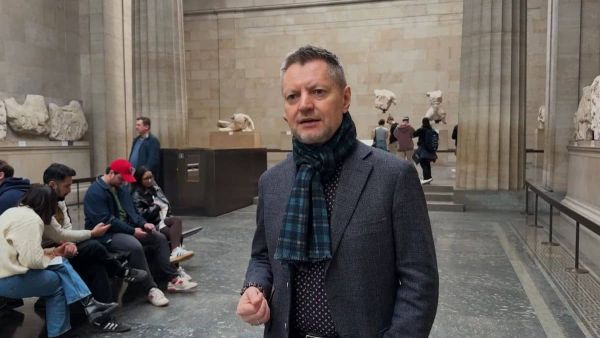
Renowned Russian journalist, television host and documentary filmmaker Alexey Pivovarov has sparked fresh conversations on colonial history with his 2025 YouTube documentary From Slaves to Bond. Pivovarov explained how the film evolved from a single incident into a wider examination of the British Empire, exploitation and historical accountability, issues that continue to resonate strongly in countries like India.
The documentary was triggered by a demand from Ethiopian authorities asking Britain to return cultural artefacts looted during a 19th-century invasion. While researching the episode, Pivovarov found himself revisiting the legacy of the British Museum, a space he says symbolises the history of the British Empire itself. What began as a film about stolen artefacts soon expanded into a broader narrative about imperial conquest and its long shadow. “You cannot talk about the museum without talking about the empire,” he noted, describing the process as deeply instructive and revealing.
Addressing perceptions of colonisation, Pivovarov said the film challenges enduring narratives that portray British rule as a civilising mission. While acknowledging that history is rarely black and white, he rejected the idea that colonisation could be considered a “blessing” for countries. According to him, such arguments downplay the immense human and economic costs borne by colonised societies. He says, “Colonisation might bring certain benefits (since nothing in human history is strictly black and white), but regarding the conquest of a foreign country as a blessing for that country is a massive stretch – or, as we say in Russian, it’s like ‘trying to stretch an owl over a globe’.”
The documentary also enters contemporary debates around labour rights, ethical responsibility and reparations. Pivovarov pointed out that colonial-era infrastructure, from railways to grand buildings, was largely designed to serve British interests. Cities like Calcutta, featured in the film, had segregated areas where Indians were barred from entry. The film highlights voices calling for reparations, including alternatives such as debt forgiveness for former colonies that still owe money to Britain. “Of course, it is difficult to imagine Britain paying financial reparations, as the amounts would vastly exceed its annual budget. However, many countries that currently owe Britain money were once its colonies. They are raising the question of reparations, taking the form of debt forgiveness or other actions that require an investment of time and effort, not just money,” he adds.
Importantly, Pivovarov emphasised that the documentary does not push conclusions but presents facts and perspectives for viewers to consider. He added that even within Britain, there is a growing understanding of the need for more equal, respectful relationships with former colonies.
One of the biggest challenges during production was gaining access to the British Museum. After repeated refusals, the team resorted to filming discreetly on mobile phones, underscoring the institution’s guarded nature. With From Slaves to Bond, Pivovarov invites audiences to re-examine empire, memory and responsibility, questions that remain deeply relevant in today’s global discourse.
-
Domestic stock market regained momentum amidst lot of ups and downs, Sensex rose by 320 points, Nifty stopped at 25175.

-
Apple launches second generation AirTag in India, know the price and powerful features

-
‘Rahul Gandhi insulted Assam,’ Why is BJP cornering Congress for Gamcha?
-
Zelensky hopes for agreement on security guarantees with America
-
India-Europe trade agreement: Tariffs on 99% goods will be reduced or removed