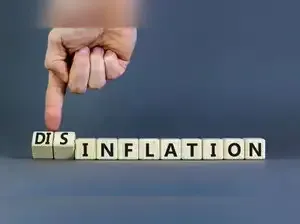
Word of the Day: Disinflation is a key economic term describing a slowdown in the rate of inflation — not prices falling, but prices rising more slowly than before. In practical terms, if consumer prices rose by 6% last year and then by 4% this year, that economy is experiencing disinflation. Prices continue to go up, but the pace of increase is slowing.
Disinflation is a sign that price pressures are easing. It is often driven by central bank actions, such as raising interest rates or cutting back money supply, and can result from weaker demand, improved supply chains, or falling commodity costs. Unlike deflation, where prices actually fall across the economy, disinflation keeps prices positive — households still pay more than before, just not as much more as they would under higher inflation.
In the current global economic context, major advanced economies have seen inflation rates fall from pandemic and post‑pandemic highs. Recent producer price data in the US and central bank discussions underscore continued easing in inflation rates — a classic disinflationary trend. This trend influences decisions on interest rates, borrowing costs, wage growth, and consumer confidence. As policymakers balance growth and price stability, understanding disinflation’s role remains crucial for markets and everyday households alike.
Economists measure price changes using indicators like the Consumer Price Index (CPI) or the Producer Price Index (PPI). When these indexes show smaller gains month over month or year over year, that signals disinflation. For example, if the CPI shows a 5% year‑over‑year increase one month and a 3% increase the next, the inflation rate has slowed — a classic case of disinflation.
Why it matters:
While the term may sound technical, it’s widely used in economic reporting and policy discussions. Financial news outlets often describe monthly inflation readings as showing signs of disinflation when the annual pace of price increases falls. Central bankers use the concept to explain why they’re holding or cutting interest rates as inflation slows but remains above target.
In practical usage, disinflation frequently shows up during economic cycles after periods of high inflation — such as the post‑pandemic period in the U.S. and Europe — and often signals that central bank policies are working to stabilize prices without tipping the economy into recession.
Global Central Banks: Many central banks have faced challenges navigating slowing inflation. The European Central Bank is reassessing monetary policy after sustained inflation spikes, reflecting how disinflation shapes policy debates in major economies. Similarly, discussions in Australia and the UK around interest rate timing have been influenced by fading disinflation trends, showing how sticky inflation data can delay rate cuts.
Emerging Markets: In countries where inflation was persistently high, disinflationary episodes can offer relief but also present policy dilemmas. Argentina’s ongoing economic adjustments and attempts to manage inflation reflect the broader challenges of sustaining disinflation in volatile environments.
Across the world, disinflation has become a focal point for investors, policymakers, and consumers. For markets, it influences expectations about interest rates and asset valuations. For households, it affects purchasing power and cost‑of‑living calculations.
In today’s economy, understanding disinflation offers clarity on key issues facing markets and policymakers. It shows that while price increases may be slowing, they are still present — and that gradual slowing can be a healthier path to long‑term price stability than abrupt price drops.
A: Disinflation is the slowdown in the rate of inflation, meaning prices rise more slowly but do not fall. In the U.S., core CPI increased 3.2% year-over-year in the latest reports, down from over 6% last year. This easing affects household budgets, borrowing costs, and central bank policies, signaling moderated price pressures across goods and services.
Q: How do central banks respond to disinflation, and what does it mean for consumers?
A: Central banks use disinflation data to adjust interest rates and manage economic growth. Slower inflation allows policymakers to ease rate hikes or hold rates steady. For consumers, it means slower increases in daily expenses, reduced pressure on loans, and slightly improved purchasing power, though overall prices remain higher than pre-pandemic levels.
Disinflation is a sign that price pressures are easing. It is often driven by central bank actions, such as raising interest rates or cutting back money supply, and can result from weaker demand, improved supply chains, or falling commodity costs. Unlike deflation, where prices actually fall across the economy, disinflation keeps prices positive — households still pay more than before, just not as much more as they would under higher inflation.
In the current global economic context, major advanced economies have seen inflation rates fall from pandemic and post‑pandemic highs. Recent producer price data in the US and central bank discussions underscore continued easing in inflation rates — a classic disinflationary trend. This trend influences decisions on interest rates, borrowing costs, wage growth, and consumer confidence. As policymakers balance growth and price stability, understanding disinflation’s role remains crucial for markets and everyday households alike.
What disinflation means
At its core, disinflation means a reduction in the rate at which prices rise over time. It does not mean that prices go down — that’s deflation. Under disinflation, prices continue to increase but more slowly than before.Economists measure price changes using indicators like the Consumer Price Index (CPI) or the Producer Price Index (PPI). When these indexes show smaller gains month over month or year over year, that signals disinflation. For example, if the CPI shows a 5% year‑over‑year increase one month and a 3% increase the next, the inflation rate has slowed — a classic case of disinflation.
Why it matters:
- Slower inflation can ease pressure on household budgets.
- It can reduce input costs for businesses and moderate wage‑price spirals.
- It influences central banks’ decisions on interest rates and monetary policy.
Origin of the term and how it’s used
The word disinflation combines the prefix “dis‑” (meaning reverse or downward) with “inflation.” Its earliest known use in English dates back to the late 19th century (around the 1880s).While the term may sound technical, it’s widely used in economic reporting and policy discussions. Financial news outlets often describe monthly inflation readings as showing signs of disinflation when the annual pace of price increases falls. Central bankers use the concept to explain why they’re holding or cutting interest rates as inflation slows but remains above target.
In practical usage, disinflation frequently shows up during economic cycles after periods of high inflation — such as the post‑pandemic period in the U.S. and Europe — and often signals that central bank policies are working to stabilize prices without tipping the economy into recession.
Modern examples and relevance in today’s economy
United States: Recent Producer Price Index (PPI) data shows a nuanced disinflation trend — producer prices are still rising, but the pace has eased across many sectors. This carries implications for market liquidity and growth projections.Global Central Banks: Many central banks have faced challenges navigating slowing inflation. The European Central Bank is reassessing monetary policy after sustained inflation spikes, reflecting how disinflation shapes policy debates in major economies. Similarly, discussions in Australia and the UK around interest rate timing have been influenced by fading disinflation trends, showing how sticky inflation data can delay rate cuts.
Emerging Markets: In countries where inflation was persistently high, disinflationary episodes can offer relief but also present policy dilemmas. Argentina’s ongoing economic adjustments and attempts to manage inflation reflect the broader challenges of sustaining disinflation in volatile environments.
Across the world, disinflation has become a focal point for investors, policymakers, and consumers. For markets, it influences expectations about interest rates and asset valuations. For households, it affects purchasing power and cost‑of‑living calculations.
Why understanding disinflation matters now
Disinflation sits at the intersection of economic policy and everyday life. As inflation rates ease worldwide, the term helps explain why prices may feel “high but rising slower” — a nuance often missed in headlines. It’s central to decisions about borrowing costs, wage negotiations, and government spending. Policymakers rely on disinflation signals to strike the right balance between cooling inflation and maintaining economic growth.In today’s economy, understanding disinflation offers clarity on key issues facing markets and policymakers. It shows that while price increases may be slowing, they are still present — and that gradual slowing can be a healthier path to long‑term price stability than abrupt price drops.
FAQs:
Q: What is disinflation, and how is it affecting the U.S. economy today?A: Disinflation is the slowdown in the rate of inflation, meaning prices rise more slowly but do not fall. In the U.S., core CPI increased 3.2% year-over-year in the latest reports, down from over 6% last year. This easing affects household budgets, borrowing costs, and central bank policies, signaling moderated price pressures across goods and services.
Q: How do central banks respond to disinflation, and what does it mean for consumers?
A: Central banks use disinflation data to adjust interest rates and manage economic growth. Slower inflation allows policymakers to ease rate hikes or hold rates steady. For consumers, it means slower increases in daily expenses, reduced pressure on loans, and slightly improved purchasing power, though overall prices remain higher than pre-pandemic levels.