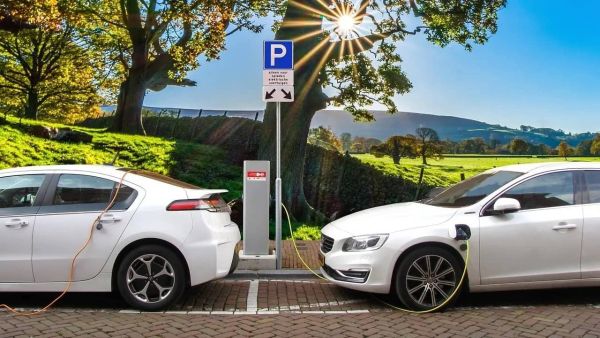
EV Means Less Pollution: The more electric cars in a neighbourhood, the lower the air pollution from burning fossil fuels, researchers studying satellite data for California found.
Conversely, satellite data also confirmed that neighbourhoods that added more gas-powered cars saw a rise in pollution.
“We’re not even fully there in terms of electrifying, but our research shows that California’s transition to electric vehicles is already making measurable differences in the air we breathe,” study leader Sandrah Eckel of the Keck School of Medicine of USC said in a statement.
For every 200 zero-emissions vehicles added to California neighbourhoods between 2019 and 2023, nitrogen dioxide levels dropped 1.1 per cent, researchers reported in The Lancet Planetary Health.
The pollutant, released from burning fossil fuels, can trigger asthma attacks, cause bronchitis, and increase the risk of heart disease and stroke.
For the analysis, the researchers divided California into 1,692 neighbourhoods and obtained publicly available data from the state’s Department of Motor Vehicles on the number of “light-duty” ZEVs registered in each neighbourhood. These included full-battery electric cars, plug-in electric hybrids and hydrogen fuel-cell cars.
They then obtained data from a high-resolution satellite sensor that monitors NO2 levels by measuring how the gas absorbs and reflects sunlight.
The researchers said they plan to compare data on ZEV adoption with asthma-related emergency room visits and hospitalisations across California.
While the Trump administration favours gas-powered vehicles and ended tax credits aimed at promoting EVs, the report noted that a full transition to electric vehicles is projected to reduce ambient NO2 concentrations by 61 per cent in the United States and by up to 80 per cent in China.
Meanwhile, the new findings “show that cleaner air isn't just a theory, it's already happening in communities across California,” Eckel said.
EXPERIMENTAL CONTACT LENSES MONITOR PRESSURE IN THE EYE
Experimental contact lenses are being developed that can monitor pressure inside the eye in order to stave off glaucoma, and early animal research found them to be as accurate as current, more cumbersome equipment.
Japanese researchers say they have come up with a way to integrate into the lenses a thin film with multiple layers, each with its own intrinsic properties that help to measure and monitor intraocular pressure in real time, they reported in npj Flexible Electronics.
An antenna built into the lens allows for wireless transmission of the data.
Glaucoma is a leading cause of blindness among people who are unable to monitor and manage their intraocular pressure daily, the researchers noted. Current tools for intraocular pressure measurement are not portable, convenient, easily accessible, or capable of continuous monitoring.
When they tested their lenses in rabbits, the pressures transmitted by the devices matched the pressures obtained with traditional monitoring devices, according to the report.
Certain obstacles must be overcome before the devices are ready for prime time, the authors acknowledge, including the need to distinguish intraocular pressure changes that arise simply from posture changes and blinking.
“Our platform is promising for long-term, non-invasive intraocular pressure monitoring," said study leader Takeo Miyake of Waseda University in Tokyo, "thus making a significant contribution to the early diagnosis and treatment of glaucoma.”
-
Chelsea tear up Raheem Sterling's contract as club set to fork out millions

-
BREAKING: Raheem Sterling leaves Chelsea as mutual agreement reached on expensive contract

-
Regatta waterproof is similar to Dry Robe but £115 cheaper and 'excellent' for dog walks

-
Why Is the Practice of Niyog Rarely Talked About in the Mahabharata?

-
10 Not To Miss Places in Bikaner