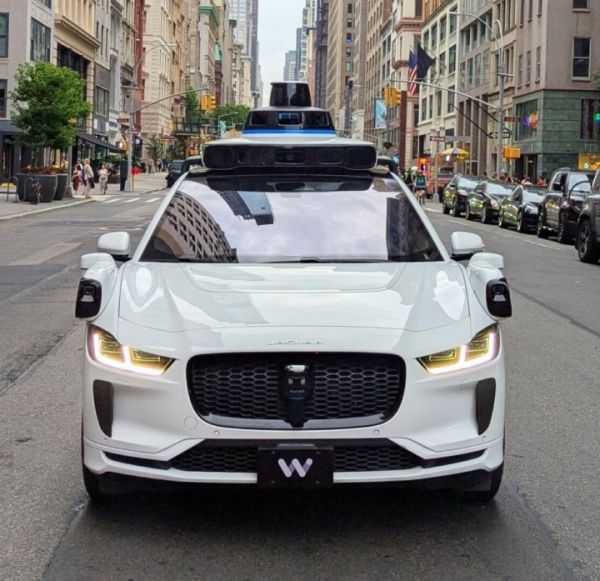
A Waymo autonomous robotaxi struck a child near an elementary school in Santa Monica, California, on January 23, 2026, prompting a federal safety investigation by the U.S. National Highway Traffic Safety Administration (NHTSA) and renewed scrutiny of self-driving car safety protocols. According to federal officials and company statements, the child sustained minor injuries and the vehicle was operating fully autonomously with no human driver present.
The incident occurred during normal school drop-off hours outside a campus near busy streets with children, crossing guards, and double-parked cars, raising questions about how autonomous systems navigate complex, pedestrian-rich environments.
According to preliminary reports from the NHTSA, the child darted into the street from behind a double-parked SUV directly into the robotaxi’s path. The Waymo vehicle detected the child as they emerged and braked sharply, reducing its speed from approximately 17 miles per hour to under 6 miles per hour at the moment of impact.
Despite being struck, the child stood up immediately and walked to the sidewalk without severe injury. Waymo officials said they called 911 and remained at the scene until law enforcement cleared the vehicle.
Waymo released a statement highlighting that its sensors detected the child as early as possible and that the reduced impact speed demonstrated the system’s response capability. The company also pointed to a peer-reviewed model suggesting that a fully attentive human driver would likely have struck the child at a significantly higher speed, an estimated 14 mph under the same conditions.
Federal Investigation: NHTSA’s Response
The U.S. National Highway Traffic Safety Administration has opened a formal investigation into the collision through its Office of Defects Investigation. The inquiry will examine whether the Waymo vehicle exercised appropriate caution given its proximity to an elementary school, the presence of multiple children, and the typical hazards associated with school zones.
Issues under review include:
- Speed and braking behavior as the vehicle approached the school zone
- Detection and avoidance of vulnerable road users, especially children
- The robotaxi’s reaction to unexpected pedestrian movements
- Protocols followed after the collision occurred
Federal investigators also noted the presence of double-parked vehicles and other environmental factors that can obscure visibility and complicate navigation near school campuses.
Waymo has stated it will fully cooperate with NHTSA’s investigation and has voluntarily reported the incident, stressing transparency in the process.
Prior Scrutiny of Waymo and Autonomous Safety Issues
This incident comes at a time when autonomous vehicle safety is under heightened scrutiny across the United States. Last year, Waymo faced federal attention over a software issue that caused its robotaxis to illegally pass stopped school buses, a serious violation of traffic safety norms. The National Transportation Safety Board (NTSB) launched an investigation after similar reports emerged in Austin, Texas, and Waymo undertook a software update to address the problem.
Together, these events have intensified debate about how self-driving systems handle complex, real-world scenarios, especially those involving children, unpredictable pedestrian behavior, and dynamic street environments such as school zones.
News of the collision spread rapidly across media and social platforms, with public commentary reflecting mixed reactions. Some view the incident as an example of the challenges autonomous vehicles face in real-world scenarios, particularly where visibility is limited and children behave unpredictably. Others argue that the Waymo system mitigated what could have been a much more damaging collision.
Critics emphasize that even with advanced sensors, fully autonomous systems must handle ambiguous and fast-evolving situations with extreme caution. Advocates for robotaxis point to how the vehicle reduced its speed sharply, potentially preventing more serious harm that might have occurred with a human driver under similar conditions.
Local residents and parents have also expressed concern about ongoing robotaxi operations near school campuses and the adequacy of safety measures during peak pedestrian traffic hours.
The Santa Monica collision illustrates key technical challenges for autonomous driving systems:
- Sensor limitations when objects or pedestrians emerge from behind larger obstacles
- Prediction models that must rapidly assess behavior of unpredictable agents like children
- The need for more robust context-aware speed management, especially in sensitive zones like schools
Even advanced AI systems can struggle with scenarios where visibility is compromised and decisions must be made in fractions of a second. This incident reinforces the importance of holistic safety design, including not just detection and braking systems but path planning that anticipates sudden pedestrian movement near schools.
As Waymo and other autonomous vehicle companies expand services in American cities, regulatory bodies are likely to refine standards governing robotaxi operations, particularly in school zones and areas with heavy foot traffic by children. The outcome of the NHTSA investigation could influence future policy on how closely autonomous systems must adhere to speed restrictions, hazard anticipation, and proximity protocols around vulnerable populations.
For Waymo, this incident underscores the importance of transparency and cooperation with federal regulators to build public trust while demonstrating the safety benefits of autonomous technology.
While the child struck by the Waymo robotaxi escaped major injury, the event marks a key moment in the ongoing evolution of autonomous vehicle deployment. The NHTSA’s investigation will probe critical questions about safety protocols, system behavior in school zones, and how autonomous systems can operate responsibly where children and pedestrians are most at risk. As regulators, industry players, and the public grapple with these issues, this episode may shape future expectations for how driverless cars coexist with human life on urban streets.
-
Do these measures for success in career and business on the night of Mahashivratri, your luck will shine.

-
Want to have glowing skin on Valentine’s Day, try this homemade face mask, effect will be visible in 15 days.

-
Woolen Dupatta For Girls: These 3 beautiful woolen dupattas will keep you safe from cold, see the designs. how to style woolen dupatta in winter | Hari Bhoomi

-
From cultural heritage to beaches, tourists respond enthusiastically to Maharashtra Tourism Hall in ‘Bharat Parv 2026’
-
If you are having frequent headaches, there may be a deficiency of this vitamin.